Overview
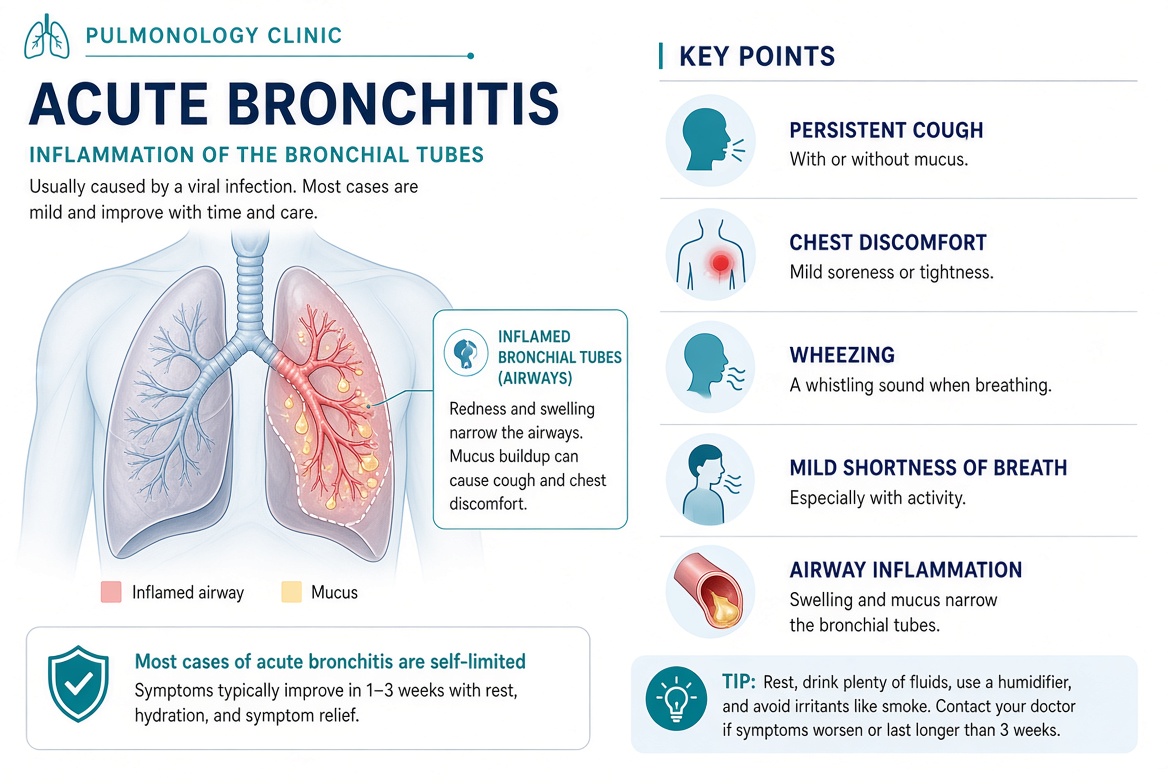
Acute bronchitis is a temporary inflammation of the bronchial tubes, the airways that carry air to and from the lungs. It most often develops after a viral respiratory infection such as a cold or flu and usually improves within a few weeks.
The main symptom of acute bronchitis is a persistent cough, which may produce clear, white, yellow, or green mucus. Other symptoms can include chest discomfort, tiredness, mild fever, sore throat, wheezing, and shortness of breath. Antibiotics are generally not helpful when acute bronchitis is caused by a virus.
Most cases of acute bronchitis resolve with rest, fluids, and supportive care. However, a cough can sometimes last for several weeks after the initial infection has improved. Medical evaluation may be necessary when symptoms are severe, prolonged, or suggest another condition such as pneumonia or asthma.
Common Symptoms
- Persistent cough, with or without mucus.
- Clear, white, yellow, or green mucus.
- Chest discomfort or soreness from frequent coughing.
- Wheezing or noisy breathing.
- Mild shortness of breath.
- Sore throat.
- Fatigue and weakness.
- Mild fever or chills.
- Body aches or other cold-like symptoms.
Acute Bronchitis Is Usually Caused by Viruses
Most cases of acute bronchitis develop after a viral respiratory infection. Antibiotics usually do not speed recovery when the cause is viral.
The Cough Can Last for Several Weeks
Even after the infection has cleared, irritated airways may continue to cause coughing for a few weeks. A gradually improving cough does not necessarily mean the infection is still active.
Know When to Seek Medical Care
Severe difficulty breathing, chest pain, coughing up significant amounts of blood, persistent high fever, confusion, or rapidly worsening symptoms require prompt medical evaluation.
If your cough is persistent, severe, or accompanied by significant breathing difficulty, consult a healthcare professional. People with asthma, COPD, heart disease, or weakened immune systems may need earlier assessment.
Symptoms
The symptoms of acute bronchitis usually develop after a cold, flu, or other respiratory infection. The main symptom is a persistent cough, which may last for several weeks even after other symptoms have improved.
Symptoms are usually mild to moderate and gradually improve on their own. However, severe breathing difficulty, persistent high fever, chest pain, or worsening symptoms may indicate pneumonia or another condition requiring medical evaluation.
Common Symptoms of Acute Bronchitis
| Symptom | Description |
|---|---|
| Persistent Cough | The most common symptom. The cough may initially be dry and later produce mucus. |
| Mucus Production | Coughing may produce clear, white, yellow, or green mucus. Mucus color alone does not necessarily mean that antibiotics are needed. |
| Chest Discomfort | Frequent or forceful coughing can cause soreness, tightness, or discomfort in the chest. |
| Wheezing | Inflamed or narrowed airways may produce a whistling sound while breathing. |
| Shortness of Breath | Mild breathing difficulty may occur, particularly during physical activity or coughing episodes. |
| Sore Throat | Irritation of the throat may occur, especially when acute bronchitis begins after a cold or other upper respiratory infection. |
| Fatigue | The infection and persistent coughing can leave you feeling tired or weak. |
| Mild Fever and Chills | Some people develop a low-grade fever or chills, particularly during the early stage of the illness. |
| Body Aches | Muscle aches and general discomfort may occur when bronchitis develops alongside a viral respiratory infection. |
| Runny or Stuffy Nose | Nasal congestion or a runny nose may accompany bronchitis when it follows a cold or flu. |
How Symptoms Usually Progress
- Acute bronchitis often begins with cold-like symptoms such as a runny nose, sore throat, or mild fever.
- A cough usually becomes the most prominent symptom.
- The cough may initially be dry and later produce mucus.
- Wheezing or mild shortness of breath may occur because the airways become inflamed.
- Other symptoms generally improve within several days, while the cough may persist for a few weeks.
A Persistent Cough Does Not Always Mean a Bacterial Infection
Mucus can become yellow or green during acute bronchitis because of the body's immune response. Mucus color alone does not reliably indicate a bacterial infection or the need for antibiotics.
People with Existing Lung Conditions May Have More Symptoms
People with asthma, COPD, or other chronic respiratory conditions may experience more significant wheezing, coughing, or breathing difficulty when they develop acute bronchitis.
Seek Medical Care Promptly If You Have:
- Severe or worsening shortness of breath.
- Chest pain that is severe or persistent.
- Coughing up significant amounts of blood.
- A high or persistent fever.
- Confusion, extreme weakness, or fainting.
- Symptoms that are getting worse rather than gradually improving.
- A cough that persists beyond the expected recovery period or repeatedly returns.
If your symptoms are severe, prolonged, or worsening, a healthcare professional can determine whether you have acute bronchitis or another condition such as pneumonia, asthma, influenza, or COVID-19.
Causes
Acute bronchitis occurs when the lining of the bronchial tubes becomes inflamed, usually after an infection. The inflammation causes the airways to swell and produce extra mucus, which leads to the characteristic cough and breathing symptoms.
Viruses are responsible for most cases of acute bronchitis. Less commonly, the condition can be triggered or worsened by exposure to cigarette smoke, air pollution, dust, chemical fumes, and other substances that irritate the airways.
Common Causes of Acute Bronchitis
| Cause | Description |
|---|---|
| Viral Infections | Most cases are caused by respiratory viruses, including viruses responsible for the common cold, influenza, and other respiratory infections. |
| Influenza (Flu) | The influenza virus can infect and inflame the bronchial tubes, causing significant coughing, fever, body aches, and fatigue. |
| Common Cold Viruses | Viruses that cause common colds can spread from the upper respiratory tract into the lower airways and trigger acute bronchitis. |
| COVID-19 and Other Respiratory Viruses | COVID-19 and other respiratory viral infections can cause bronchial inflammation and symptoms similar to acute bronchitis. |
| Bacterial Infections | Bacteria are an uncommon cause of acute bronchitis. When bacterial infection is suspected, a healthcare professional can determine whether specific treatment is appropriate. |
| Cigarette Smoke | Smoking irritates and damages the bronchial tubes, making them more susceptible to inflammation and respiratory infections. |
| Secondhand Smoke | Regular exposure to tobacco smoke from other people can irritate the airways and increase respiratory symptoms. |
| Air Pollution | Polluted air and fine particles can irritate the respiratory tract and contribute to airway inflammation. |
| Dust and Chemical Fumes | Workplace or environmental exposure to dust, solvents, cleaning chemicals, and other airborne irritants can trigger bronchial inflammation. |
| Other Airway Irritants | Strong odors, fumes, vapors, and certain industrial substances may irritate the bronchial tubes and worsen coughing or breathing symptoms. |
How Acute Bronchitis Develops
- A respiratory virus or airway irritant affects the bronchial tubes.
- The lining of the airways becomes inflamed and swollen.
- The bronchial tubes produce additional mucus.
- Airflow may become temporarily restricted, causing wheezing or mild shortness of breath.
- The body responds by producing a persistent cough to clear mucus and irritants from the airways.
Most Cases Are Viral
Most acute bronchitis cases are caused by viruses rather than bacteria. Because of this, antibiotics usually do not help and are not routinely recommended for uncomplicated acute bronchitis.
Smoking Can Make Bronchitis Worse
Cigarette smoke continuously irritates the airways and can prolong coughing and recovery. Avoiding smoking and secondhand smoke can help the airways recover.
Reducing Irritant Exposure Can Help
Avoiding tobacco smoke, excessive air pollution, dust, and chemical fumes can reduce airway irritation and support recovery from acute bronchitis.
If a cough is severe, lasts longer than expected, or is accompanied by high fever, significant shortness of breath, chest pain, or coughing up blood, medical evaluation is important to rule out pneumonia or another underlying condition.
Risk Factors
Anyone can develop acute bronchitis, but certain factors can increase the likelihood of developing the condition or make symptoms more severe. Most cases occur after a viral respiratory infection, while smoking, exposure to air pollutants, and certain underlying health conditions can increase susceptibility.
Having a risk factor does not mean that you will develop acute bronchitis. However, understanding these factors can help you take steps to protect your respiratory health.
Common Risk Factors for Acute Bronchitis
| Risk Factor | How It Increases Risk |
|---|---|
| Smoking | Cigarette smoke irritates and damages the airways, increasing susceptibility to bronchial inflammation and respiratory infections. |
| Secondhand Smoke | Regular exposure to tobacco smoke can irritate the respiratory tract and increase the risk of coughing and respiratory infections. |
| Frequent Respiratory Infections | People who frequently develop colds, influenza, or other respiratory infections have more opportunities to develop acute bronchitis. |
| Weakened Immune System | A weakened immune system can make it more difficult for the body to fight respiratory infections, increasing the risk of complications. |
| Young Children | Children, particularly young children, may be more susceptible to respiratory infections because their immune systems and airways are still developing. |
| Older Adults | Older adults may have a higher risk of respiratory infections and complications, particularly when other chronic health conditions are present. |
| Chronic Lung Conditions | Conditions such as asthma and COPD can make the airways more sensitive and may lead to more severe or prolonged symptoms. |
| Air Pollution | Exposure to polluted air, smoke, and fine particles can irritate the bronchial tubes and make respiratory symptoms worse. |
| Dust and Chemical Fumes | Workplace exposure to dust, solvents, industrial chemicals, and other airborne irritants can increase airway inflammation. |
| Close Contact with Infected People | Acute bronchitis caused by respiratory viruses can spread through respiratory droplets and close contact with infected individuals. |
| Cold and Flu Season | Acute bronchitis becomes more common during periods when respiratory viruses such as influenza and common cold viruses circulate widely. |
People at Higher Risk
- People who smoke or regularly breathe secondhand smoke.
- Young children and older adults.
- People with asthma, COPD, or other chronic respiratory conditions.
- Individuals with weakened immune systems.
- People frequently exposed to respiratory infections.
- Workers exposed to dust, chemical fumes, or other airborne irritants.
- People living or working in areas with significant air pollution.
Smoking Is an Important Modifiable Risk Factor
Avoiding cigarettes and secondhand smoke can reduce airway irritation and lower the risk of respiratory infections and prolonged bronchitis symptoms.
Chronic Lung Disease Can Increase Symptom Severity
People with asthma or COPD may experience more severe coughing, wheezing, or breathing difficulty when they develop acute bronchitis. They should follow their existing treatment plan and seek medical advice if symptoms worsen.
Reducing Exposure Can Protect Your Airways
Good hand hygiene, avoiding close contact with people who are sick, staying up to date with recommended vaccinations, avoiding tobacco smoke, and reducing exposure to respiratory irritants can help protect respiratory health.
If you have risk factors for severe respiratory infections or develop persistent or worsening symptoms, speak with a healthcare professional. Early evaluation can help distinguish acute bronchitis from pneumonia, asthma exacerbation, influenza, COVID-19, or other respiratory conditions.
Diagnosis
Acute bronchitis is usually diagnosed based on your symptoms, medical history, and a physical examination. In uncomplicated cases, laboratory tests and imaging are often not necessary. The main purpose of evaluation is to identify acute bronchitis and rule out other conditions, particularly pneumonia, asthma, COPD exacerbation, influenza, or COVID-19.
Your healthcare provider may ask when the cough started, whether you are producing mucus, whether you have fever or breathing difficulty, and whether you have recently had a cold, flu, or contact with someone who was sick.
Tests Used to Diagnose Acute Bronchitis
| Test or Examination | Purpose |
|---|---|
| Medical History | Your healthcare provider asks about the onset and duration of your cough, mucus production, fever, breathing symptoms, recent infections, smoking, and exposure to respiratory irritants. |
| Physical Examination | The provider listens to your lungs with a stethoscope for wheezing, abnormal breath sounds, or other signs that may suggest a different lung condition. |
| Pulse Oximetry | A small device placed on the finger measures blood oxygen saturation (SpO?), particularly when shortness of breath or significant respiratory symptoms are present. |
| Chest X-ray | A chest X-ray is not routinely required for uncomplicated acute bronchitis. It may be recommended when pneumonia or another lung condition is suspected. |
| COVID-19 or Influenza Testing | Viral testing may be considered when symptoms, local infection patterns, treatment decisions, or exposure history make influenza or COVID-19 a possibility. |
| Blood Tests | Routine blood tests are generally unnecessary for uncomplicated acute bronchitis but may be performed when a more serious infection or another medical condition is suspected. |
| Sputum Testing | Mucus testing is not routinely needed. It may occasionally be considered when another infection is suspected or symptoms are unusually severe or prolonged. |
| Pulmonary Function Tests | Breathing tests are generally not needed for a straightforward episode of acute bronchitis but may be performed later if asthma, COPD, or another chronic airway condition is suspected. |
How Doctors Rule Out Other Conditions
- Pneumonia: May be suspected when there is a high or persistent fever, rapid breathing, low oxygen levels, or abnormal lung examination findings.
- Asthma: Recurrent wheezing or coughing may require further evaluation for asthma.
- COPD: Persistent respiratory symptoms, particularly in smokers or older adults, may require lung function testing.
- Influenza: Testing may be considered when flu symptoms are prominent or antiviral treatment may be beneficial.
- COVID-19: Testing may be appropriate based on symptoms, exposure, and current circulation of the virus.
Acute Bronchitis Is Usually a Clinical Diagnosis
In most otherwise healthy adults, acute bronchitis can be diagnosed from the history and physical examination without extensive testing. The cough is usually the dominant symptom and gradually improves with time.
A Chest X-Ray May Be Needed When Pneumonia Is Suspected
A persistent high fever, rapid breathing, low oxygen levels, significant shortness of breath, chest pain, or abnormal lung sounds may prompt your healthcare provider to order a chest X-ray to look for pneumonia or another lung problem.
Seek Prompt Medical Evaluation for Severe Symptoms
Severe difficulty breathing, blue lips or fingertips, confusion, significant chest pain, coughing up substantial amounts of blood, or rapidly worsening symptoms require urgent medical assessment.
If your cough persists, repeatedly returns, or is accompanied by significant breathing difficulty, medical evaluation can help determine whether acute bronchitis is the correct diagnosis or whether another respiratory condition requires treatment.
Treatment
Treatment for acute bronchitis focuses mainly on relieving symptoms and supporting the body's recovery. Most cases are caused by viruses and improve on their own within a few weeks. Antibiotics generally do not help viral acute bronchitis and are not routinely recommended.
The appropriate treatment depends on the severity of symptoms, the person's age and overall health, and whether an underlying condition such as asthma or COPD is present.
Common Treatment Options for Acute Bronchitis
| Treatment | Purpose |
|---|---|
| Rest | Getting adequate rest allows the body to recover from the infection and can help reduce fatigue. |
| Fluids | Drinking adequate fluids helps prevent dehydration and may make mucus easier to clear from the airways. |
| Honey | Honey may help soothe coughing in adults and children older than 1 year. It should never be given to infants younger than 1 year. |
| Humidified Air | Humidified air or a warm shower may help relieve throat and airway irritation in some people. |
| Pain and Fever Relief | Over-the-counter medicines such as acetaminophen or ibuprofen may help reduce fever, headache, body aches, and chest discomfort when appropriate. |
| Cough Relief | Certain over-the-counter cough medicines may provide temporary symptom relief, although their effectiveness varies. Follow product instructions and ask a healthcare professional when unsure. |
| Bronchodilators | An inhaled bronchodilator may be prescribed when significant wheezing or airflow narrowing is present, particularly in people with asthma or COPD. |
| Treatment of Underlying Conditions | People with asthma or COPD may need adjustments to their usual treatment if bronchitis triggers worsening respiratory symptoms. |
| Antibiotics | Antibiotics are generally not useful for uncomplicated viral acute bronchitis. They may be considered only when a bacterial infection or another condition requiring antibiotics is suspected. |
What You Can Do at Home
- Get plenty of rest and avoid strenuous activity while feeling unwell.
- Drink adequate fluids throughout the day.
- Avoid cigarette smoke and secondhand smoke.
- Use a clean humidifier if dry air irritates your throat or airways.
- Honey may help soothe a cough in adults and children over 1 year of age.
- Follow the recommended dose when using over-the-counter medicines.
- Continue prescribed asthma or COPD medications as directed by your healthcare provider.
Antibiotics Usually Are Not Needed
Most acute bronchitis is caused by viruses, so antibiotics do not speed recovery. Unnecessary antibiotic use can cause side effects and contributes to antibiotic resistance.
Avoid Smoking During Recovery
Cigarette smoke can further irritate inflamed airways, worsen coughing, and delay recovery. Avoid smoking and exposure to secondhand smoke while recovering from acute bronchitis.
When Medical Treatment Is Needed
Seek medical evaluation if you develop severe or worsening shortness of breath, persistent high fever, significant chest pain, coughing up blood, confusion, blue lips or fingertips, or symptoms that are not gradually improving.
Recovery
Most people recover from acute bronchitis without complications. Other cold or flu symptoms often improve within several days, while the cough can persist for a few weeks because the bronchial tubes may remain irritated after the infection has cleared.
If the cough continues for an unusually long time, repeatedly returns, or is accompanied by worsening breathing problems, a healthcare professional should evaluate you for conditions such as asthma, COPD, pneumonia, or another underlying cause.
Need Expert Medical Guidance?
Schedule a direct consultation with Dr. Nabila Zaheer for a personalized care plan.
Prevention
Acute bronchitis is often caused by viral respiratory infections, so it is not always possible to prevent it completely. However, good respiratory hygiene, vaccination, avoiding tobacco smoke, and reducing exposure to respiratory irritants can lower the risk of developing acute bronchitis and other respiratory infections.
People with asthma, COPD, weakened immune systems, or other chronic health conditions should take additional precautions because respiratory infections may cause more severe symptoms or complications.
Ways to Help Prevent Acute Bronchitis
| Prevention Strategy | How It Helps |
|---|---|
| Wash Your Hands Frequently | Regular handwashing with soap and water helps remove viruses and other germs that can cause respiratory infections. |
| Avoid Touching Your Face | Avoiding unnecessary contact with your eyes, nose, and mouth can reduce the chance of transferring infectious germs into your respiratory system. |
| Avoid Close Contact With Sick People | Keeping some distance from people who have respiratory infections can reduce exposure to viruses that may cause bronchitis. |
| Cover Coughs and Sneezes | Covering your mouth and nose with a tissue or your elbow helps prevent respiratory droplets from spreading to others. |
| Stay Up to Date With Recommended Vaccinations | Vaccines such as influenza and COVID-19 vaccines can help prevent infections that may cause respiratory symptoms and complications. |
| Quit Smoking | Stopping smoking reduces airway irritation and improves respiratory health, while also lowering the risk of respiratory infections. |
| Avoid Secondhand Smoke | Reducing exposure to tobacco smoke helps protect the bronchial tubes from irritation and inflammation. |
| Reduce Exposure to Air Pollutants | Avoiding heavy pollution, dust, chemical fumes, and other respiratory irritants can help protect the airways. |
| Maintain Good Indoor Ventilation | Good airflow can help reduce the concentration of respiratory particles and irritants in indoor environments. |
| Manage Chronic Lung Conditions | Proper control of asthma, COPD, and other chronic respiratory diseases can reduce the severity of respiratory infections and related symptoms. |
Healthy Habits for Respiratory Protection
- Wash your hands regularly, especially after being in public places.
- Avoid sharing cups, utensils, or personal items with someone who is sick.
- Stay home when you are sick when possible to reduce spreading respiratory infections.
- Get recommended seasonal vaccinations.
- Avoid smoking and secondhand smoke.
- Use appropriate respiratory protection when working around dust or chemical fumes.
- Maintain a healthy lifestyle with adequate sleep, nutrition, and physical activity.
- Follow your prescribed treatment plan if you have asthma or COPD.
Hand Hygiene Helps Prevent Respiratory Infections
Many cases of acute bronchitis follow viral respiratory infections. Regular handwashing and avoiding close contact with people who are sick can reduce the spread of these infections.
Protect Your Airways From Smoke and Irritants
Cigarette smoke, secondhand smoke, air pollution, dust, and chemical fumes can irritate the bronchial tubes. Avoiding these exposures can help protect your respiratory system.
Vaccination Can Reduce Respiratory Illness
Staying up to date with recommended vaccinations, including seasonal influenza and COVID-19 vaccination when appropriate, can reduce the risk of respiratory infections that may lead to bronchitis-like symptoms.
Although acute bronchitis cannot always be prevented, good hygiene, vaccination, smoking cessation, and avoidance of respiratory irritants can significantly support healthier airways. If you develop persistent or worsening respiratory symptoms, seek medical advice.
Complications
Acute bronchitis usually improves without causing serious problems, and most people recover completely. However, complications can occasionally occur, particularly in young children, older adults, people with weakened immune systems, and individuals with chronic lung or heart conditions.
Persistent or worsening symptoms may also indicate that the original diagnosis was incorrect or that another respiratory condition, such as pneumonia or asthma, has developed.
Possible Complications of Acute Bronchitis
| Complication | Description |
|---|---|
| Pneumonia | In some cases, an infection can involve the deeper lung tissue and develop into pneumonia, which can cause more severe fever, breathing difficulty, chest pain, and low oxygen levels. |
| Worsening of Asthma | A respiratory infection can trigger increased coughing, wheezing, and airway narrowing in people with asthma. |
| COPD Exacerbation | Acute bronchitis can trigger a flare-up of COPD, resulting in increased cough, mucus production, wheezing, and shortness of breath. |
| Persistent Cough | Airway inflammation can continue after the infection has improved, causing a cough that lasts for several weeks. |
| Breathing Difficulty | Significant airway inflammation may temporarily worsen airflow and cause shortness of breath or wheezing. |
| Respiratory Failure | Severe respiratory infection can rarely lead to respiratory failure, particularly in people with serious underlying lung disease or weakened immune systems. |
| Dehydration | Fever, reduced fluid intake, sweating, or prolonged illness can contribute to dehydration. |
| Secondary Infection | Although uncommon, another infection may develop during or after the initial respiratory illness, particularly in vulnerable individuals. |
| Hospitalization | Severe symptoms or complications such as pneumonia, significant breathing difficulty, or respiratory failure may require hospital treatment. |
People at Higher Risk of Complications
- Older adults.
- Young children and infants.
- People with asthma or COPD.
- Individuals with heart or other chronic medical conditions.
- People with weakened immune systems.
- People who smoke or have significant exposure to tobacco smoke.
- Individuals with severe or prolonged respiratory infections.
A Lingering Cough Can Be Normal
The cough associated with acute bronchitis can continue for several weeks because the bronchial tubes may remain irritated after the infection has resolved. A gradually improving cough is usually less concerning than symptoms that are becoming progressively worse.
Watch for Signs of Pneumonia
A high or persistent fever, worsening shortness of breath, chest pain, confusion, rapid breathing, or low oxygen levels may indicate pneumonia or another serious condition and should be medically evaluated.
Seek Emergency Medical Care If You:
- Have severe difficulty breathing.
- Develop blue or gray lips or fingertips.
- Experience severe or persistent chest pain.
- Become confused, extremely weak, or lose consciousness.
- Cough up a significant amount of blood.
- Have rapidly worsening respiratory symptoms.
Most People Recover Completely
Acute bronchitis usually resolves without lasting lung damage. Avoiding smoking, managing underlying lung conditions, and seeking medical care when symptoms are severe or prolonged can help reduce the risk of complications.
If your symptoms are worsening rather than improving, or if your cough persists longer than expected, consult a healthcare professional. Additional evaluation may be needed to rule out pneumonia, asthma, COPD exacerbation, or another underlying condition.
When to See a Doctor
Most cases of acute bronchitis improve on their own with rest, fluids, and supportive care. However, medical evaluation is important when symptoms are severe, prolonged, worsening, or occur in someone at higher risk of complications.
Because acute bronchitis can cause symptoms similar to pneumonia, asthma, influenza, COVID-19, and other respiratory conditions, a healthcare professional may need to determine the underlying cause when symptoms are unusual or severe.
Schedule a Medical Appointment If You:
- Have a cough that persists for several weeks without gradually improving.
- Experience repeated episodes of bronchitis.
- Have persistent or worsening wheezing.
- Develop shortness of breath that is new or worsening.
- Have a fever that persists or returns after initially improving.
- Experience chest pain that is persistent or concerning.
- Have symptoms that are becoming worse rather than better.
- Have asthma, COPD, heart disease, or another chronic medical condition and develop worsening respiratory symptoms.
- Have a weakened immune system and develop significant respiratory symptoms.
Seek Urgent Medical Care If You:
- Have significant difficulty breathing.
- Develop a high or persistent fever.
- Cough up blood.
- Have severe or persistent chest pain.
- Experience rapid or difficult breathing.
- Have symptoms of dehydration, such as severe weakness, dizziness, or very little urination.
- Notice symptoms that are rapidly getting worse.
Seek Emergency Medical Care Immediately If You:
- Are struggling to breathe or cannot speak normally because of breathlessness.
- Have blue or gray lips, face, or fingertips.
- Develop severe chest pain or pressure.
- Become confused, extremely drowsy, or difficult to wake.
- Faint or lose consciousness.
- Cough up a large amount of blood.
- Experience rapidly worsening breathing difficulty.
A Persistent Cough Should Be Evaluated
A cough can continue for several weeks after acute bronchitis because the airways remain irritated. However, a cough that does not gradually improve, repeatedly returns, or is accompanied by worsening symptoms should be evaluated to rule out pneumonia, asthma, COPD, or another underlying condition.
People With Chronic Lung Disease May Need Earlier Care
People with asthma, COPD, or other chronic respiratory conditions can experience more severe symptoms during respiratory infections. Contact your healthcare provider if your usual breathing symptoms become noticeably worse.
Early Evaluation Can Prevent Complications
Prompt medical evaluation can help identify complications such as pneumonia or worsening of an underlying lung condition and ensure that appropriate treatment is provided.
If you are unsure whether your symptoms are due to acute bronchitis or another respiratory condition, consult a healthcare professional. Sudden severe breathing difficulty, blue lips, confusion, or significant chest pain requires immediate emergency medical attention.