Overview
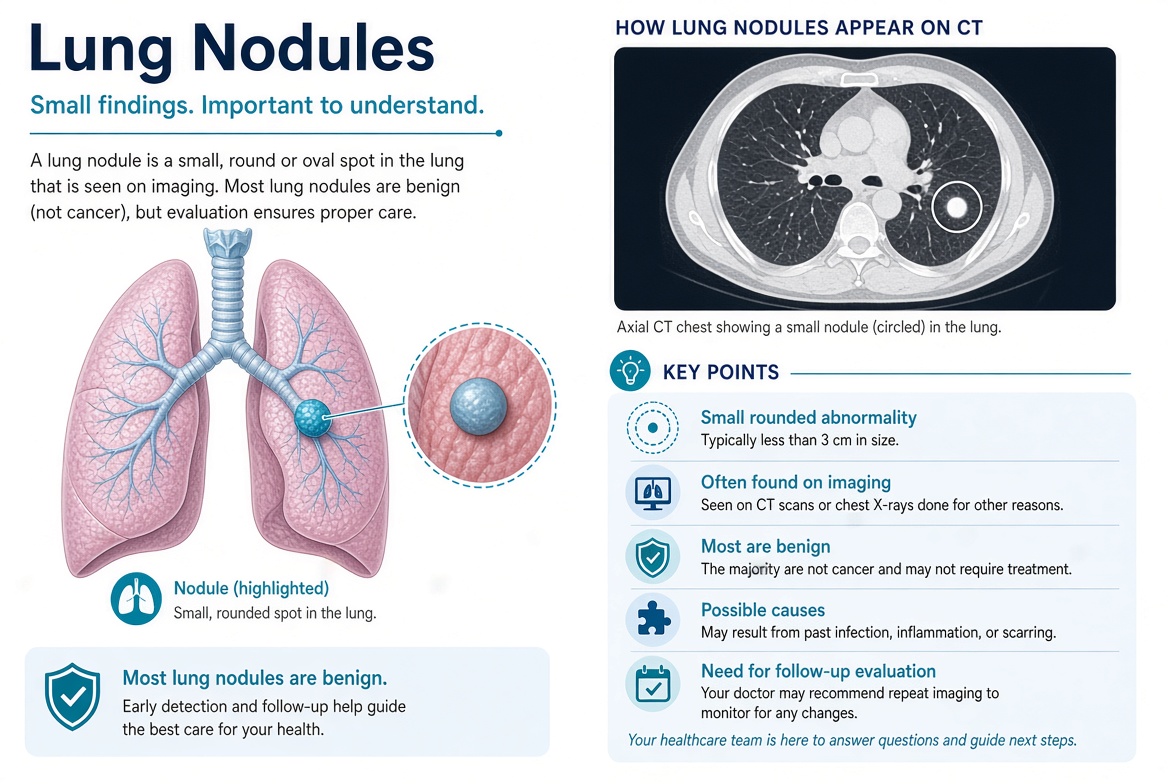
A lung nodule is a small, rounded or oval-shaped abnormality in the lung that is usually detected on a chest X-ray or CT scan. Lung nodules are sometimes called “spots on the lung.” Most lung nodules are benign (non-cancerous), but some can represent an early stage of lung cancer or another lung disease.
Lung nodules can develop for many different reasons, including previous infections, inflammation, scar tissue, or exposure to certain environmental substances. A nodule itself is not a diagnosis of cancer. Doctors evaluate its size, shape, appearance, location, and growth over time along with the person's age, smoking history, medical history, and other risk factors.
Key Features of Lung Nodules
- Lung nodules are usually small, localized areas of abnormal tissue within the lung.
- They are commonly discovered incidentally during imaging performed for another reason.
- Most lung nodules are benign.
- Some nodules may be caused by previous infections or inflammation.
- A smaller number can be associated with lung cancer.
- Changes in a nodule's size or appearance over time can help doctors determine its significance.
- A CT scan generally provides more detailed information about a lung nodule than a standard chest X-ray.
A Lung Nodule Does Not Automatically Mean Cancer
Finding a lung nodule can be concerning, but most nodules are not cancerous. Doctors consider several factors, including the nodule's size, shape, location, growth pattern, and the person's individual risk factors before deciding whether further testing or monitoring is needed.
Types of Lung Nodules
Lung nodules can be described based on their appearance on CT imaging. Common categories include solid nodules and subsolid nodules.
- Solid nodules: These appear as dense areas of tissue on a CT scan.
- Ground-glass nodules: These appear hazy on CT while allowing some underlying lung structures to remain visible.
- Part-solid nodules: These contain both a solid component and a ground-glass component.
- Single nodule: One isolated nodule is present.
- Multiple nodules: Several nodules are present in one or both lungs.
Common Causes
Lung nodules can have many causes. Benign causes are common and include healed infections, inflammation, and scar tissue. Some nodules can also develop from benign growths or other lung conditions.
In some cases, a lung nodule may represent an early lung cancer or a metastasis from cancer elsewhere in the body. The possibility depends on the individual's clinical and imaging characteristics.
Symptoms
Most small lung nodules do not cause symptoms and are discovered during imaging performed for another reason. When symptoms occur, they are usually related to the underlying condition rather than the nodule itself.
Larger or more concerning abnormalities may sometimes be associated with symptoms such as persistent cough, coughing up blood, chest discomfort, shortness of breath, unexplained weight loss, or recurrent respiratory infections. These symptoms require medical evaluation because they can have many possible causes.
How Lung Nodules Are Evaluated
Evaluation usually begins with a review of previous imaging and a detailed assessment of the person's risk factors. If previous scans are available, comparing them with the new scan can be particularly helpful. A nodule that has remained stable over an appropriate period may be less concerning than one that is growing.
Depending on the nodule's characteristics and the person's risk level, doctors may recommend follow-up CT scans, additional imaging such as PET-CT in selected cases, or tissue sampling (biopsy). Not every lung nodule requires a biopsy.
Follow-Up Is Important
If a doctor recommends repeat imaging, it is important to attend the follow-up appointment. Monitoring changes in the size or appearance of a nodule can help determine whether additional evaluation is necessary.
Factors That Influence Risk
- Age.
- Current or previous cigarette smoking.
- Size of the nodule.
- Shape and edges of the nodule.
- Location within the lungs.
- Whether the nodule is solid, ground-glass, or part-solid.
- Whether the nodule has grown compared with previous scans.
- Personal or family history of lung cancer.
- Previous cancer.
- History of certain infections or inflammatory lung diseases.
When to Seek Medical Attention
A lung nodule should be discussed with a healthcare professional, particularly if it was newly discovered or has changed on follow-up imaging. Prompt medical assessment is especially important when symptoms such as coughing up blood, persistent or worsening shortness of breath, chest pain, unexplained weight loss, or a persistent cough are present.
Seek Urgent Medical Care If You Have:
- Significant difficulty breathing.
- Coughing up a large amount of blood.
- Severe or persistent chest pain.
- Sudden severe weakness, dizziness, or fainting.
- Rapidly worsening respiratory symptoms.
The presence of a lung nodule does not by itself confirm lung cancer. A pulmonologist or other qualified healthcare professional can assess the imaging findings and determine whether observation, repeat imaging, or further testing is appropriate.
Symptoms
Most lung nodules do not cause any symptoms, especially when they are small. They are often discovered incidentally during a chest X-ray or CT scan performed for another medical reason. In many cases, the symptoms are related to the underlying condition that caused the nodule rather than the nodule itself.
Common Symptoms Associated With Lung Nodules
| Symptom | Description |
|---|---|
| Persistent Cough | A cough that does not improve or continues for several weeks may occur, although most small lung nodules do not cause coughing. |
| Shortness of Breath | Difficulty breathing is uncommon with small nodules but may occur when there is a larger lesion, significant underlying lung disease, or another condition affecting lung function. |
| Chest Discomfort or Pain | Chest discomfort can occasionally occur, but it is not a typical symptom of a small lung nodule and can have many other causes. |
| Coughing Up Blood | Blood in the sputum can occasionally occur with certain lung conditions. Coughing up blood should always be medically evaluated. |
| Unexplained Weight Loss | Unintentional weight loss can be associated with some underlying diseases, including certain cancers, but it does not mean that a lung nodule is cancerous. |
| Fatigue | Unusual or persistent tiredness may occur when a lung nodule is associated with an underlying infection, inflammatory condition, or other illness. |
| Recurrent Respiratory Infections | Repeated respiratory infections can sometimes be associated with an underlying lung abnormality, although this is not typical of most small nodules. |
Most Lung Nodules Have No Symptoms
A lung nodule can remain completely unnoticed because it is often too small to affect breathing or other lung functions. This is why many nodules are found unexpectedly during imaging performed for conditions such as a cough, chest discomfort, an injury, or another medical evaluation.
A Lung Nodule Is Often an Imaging Finding
The absence of symptoms does not determine whether a nodule is benign or potentially serious. Doctors evaluate its size, shape, density, location, and changes over time together with the person's individual risk factors.
Symptoms That May Suggest an Underlying Condition
Because most nodules themselves do not cause symptoms, symptoms may instead result from the condition responsible for the nodule. Possible associated symptoms include:
- Fever or chills, which may occur with an infection.
- Persistent cough.
- Increased mucus or phlegm.
- Shortness of breath.
- Chest discomfort.
- Fatigue.
- Night sweats.
- Unexplained weight loss.
These symptoms are not specific to lung nodules and can occur with many respiratory conditions. Further evaluation is needed to determine the underlying cause.
Symptoms That Require Prompt Medical Evaluation
- Persistent or worsening cough.
- Coughing up blood.
- Unexplained weight loss.
- Persistent chest pain or discomfort.
- New or worsening shortness of breath.
- Unexplained fatigue or weakness.
- Repeated respiratory infections.
Emergency Warning Signs
Seek emergency medical attention if you experience:
- Severe difficulty breathing.
- Coughing up a large amount of blood.
- Severe or sudden chest pain.
- Fainting or severe dizziness.
- Rapidly worsening breathing or respiratory symptoms.
When to Follow Up
If a lung nodule has been identified on an X-ray or CT scan, follow-up should be based on your healthcare professional's recommendation. Even when you feel completely well, recommended follow-up imaging can be important because changes in the nodule over time may provide valuable information about its cause.
A pulmonologist can review the imaging findings, consider your risk factors, and determine whether monitoring or additional testing is needed.
Causes
Lung nodules can develop for many different reasons. Most lung nodules are benign and are caused by previous infections, inflammation, or scar tissue. However, some nodules can be associated with lung cancer or cancer that has spread from another part of the body.
Common Causes of Lung Nodules
| Cause | Description |
|---|---|
| Previous Lung Infections | Infections can leave small areas of inflammation or scar tissue in the lungs that appear as nodules on imaging, even after the infection has resolved. |
| Fungal Infections | Certain fungal infections can produce granulomas or other localized abnormalities that appear as lung nodules. |
| Tuberculosis (TB) | Previous or active tuberculosis can cause nodules, granulomas, or other abnormalities in the lungs. |
| Inflammation | Inflammatory conditions can cause localized areas of inflammation that appear as nodules on chest imaging. |
| Granulomas | Granulomas are small areas of organized inflammation that can form in response to infections or inflammatory diseases and may appear as nodules. |
| Scar Tissue | Previous infections, injuries, inflammation, or other lung damage can leave scar tissue that appears as a nodule. |
| Benign Lung Tumors | Some non-cancerous growths, such as hamartomas, can appear as lung nodules on imaging. |
| Inflammatory Lung Diseases | Conditions such as sarcoidosis and certain autoimmune diseases can produce nodules or multiple nodular abnormalities in the lungs. |
| Rheumatoid Arthritis and Other Autoimmune Conditions | Some autoimmune diseases can cause inflammatory lung nodules, particularly in people with established systemic disease. |
| Lung Cancer | Some lung nodules are early lung cancers. The likelihood depends on factors such as nodule size, appearance, growth, age, smoking history, and other risk factors. |
| Metastatic Cancer | Cancer that began in another part of the body can sometimes spread to the lungs and appear as one or more nodules. |
Why Do Lung Nodules Form?
A lung nodule develops when a small localized area of tissue in the lung becomes abnormal. This can happen because of infection, inflammation, healing and scar formation, a benign growth, or cancerous changes.
The appearance of a nodule on an X-ray or CT scan cannot always determine its exact cause. Doctors therefore consider the nodule's characteristics together with the patient's medical history and risk factors.
Most Lung Nodules Are Not Cancer
Finding a lung nodule does not mean that you have lung cancer. Many nodules are related to previous infections, inflammation, or other benign conditions. Further evaluation is used to determine whether a nodule requires monitoring or additional testing.
Factors That Can Influence the Cause
- Age.
- Current or previous smoking.
- Exposure to secondhand smoke.
- Previous tuberculosis or other lung infections.
- History of fungal infections.
- Chronic inflammatory or autoimmune diseases.
- Previous cancer.
- Family history of lung cancer.
- Occupational exposure to certain dusts or chemicals.
- Characteristics of the nodule on CT imaging.
Single vs. Multiple Lung Nodules
A single lung nodule can result from a healed infection, benign growth, inflammation, or cancer. Multiple nodules can have a wider range of causes, including infections, inflammatory diseases, metastatic cancer, or other lung conditions.
The presence of multiple nodules does not automatically mean cancer. The size, distribution, appearance, and clinical history are important when determining the likely cause.
Can Smoking Cause Lung Nodules?
Smoking does not directly cause every lung nodule, but it significantly increases the risk of lung cancer and other lung diseases that can be associated with abnormal findings on imaging. A lung nodule in a current or former smoker may therefore require more careful assessment depending on its characteristics.
Previous Infection Can Leave a Nodule Behind
A lung nodule may remain visible on imaging long after an infection has resolved. Some healed infections produce calcified granulomas or scar tissue that remain stable for years and are usually benign.
When the Cause Is Uncertain
Sometimes imaging cannot determine exactly why a lung nodule is present. Your doctor may recommend comparing the current scan with older images, repeating a CT scan after an appropriate interval, or performing additional testing when necessary.
Depending on the nodule's characteristics and your individual risk factors, additional evaluation may include PET imaging or a biopsy. Not every lung nodule requires invasive testing.
If you have been told that you have a lung nodule, discuss the finding with a qualified healthcare professional or pulmonologist. Appropriate follow-up can help distinguish benign nodules from those that require further investigation.
Risk Factors
Anyone can develop a lung nodule, and many nodules are caused by previous infections or other benign conditions. However, certain factors can increase the likelihood that a lung nodule is present or increase the chance that an existing nodule could be related to lung cancer.
Major Risk Factors
| Risk Factor | Why It Matters |
|---|---|
| Older Age | The likelihood that a lung nodule is associated with cancer generally increases with age. |
| Current or Previous Smoking | Smoking is one of the most important risk factors for lung cancer and can increase concern when a lung nodule is detected. |
| Heavy or Long-Term Smoking History | The risk generally increases with greater cumulative exposure to tobacco smoke. |
| Secondhand Smoke Exposure | Long-term exposure to tobacco smoke from other people can increase the risk of lung cancer and other respiratory diseases. |
| Previous Cancer | A history of cancer can increase the possibility that a lung nodule represents recurrent or metastatic cancer, depending on the type and history of the previous cancer. |
| Family History of Lung Cancer | A family history of lung cancer may increase an individual's risk, particularly when combined with other risk factors such as smoking. |
| Previous Lung Infections | Past infections such as tuberculosis or certain fungal infections can leave granulomas or scar tissue that appear as lung nodules. |
| Chronic Inflammatory Diseases | Conditions such as sarcoidosis and certain autoimmune diseases can cause inflammatory nodules in the lungs. |
| Occupational Exposure | Long-term exposure to substances such as asbestos, silica, certain dusts, and other workplace hazards can increase the risk of lung disease and lung cancer. |
| Environmental Exposure | Long-term exposure to certain pollutants or carcinogenic substances may increase the risk of lung disease and cancer. |
| Nodule Characteristics | Size, shape, density, location, and growth over time can influence how concerning a lung nodule is. |
Factors That Increase Concern About Cancer
When a lung nodule is discovered, doctors assess several characteristics to estimate whether it is likely to be benign or malignant. Factors that may increase concern include:
- Older age.
- Current or previous cigarette smoking.
- Larger nodule size.
- Nodule growth on follow-up imaging.
- Irregular or spiculated edges.
- Upper-lobe location in the lungs.
- Previous history of cancer.
- Significant family history of lung cancer.
- Long-term exposure to certain occupational or environmental carcinogens.
A Risk Factor Does Not Mean the Nodule Is Cancer
Having one or more risk factors does not mean that a lung nodule is cancerous. Many nodules remain benign even in people who have significant risk factors. Doctors combine imaging findings, medical history, and individual risk factors when deciding whether further evaluation is needed.
Risk Factors for Benign Lung Nodules
Not all risk factors are related to cancer. Certain conditions increase the likelihood of developing benign nodules, particularly through infection or inflammation.
- Previous tuberculosis infection.
- Previous fungal lung infection.
- Other previous respiratory infections.
- Sarcoidosis.
- Rheumatoid arthritis and certain autoimmune diseases.
- Previous lung inflammation or injury.
- Exposure to certain environmental organisms or substances.
Smoking and Lung Nodules
Smoking is particularly important when evaluating a lung nodule because it increases the risk of lung cancer. Current smokers and people with a substantial previous smoking history may require closer assessment depending on the nodule's size and appearance.
Stopping smoking is beneficial even after a lung nodule has been discovered because it can reduce the risk of future lung disease and lung cancer.
Previous Scans Can Be Very Important
If you have older chest X-rays or CT scans, provide them to your healthcare professional. A nodule that has remained stable over an appropriate period may be less concerning than a nodule that is newly appearing or growing.
When a Lung Nodule Needs Closer Evaluation
The need for further testing depends on the estimated risk of malignancy rather than on one factor alone. Depending on the situation, your doctor may recommend repeat CT imaging, additional imaging such as PET-CT, or tissue sampling.
A pulmonologist can review your imaging and medical history to determine the most appropriate follow-up plan for your individual risk profile.
Diagnosis
Lung nodules are usually discovered during imaging of the chest, often when a chest X-ray or CT scan is performed for another reason. Finding a nodule does not automatically mean that it is cancer. Doctors evaluate its size, shape, location, density, and growth pattern together with the person's age, smoking history, medical conditions, and other risk factors.
Tests Used to Evaluate Lung Nodules
| Diagnostic Test | Purpose |
|---|---|
| Chest X-ray | May detect a lung nodule, although very small nodules can be difficult to see. A CT scan is often used for more detailed evaluation. |
| Chest CT Scan | Provides detailed images of the lungs and is commonly used to assess the size, shape, density, location, and other characteristics of a lung nodule. |
| Previous Imaging Comparison | Comparing the current scan with older X-rays or CT scans can show whether the nodule is new, stable, or growing. |
| PET-CT Scan | May be considered for selected nodules that are large enough or have other features that raise concern. It can help assess metabolic activity but cannot by itself definitively diagnose cancer. |
| Bronchoscopy | A thin flexible camera is passed through the airways to examine the lungs and, when appropriate, obtain tissue or fluid samples from certain nodules. |
| CT-Guided Needle Biopsy | A needle is guided through the chest wall using CT imaging to obtain a tissue sample from a nodule when a biopsy is appropriate. |
| Surgical Biopsy | In selected cases, surgery may be used to remove or sample a nodule when other diagnostic methods cannot provide sufficient information or when cancer is strongly suspected. |
Medical History and Risk Assessment
Imaging is only one part of the evaluation. Your doctor will usually ask about factors that can affect the likelihood that a nodule is benign or malignant.
- Age.
- Current or previous smoking.
- Amount and duration of tobacco exposure.
- Previous cancer.
- Family history of lung cancer.
- Previous tuberculosis or fungal infections.
- History of inflammatory or autoimmune diseases.
- Occupational exposure to asbestos, silica, or other substances.
- Previous chest imaging.
- Current symptoms and their duration.
CT Scan Is Usually the Key Imaging Test
A CT scan provides much more detail than a standard chest X-ray and allows doctors to characterize a lung nodule more accurately. The CT appearance helps determine whether monitoring or additional testing is appropriate.
What Doctors Look for on a CT Scan
Several characteristics of a lung nodule are considered when estimating the risk of malignancy.
- Size: Larger nodules generally require more careful evaluation than very small nodules.
- Shape: Smooth, well-defined nodules may be less concerning than irregular or spiculated nodules.
- Density: Nodules may be solid, ground-glass, or part-solid.
- Location: The location within the lung can influence risk assessment.
- Growth: A nodule that increases in size on follow-up imaging may require further evaluation.
- Calcification: Certain patterns of calcification can suggest a benign cause.
- Number: Doctors consider whether there is one nodule or multiple nodules.
Monitoring a Lung Nodule
Not every lung nodule requires an immediate biopsy. Depending on its size, appearance, and the person's risk factors, the doctor may recommend a follow-up CT scan after an appropriate interval.
Monitoring allows doctors to determine whether the nodule remains stable or changes over time. A stable nodule is often less concerning, although the appropriate duration of follow-up depends on the type and characteristics of the nodule.
Do Not Skip Recommended Follow-Up
If your doctor recommends repeat imaging, attending the scheduled follow-up is important. Changes in a nodule's size or appearance can provide valuable information about whether additional investigation is necessary.
When Is a Biopsy Needed?
A biopsy may be considered when imaging suggests a meaningful possibility of cancer or when the diagnosis cannot be determined through imaging and observation alone. The decision depends on the nodule's characteristics, estimated cancer risk, overall health, and potential risks of the procedure.
Because biopsies can have complications such as bleeding or a collapsed lung, doctors generally recommend them when the expected diagnostic benefit outweighs the procedural risks.
Can a Lung Nodule Be Diagnosed as Cancer Without a Biopsy?
In some situations, imaging findings and the overall clinical picture may strongly suggest cancer, but tissue examination is often needed to establish a definitive diagnosis when treatment decisions depend on knowing the exact type of cancer.
The appropriate approach varies from person to person. A pulmonologist, radiologist, or multidisciplinary lung team can determine whether surveillance, additional imaging, biopsy, or another approach is appropriate.
Seek Prompt Medical Evaluation If You Have:
- Coughing up blood.
- Persistent or worsening shortness of breath.
- Unexplained weight loss.
- Persistent chest pain.
- A persistent or worsening cough.
- A newly detected or growing lung nodule.
If a lung nodule has been found on an X-ray or CT scan, do not assume that it is cancer. Bring any previous chest imaging to your appointment and discuss the recommended follow-up with a qualified healthcare professional or pulmonologist.
Treatment
Treatment for a lung nodule depends on its size, appearance, cause, growth over time, and the person's individual risk factors. Most lung nodules do not require immediate treatment because they are benign. Instead, doctors may recommend observation with follow-up imaging. If a nodule is caused by an infection, inflammation, or cancer, treatment is directed at the underlying condition.
Common Treatment Approaches
| Treatment Approach | When It May Be Used |
|---|---|
| Observation and Monitoring | Small or low-risk nodules may be monitored with follow-up CT scans to determine whether they remain stable or change over time. |
| Treatment of Infection | If the nodule is associated with a bacterial, fungal, or other infection, appropriate treatment may be prescribed based on the identified cause. |
| Anti-Inflammatory or Immune Treatment | When nodules are caused by certain inflammatory or autoimmune diseases, treatment may focus on controlling the underlying inflammation. |
| Surgical Removal | A nodule may be surgically removed when cancer is strongly suspected or confirmed, or when removal is otherwise medically appropriate. |
| Radiation Therapy | Selected patients with an early-stage lung cancer nodule who cannot undergo surgery may be considered for highly focused radiation treatment. |
| Systemic Cancer Treatment | If a nodule is confirmed to be cancerous, treatment may include targeted therapy, immunotherapy, chemotherapy, or other treatments depending on the type and stage of cancer. |
Monitoring Small Lung Nodules
Many small lung nodules are managed with surveillance rather than immediate treatment. Your doctor may recommend a follow-up CT scan after an appropriate interval based on the nodule's size, appearance, and your risk factors.
The purpose of monitoring is to determine whether the nodule remains stable or grows. A nodule that changes in size or appearance may require additional evaluation.
Not Every Lung Nodule Needs Treatment
A lung nodule is an imaging finding rather than a diagnosis by itself. If the nodule appears benign and remains stable, treatment may not be necessary. Regular follow-up may be all that is required.
Treatment When an Infection Is the Cause
Some lung nodules develop because of previous or active infections. If testing shows that an active infection is responsible, treatment is directed at the specific infection.
- Bacterial infections may require appropriate antibiotics.
- Some fungal infections may require antifungal medicines.
- Tuberculosis requires a specific combination of anti-tuberculosis medicines.
The appropriate medicine depends on the organism, the severity of infection, and the person's medical history. Antibiotics should not be used simply because a lung nodule is present.
Treatment of Inflammatory Lung Nodules
Lung nodules associated with conditions such as sarcoidosis or certain autoimmune diseases may improve when the underlying inflammatory disease is treated. Depending on the condition and severity, treatment can include observation or medications that reduce inflammation or modify immune-system activity.
Surgical Treatment
If a lung nodule is highly suspicious for cancer or is confirmed to be cancerous, surgery may be recommended for appropriate patients. The type of surgery depends on the location and size of the lesion and the overall health and lung function of the patient.
Surgical options can include removal of the nodule with a surrounding margin of lung tissue, removal of a lung segment, or removal of a larger portion of the lung when necessary.
Surgery Is Not Appropriate for Everyone
The decision to remove a lung nodule depends on the estimated risk of cancer, the patient's lung function, overall health, and the risks and benefits of surgery. Some patients may be better suited to less invasive treatment or active surveillance.
Treatment of Cancerous Lung Nodules
When a nodule is diagnosed as lung cancer, treatment depends on the cancer type and stage. Depending on the individual case, treatment may include:
- Surgery.
- Radiation therapy.
- Chemotherapy.
- Targeted therapy.
- Immunotherapy.
- A combination of treatments.
For some early-stage lung cancers, removing the cancer or treating it with focused radiation can potentially provide curative treatment. More advanced cancers may require systemic treatment and ongoing specialist care.
What Happens After Treatment?
Follow-up after treatment depends on the cause of the nodule. People whose nodules are being monitored may need periodic CT scans. Patients treated for lung cancer generally require a structured follow-up plan to monitor for recurrence and assess overall health.
- Attend all recommended imaging appointments.
- Report new or worsening respiratory symptoms.
- Stop smoking if you smoke.
- Follow treatment instructions carefully.
- Keep previous imaging available for comparison.
- Discuss any new symptoms with your healthcare professional.
When to Seek Medical Attention
Contact a healthcare professional promptly if you develop:
- Coughing up blood.
- New or worsening shortness of breath.
- Persistent chest pain.
- A persistent or worsening cough.
- Unexplained weight loss.
- Significant or unexplained fatigue.
If you have been diagnosed with a lung nodule, do not attempt to treat it yourself. A pulmonologist can review your imaging, assess your individual risk, and determine whether observation, additional testing, or treatment is appropriate.
Need Expert Medical Guidance?
Schedule a direct consultation with Dr. Nabila Zaheer for a personalized care plan.
Prevention
Not all lung nodules can be prevented because many develop as a result of previous infections, inflammation, scar tissue, or other conditions that may occur unexpectedly. However, reducing exposure to known lung-damaging substances, preventing respiratory infections, and maintaining good lung health can lower the risk of some underlying causes.
Ways to Reduce the Risk of Lung Nodules and Related Lung Disease
| Prevention Strategy | How It Helps |
|---|---|
| Do Not Smoke | Avoiding tobacco smoke reduces the risk of lung cancer and other lung diseases that may be associated with abnormal lung findings. |
| Quit Smoking | Stopping smoking can reduce the risk of lung cancer and improve overall respiratory health, even after many years of smoking. |
| Avoid Secondhand Smoke | Reducing exposure to other people's tobacco smoke helps protect the lungs and lowers the risk of respiratory disease. |
| Protect Yourself at Work | Use appropriate protective equipment and follow workplace safety procedures when exposed to asbestos, silica, dust, chemicals, or other respiratory hazards. |
| Reduce Air Pollution Exposure | When air quality is poor, reducing prolonged outdoor exposure and following local air-quality recommendations can help protect lung health. |
| Prevent Respiratory Infections | Good hand hygiene, appropriate vaccination, respiratory hygiene, and avoiding close contact with people who are sick can reduce the risk of certain respiratory infections. |
| Maintain Good Lung Health | Regular physical activity, a healthy diet, and management of chronic respiratory conditions support overall lung function. |
| Follow Recommended Medical Care | People with chronic lung or inflammatory conditions should follow their treatment plans and attend recommended medical appointments. |
Smoking Cessation
Smoking is one of the most important preventable risk factors for lung cancer. If you smoke, quitting is one of the most effective steps you can take to reduce your future risk of lung disease and lung cancer.
- Set a quit date.
- Discuss smoking-cessation options with a healthcare professional.
- Avoid situations that trigger the urge to smoke.
- Ask family and friends for support.
- Consider evidence-based counseling or approved medications when appropriate.
It Is Never Too Late to Quit
Stopping smoking provides health benefits at any age. Quitting can reduce ongoing exposure to harmful chemicals and lower the long-term risk of lung cancer and other serious diseases.
Protect Your Lungs at Work
Some occupations involve exposure to substances that can damage the lungs or increase the risk of lung cancer. Examples include asbestos, silica dust, certain industrial chemicals, and other airborne particles.
- Use recommended respiratory protective equipment.
- Follow workplace ventilation and safety procedures.
- Do not ignore occupational exposure warnings.
- Tell your healthcare professional about significant workplace exposures.
- Follow occupational health screening recommendations when applicable.
Prevent Lung Infections
Some infections can cause granulomas, inflammation, or scar tissue that may later appear as lung nodules. Reducing the risk of respiratory infections can therefore help prevent some causes of lung nodules.
- Keep recommended vaccinations up to date.
- Wash your hands regularly.
- Cover coughs and sneezes.
- Avoid close contact with people who have contagious respiratory infections.
- Improve ventilation in crowded indoor spaces.
- Seek medical care when symptoms of a serious respiratory infection develop.
Manage Chronic Inflammatory Conditions
Some inflammatory and autoimmune diseases can cause lung nodules. If you have a condition such as sarcoidosis or an autoimmune disease, following your treatment plan and attending regular medical appointments can help reduce complications and monitor lung involvement.
Can Lung Nodules Always Be Prevented?
No. Many lung nodules are caused by previous infections, inflammation, or benign changes that cannot be completely prevented. The goal of prevention is mainly to reduce avoidable risk factors and maintain good lung health.
Early Evaluation Is Important
Although lung nodules cannot always be prevented, detecting and evaluating them appropriately can help identify potentially serious conditions at an earlier stage. If a lung nodule is found on an X-ray or CT scan, follow the recommended medical follow-up even if you feel completely well.
Regular Medical Follow-Up
People with significant smoking exposure, previous cancer, chronic lung disease, or other risk factors should discuss appropriate lung-health screening and follow-up with their healthcare professional. Routine screening is not recommended for everyone, but eligible high-risk individuals may benefit from low-dose CT screening for lung cancer according to current guidelines.
If you have already been diagnosed with a lung nodule, prevention does not replace follow-up. Attend all recommended CT scans and medical appointments so that any changes can be identified promptly.
Complications
Most lung nodules do not cause complications, particularly when they are small and benign. However, complications can occur depending on the underlying cause of the nodule. A nodule that represents an infection, inflammatory disease, or cancer may require further evaluation and treatment.
Possible Complications of Lung Nodules
| Complication | Description |
|---|---|
| Growth of the Nodule | A nodule may increase in size over time. Growth can increase concern for malignancy and may require additional imaging or testing. |
| Lung Cancer | Some lung nodules are early lung cancers. Early detection and appropriate evaluation can provide an opportunity for treatment at an earlier stage. |
| Spread of Cancer | If a nodule is cancerous and the cancer is not detected and treated, it may eventually spread to nearby lymph nodes or other organs. |
| Respiratory Symptoms | Larger or strategically located abnormalities may sometimes contribute to cough, chest discomfort, or breathing difficulties, although most small nodules cause no symptoms. |
| Recurrent Respiratory Problems | When a nodule is related to an underlying infection, inflammation, or structural lung problem, the underlying condition may cause repeated respiratory symptoms or infections. |
| Complications From the Underlying Disease | Nodules caused by tuberculosis, fungal infections, sarcoidosis, autoimmune disease, or other conditions may have complications related to the underlying illness. |
| Bleeding | Some lung conditions associated with nodules can cause bleeding in the airways, resulting in blood in the sputum. |
| Complications From Diagnostic Procedures | Tests such as needle biopsy or bronchoscopy can have risks, including bleeding or pneumothorax (collapsed lung), although serious complications are uncommon. |
| Anxiety and Emotional Stress | Being told that a lung nodule has been found can cause significant worry, particularly when the cause is initially uncertain. |
When a Lung Nodule Is Cancerous
A lung nodule can sometimes represent an early lung cancer. If cancer is present, the potential complications depend on the type and stage of the cancer.
- Progressive growth of the tumor.
- Spread to nearby lymph nodes.
- Spread to other organs.
- Worsening cough or shortness of breath.
- Chest pain.
- Coughing up blood.
- Unintentional weight loss.
- Reduced overall health and lung function.
Most Lung Nodules Are Benign
The discovery of a lung nodule does not mean that you have cancer. Many nodules are caused by previous infections, inflammation, or scar tissue and remain stable without causing problems.
Complications From Infections
If a lung nodule is caused by an active infection, complications depend on the type and severity of the infection. Certain infections can cause persistent inflammation, lung damage, or spread to other parts of the body if they are not appropriately treated.
Tuberculosis and some fungal infections require specific medical treatment. A healthcare professional may recommend additional testing to identify the underlying infection.
Complications From Inflammatory Diseases
Some lung nodules are associated with inflammatory or autoimmune conditions such as sarcoidosis or rheumatoid arthritis. In these situations, complications are generally related to the underlying disease and may include progressive inflammation or impairment of lung function.
Complications From Biopsy
When a lung nodule requires tissue sampling, the procedure itself can carry some risks. Depending on the method used, possible complications include:
- Pneumothorax (collapsed lung).
- Bleeding.
- Pain or discomfort.
- Infection.
- Temporary breathing difficulties.
Your healthcare professional will consider these risks against the potential benefits before recommending a biopsy.
When to Seek Medical Attention
Seek prompt medical evaluation if you develop:
- Coughing up blood.
- New or worsening shortness of breath.
- Persistent or severe chest pain.
- A persistent or worsening cough.
- Unexplained weight loss.
- Persistent fever or night sweats.
- Rapidly worsening respiratory symptoms.
Emergency Warning Signs
Seek emergency medical care if you experience severe difficulty breathing, significant bleeding from the airways, severe chest pain, fainting, or rapidly worsening symptoms.
Reducing the Risk of Complications
- Attend all recommended follow-up CT scans.
- Do not ignore changes in respiratory symptoms.
- Stop smoking if you smoke.
- Follow treatment for any underlying infection or inflammatory disease.
- Discuss previous chest imaging with your healthcare professional.
- Follow your pulmonologist's recommendations for further testing.
Most lung nodules do not cause serious problems. Appropriate evaluation and follow-up are important because they can help identify nodules that require treatment while avoiding unnecessary invasive procedures for nodules that are likely to be benign.
When to See a Doctor
Most lung nodules do not cause symptoms and are discovered incidentally during a chest X-ray or CT scan. However, any newly identified lung nodule should be discussed with a qualified healthcare professional to determine whether follow-up imaging or additional testing is needed.
See a Doctor If a Lung Nodule Is Found
If an X-ray or CT scan shows a lung nodule, arrange an appointment with your doctor or pulmonologist. The doctor may review the imaging, compare it with previous scans, assess your risk factors, and determine the appropriate follow-up plan.
- A new lung nodule has been detected.
- A previously known nodule has increased in size.
- The appearance of a nodule has changed.
- You have multiple lung nodules.
- You have a history of smoking.
- You have previously had cancer.
- You have a significant family history of lung cancer.
- You have a history of tuberculosis or other significant lung infections.
See a Doctor If You Develop Symptoms
Although most lung nodules do not cause symptoms, certain symptoms should be evaluated, particularly when they are persistent or worsening.
- Persistent cough.
- New or worsening shortness of breath.
- Persistent chest pain or discomfort.
- Coughing up blood.
- Unexplained weight loss.
- Persistent fatigue or weakness.
- Repeated respiratory infections.
- Persistent fever or night sweats.
Do Not Ignore Coughing Up Blood
Coughing up blood can have many causes, some of which are serious. If you notice blood in your sputum, contact a healthcare professional promptly for evaluation.
People Who Need Closer Follow-Up
Doctors may recommend more careful assessment for people with factors that increase the likelihood of lung cancer or other significant lung disease.
- Older adults.
- Current or former smokers.
- People with a substantial smoking history.
- People with a previous history of cancer.
- People with a strong family history of lung cancer.
- People with significant occupational exposure to asbestos, silica, or other lung hazards.
- People with certain chronic inflammatory or autoimmune diseases.
- People with a history of tuberculosis or certain fungal infections.
When Emergency Care Is Needed
Seek emergency medical attention if you experience:
- Severe or sudden difficulty breathing.
- Coughing up a large amount of blood.
- Severe or sudden chest pain.
- Fainting or loss of consciousness.
- Severe dizziness or weakness.
- Rapidly worsening respiratory symptoms.
Do I Need to See a Doctor Even If I Have No Symptoms?
Yes. A lung nodule can be completely symptom-free, particularly when it is small. If a nodule was found on an imaging study, follow-up should be based on its size, appearance, and your individual risk factors rather than on whether you have symptoms.
Your doctor may recommend monitoring with a follow-up CT scan instead of immediate treatment or biopsy. Following the recommended schedule is important because changes in the nodule over time can provide useful information.
Bring Previous Scans to Your Appointment
If you have older chest X-rays or CT scans, take them to your appointment. Comparing previous and current images can help determine whether the nodule is new, stable, or growing.
When to Contact a Pulmonologist
A pulmonologist may be particularly helpful when a lung nodule is growing, has suspicious imaging features, is relatively large, or occurs in someone with significant risk factors. A specialist can determine whether continued observation, additional imaging, biopsy, or another evaluation is appropriate.
What to Prepare for Your Appointment
- Bring previous chest X-rays or CT scans if available.
- Know when the nodule was first discovered.
- Provide your current and previous smoking history.
- Tell the doctor about previous cancer or significant lung infections.
- Provide a list of current medicines and medical conditions.
- Report any recent or persistent respiratory symptoms.
A lung nodule does not automatically mean cancer. However, appropriate medical evaluation and follow-up are important to identify nodules that may require further investigation while avoiding unnecessary procedures for nodules that are likely to be benign.