Overview
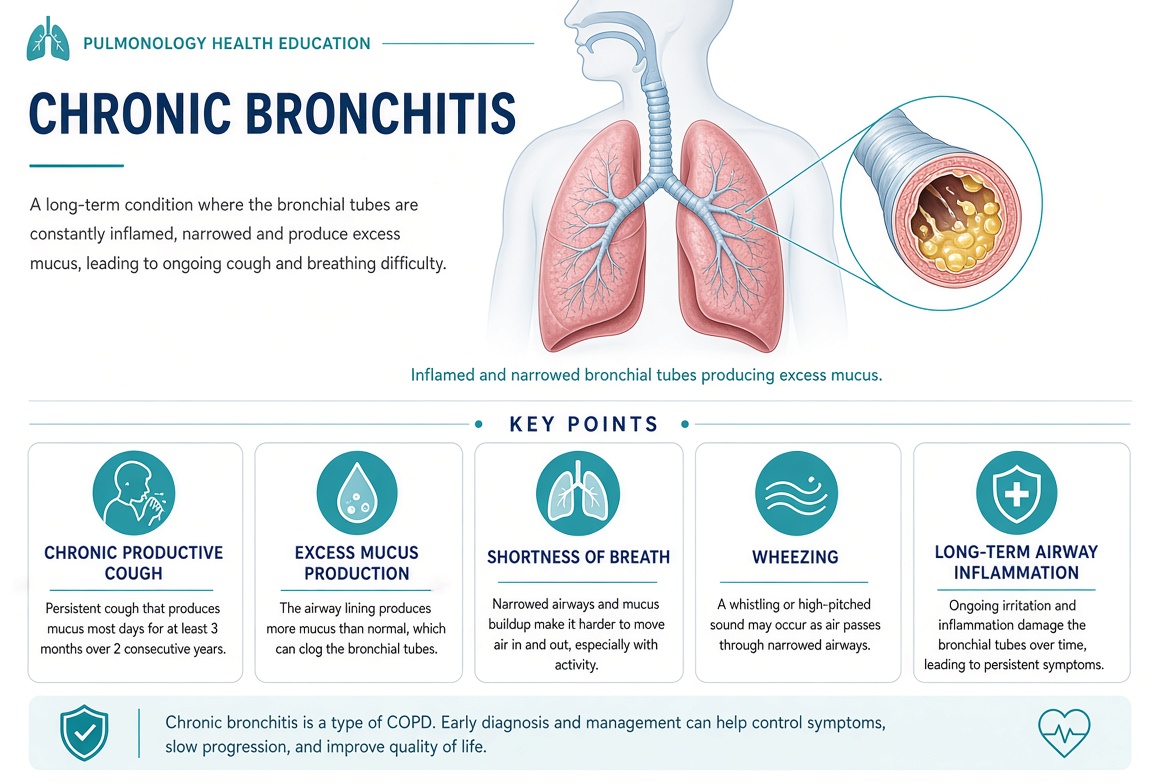
Chronic bronchitis is a long-term lung condition in which the lining of the bronchial tubes becomes persistently inflamed and produces excessive mucus. It is one of the conditions included under chronic obstructive pulmonary disease (COPD), a group of lung diseases that cause persistent airflow limitation and breathing difficulties.
Chronic bronchitis is traditionally defined as a productive cough that occurs on most days for at least three months in each of two consecutive years, after other causes of chronic cough have been excluded. It is most commonly associated with long-term exposure to cigarette smoke, although secondhand smoke, air pollution, occupational dust, and chemical fumes can also contribute.
The condition can gradually worsen over time and may cause persistent coughing, mucus production, wheezing, chest discomfort, and shortness of breath. Symptoms may become worse during flare-ups, often triggered by respiratory infections or exposure to irritants.
Key Features of Chronic Bronchitis
- Long-term inflammation of the bronchial tubes.
- Excessive mucus production.
- Persistent productive cough.
- Shortness of breath, particularly with physical activity.
- Wheezing or noisy breathing.
- Periodic worsening of symptoms known as exacerbations or flare-ups.
- Gradual reduction in airflow in people with COPD.
Chronic Bronchitis vs Acute Bronchitis
Acute bronchitis is usually a short-term illness that follows a respiratory infection. Chronic bronchitis is a long-term condition characterized by persistent productive cough and is commonly associated with COPD and prolonged exposure to airway irritants.
Smoking Is a Major Cause
Long-term cigarette smoking is the most important risk factor for chronic bronchitis. Avoiding tobacco smoke and quitting smoking can slow disease progression and help protect remaining lung function.
Breathing Symptoms Should Not Be Ignored
Severe or rapidly worsening shortness of breath, blue lips or fingertips, confusion, severe chest pain, or difficulty speaking because of breathlessness requires immediate medical attention.
Management and Outlook
Chronic bronchitis cannot always be reversed, but appropriate treatment can reduce symptoms, improve quality of life, decrease flare-ups, and slow the progression of COPD. Stopping smoking, avoiding respiratory irritants, staying up to date with recommended vaccinations, taking prescribed inhaled medicines, and maintaining physical activity can all play an important role in long-term management.
If you have a persistent cough with mucus, frequent respiratory infections, wheezing, or increasing shortness of breath, consult a healthcare professional. Early evaluation can help identify chronic bronchitis and other lung conditions and allow appropriate treatment to begin.
Symptoms
The main symptoms of chronic bronchitis are a persistent cough and increased mucus production. Symptoms develop gradually and may become more noticeable over time. Chronic bronchitis is commonly associated with COPD, so some people also experience progressive shortness of breath and reduced exercise tolerance.
Symptoms may remain relatively stable for periods of time but can suddenly become worse during exacerbations, often because of respiratory infections or exposure to cigarette smoke, air pollution, or other airway irritants.
Common Symptoms of Chronic Bronchitis
| Symptom | Description |
|---|---|
| Persistent Cough | A long-lasting cough is the hallmark symptom of chronic bronchitis. It often occurs daily and may be worse in the morning. |
| Excess Mucus Production | The cough commonly produces mucus or phlegm. The amount may increase during respiratory infections or flare-ups. |
| Shortness of Breath | Breathing difficulty may initially occur during exercise and can become more noticeable with everyday activities as airflow limitation progresses. |
| Wheezing | Narrowed or inflamed airways can produce a whistling or squeaking sound when breathing. |
| Chest Tightness | Some people experience a feeling of pressure, tightness, or discomfort in the chest, particularly during periods of worsening symptoms. |
| Fatigue | Persistent coughing and increased effort required for breathing can contribute to tiredness and reduced energy. |
| Frequent Respiratory Infections | People with chronic bronchitis may experience repeated chest infections, which can cause temporary worsening of cough, mucus, and breathing problems. |
| Reduced Exercise Tolerance | Shortness of breath and reduced lung function may make activities such as walking, climbing stairs, or exercising increasingly difficult. |
| Morning Cough | Mucus can accumulate overnight, causing more prominent coughing and phlegm production after waking. |
| Blue or Gray Lips or Fingertips | In advanced or severe disease, low blood oxygen can cause a bluish or grayish color of the lips or fingertips and requires medical assessment. |
Symptoms During a Chronic Bronchitis Flare-Up
A flare-up, also called an exacerbation, occurs when respiratory symptoms suddenly become worse than usual. Common signs include:
- Increased coughing.
- More mucus than usual.
- Changes in mucus thickness or color.
- Worsening shortness of breath.
- Increased wheezing.
- Chest tightness.
- Reduced ability to perform normal activities.
- Fever or other symptoms of a respiratory infection.
Symptoms Can Progress Gradually
Chronic bronchitis often develops slowly. Some people may adapt to gradually increasing breathlessness and not realize that their lung function has changed. Persistent cough, mucus production, or reduced exercise ability should be evaluated rather than dismissed as a normal part of aging or smoking.
Watch for Changes During a Flare-Up
A sudden increase in coughing, mucus production, wheezing, or shortness of breath may indicate an exacerbation of COPD and may require prompt medical assessment.
Seek Emergency Care for Severe Breathing Problems
- Severe or rapidly worsening shortness of breath.
- Blue or gray lips, face, or fingertips.
- Confusion, extreme drowsiness, or fainting.
- Severe chest pain.
- Inability to speak normally because of breathlessness.
- Sudden severe worsening despite prescribed treatment.
If you have a persistent cough with mucus for several months, frequent chest infections, wheezing, or increasing shortness of breath, consult a healthcare professional. Early assessment can help identify chronic bronchitis, COPD, or another underlying lung condition and guide appropriate treatment.
Causes
Chronic bronchitis develops when the bronchial tubes remain irritated and inflamed over a long period of time. This causes the airway lining to become swollen and produce excessive mucus, leading to a persistent productive cough and, in many people, ongoing airflow limitation.
The most common cause is long-term cigarette smoking. However, secondhand smoke, air pollution, workplace dust, chemical fumes, and other respiratory irritants can also contribute. Learn more about how smoking damages the lungs and why quitting is one of the most important steps for protecting long-term lung health.
Common Causes of Chronic Bronchitis
| Cause | Description |
|---|---|
| Long-Term Cigarette Smoking | Smoking is the most important cause of chronic bronchitis. Tobacco smoke repeatedly irritates the airways, increases mucus production, and damages lung tissue over time. |
| Secondhand Smoke | Long-term exposure to tobacco smoke from other people can irritate the bronchial tubes and contribute to chronic respiratory disease. |
| Air Pollution | Long-term exposure to polluted air, particulate matter, and other environmental pollutants can cause chronic airway irritation and inflammation. |
| Workplace Dust | Repeated exposure to dust from coal, minerals, grains, textiles, construction materials, and other substances can damage and irritate the airways. |
| Chemical Fumes and Vapors | Long-term exposure to industrial chemicals, solvents, fumes, and vapors can contribute to chronic inflammation of the bronchial tubes. |
| Indoor Air Pollution | Long-term exposure to smoke and fumes from cooking or heating fuels, particularly in poorly ventilated spaces, can contribute to chronic respiratory irritation. |
| Repeated Respiratory Irritation | Repeated exposure to smoke, dust, fumes, and other irritants can maintain inflammation and increase mucus production in the airways. |
| Genetic Susceptibility | Some people are more susceptible to chronic lung damage because of inherited factors. Rare conditions such as alpha-1 antitrypsin deficiency can increase the risk of COPD and emphysema. |
How Chronic Bronchitis Develops
- Repeated exposure to smoke, pollutants, or other airway irritants damages the bronchial lining.
- The airways become chronically inflamed and swollen.
- Mucus-producing cells and glands may become enlarged and produce excessive mucus.
- The airways can become narrower, making it harder for air to move through the lungs.
- Over time, persistent airway inflammation may contribute to airflow limitation and COPD.
Smoking Is the Leading Cause
Long-term cigarette smoking is the most important preventable cause of chronic bronchitis. Learn how smoking damages the lungs and why quitting smoking is one of the most effective steps for slowing further lung damage and protecting respiratory health.
Occupational Exposure Can Matter
People who regularly work around dust, chemical fumes, smoke, or industrial pollutants may have an increased risk. Appropriate workplace ventilation and protective equipment can help reduce exposure.
Reducing Irritant Exposure Can Help
Avoiding tobacco smoke, improving indoor ventilation, reducing exposure to air pollution, and using appropriate protection around occupational dust and chemicals can help protect the airways.
If you have a long-term cough with mucus, wheezing, or increasing shortness of breath, especially if you smoke or have occupational exposure to respiratory irritants, consult a healthcare professional. Lung function testing may be needed to determine whether chronic bronchitis or COPD is present.
Risk Factors
Several factors can increase the risk of developing chronic bronchitis and other forms of chronic obstructive pulmonary disease (COPD). The most important risk factor is long-term exposure to tobacco smoke, but environmental pollution, workplace exposures, age, genetics, and existing respiratory conditions can also contribute.
Having one or more risk factors does not mean that you will develop chronic bronchitis. However, reducing avoidable exposures and managing existing health conditions can help protect lung function.
Common Risk Factors for Chronic Bronchitis
| Risk Factor | How It Increases Risk |
|---|---|
| Cigarette Smoking | Long-term smoking repeatedly irritates the airways, increases mucus production, and damages lung tissue. It is the most important risk factor for chronic bronchitis and COPD. Learn more about the effects of smoking on the lungs. |
| Secondhand Smoke | Long-term exposure to tobacco smoke from other people can contribute to airway inflammation and chronic respiratory disease. |
| Air Pollution | Long-term exposure to outdoor air pollution and fine particles can irritate the airways and contribute to chronic lung damage. |
| Workplace Dust and Fumes | Repeated exposure to dust, chemical fumes, vapors, smoke, and industrial pollutants can increase the risk of chronic bronchial inflammation. |
| Indoor Air Pollution | Long-term exposure to smoke and fumes from cooking or heating fuels, especially in poorly ventilated environments, can damage the respiratory system. |
| Age | The risk of chronic bronchitis and COPD generally increases with age because of cumulative exposure to tobacco smoke and other environmental factors. |
| History of Respiratory Infections | Repeated or severe respiratory infections, particularly earlier in life, may contribute to reduced lung health and increase susceptibility to chronic respiratory problems. |
| Asthma | People with long-standing or poorly controlled asthma may have an increased risk of persistent airflow limitation and chronic respiratory symptoms. |
| Family History and Genetics | Genetic factors can influence susceptibility to COPD and chronic lung disease. Rare inherited conditions such as alpha-1 antitrypsin deficiency can significantly increase risk. |
| Low Socioeconomic and Environmental Conditions | Limited access to healthcare, poor housing conditions, occupational exposures, and greater exposure to indoor or outdoor pollutants can contribute to chronic respiratory disease risk. |
People at Higher Risk
- Current or former long-term smokers.
- People regularly exposed to secondhand smoke.
- Workers exposed to dust, chemical fumes, vapors, or industrial pollutants.
- People living in areas with significant air pollution.
- Older adults with a history of smoking or occupational exposure.
- People with long-standing asthma or other chronic respiratory conditions.
- Individuals with a family history of COPD or certain inherited lung conditions.
- People exposed to indoor smoke from cooking or heating fuels in poorly ventilated environments.
Smoking Is the Most Important Preventable Risk Factor
Quitting smoking can slow the progression of chronic lung disease and reduce ongoing irritation and damage to the airways. It is beneficial even after many years of smoking.
Occupational Exposure Should Not Be Ignored
If your work involves regular exposure to dust, smoke, chemical fumes, or other respiratory irritants, use appropriate protective equipment and follow workplace safety and ventilation procedures.
Reducing Risk Can Protect Lung Function
Avoiding tobacco smoke, reducing exposure to pollutants, managing asthma and other respiratory conditions, and seeking medical evaluation for persistent breathing symptoms can help protect long-term lung health.
If you have a persistent cough with mucus, frequent chest infections, wheezing, or gradually increasing shortness of breath, particularly if you have one or more risk factors, speak with a healthcare professional. Lung function testing may help identify chronic bronchitis or COPD at an earlier stage.
Diagnosis
Chronic bronchitis is diagnosed using a combination of medical history, symptom assessment, physical examination, and lung function testing. Because chronic bronchitis is commonly associated with chronic obstructive pulmonary disease (COPD), doctors also evaluate whether there is persistent airflow limitation and whether another condition could be causing the symptoms.
A persistent cough with mucus is an important feature, but the diagnosis should not be based on cough alone. Your healthcare provider may ask about smoking, workplace exposures, air pollution, previous respiratory infections, medications, and how symptoms affect daily activities.
Tests Used to Diagnose Chronic Bronchitis
| Test or Examination | Purpose |
|---|---|
| Medical History | The healthcare provider asks about the duration and pattern of coughing, mucus production, breathing difficulty, smoking history, occupational exposures, respiratory infections, and other medical conditions. |
| Physical Examination | The provider listens to the lungs for wheezing, reduced breath sounds, crackles, or other abnormal sounds and checks breathing rate and overall health. |
| Spirometry | A key lung function test that measures how much air you can breathe out and how quickly you can exhale. It is commonly used to identify persistent airflow obstruction associated with COPD. |
| Chest X-ray | A chest X-ray does not diagnose chronic bronchitis by itself, but it can help rule out pneumonia, lung cancer, heart failure, and other conditions that may cause similar symptoms. |
| Chest CT Scan | A CT scan provides more detailed images of the lungs and may be used when another lung condition is suspected or when additional structural information is needed. |
| Pulse Oximetry | Measures blood oxygen saturation (SpO?) using a small sensor placed on the finger. It can help assess the severity of breathing problems. |
| Arterial Blood Gas (ABG) | Measures oxygen and carbon dioxide levels in the blood. It may be used in people with severe respiratory symptoms or advanced lung disease. |
| Complete Blood Count (CBC) | May help identify anemia, infection, or other conditions that could contribute to fatigue or breathing difficulties. |
| Sputum Testing | Mucus may occasionally be tested when there are frequent infections, unusual symptoms, or concern about a specific infection. |
| Alpha-1 Antitrypsin Testing | A blood test may be recommended in selected patients, particularly those who develop COPD at a younger age or have a strong family history, to look for inherited alpha-1 antitrypsin deficiency. |
Why Spirometry Is Important
Spirometry is particularly important when chronic bronchitis occurs as part of COPD. The test measures airflow and helps determine whether there is persistent airway obstruction. Your healthcare provider may repeat lung function testing over time to monitor changes and response to treatment.
Conditions Doctors May Need to Rule Out
- Asthma: Can cause coughing, wheezing, and shortness of breath that may resemble chronic bronchitis.
- Pneumonia: May cause cough, mucus, fever, chest pain, and breathing difficulty.
- Lung Cancer: A persistent or changing cough, particularly in smokers, may require evaluation for lung cancer.
- Heart Failure: Can cause breathlessness and coughing, particularly when lying down or during physical activity.
- Bronchiectasis: A chronic lung condition that can cause persistent cough and large amounts of mucus.
- Tuberculosis: May need consideration when there is a prolonged cough, weight loss, fever, night sweats, or relevant exposure.
Spirometry Helps Identify COPD
A persistent productive cough may suggest chronic bronchitis, but spirometry is important for determining whether persistent airflow obstruction consistent with COPD is present.
A Chest X-Ray May Help Exclude Other Diseases
Chest imaging is not usually sufficient to diagnose chronic bronchitis itself. However, it can help doctors look for pneumonia, lung cancer, heart-related problems, or other conditions that can cause similar symptoms.
Seek Prompt Evaluation for Worsening Breathing
Severe or rapidly worsening shortness of breath, blue or gray lips or fingertips, confusion, fainting, or severe chest pain requires urgent medical attention.
If you have a long-lasting cough with mucus, wheezing, frequent chest infections, or gradually worsening shortness of breath, consult a healthcare professional. Early diagnosis and appropriate management can help control symptoms, reduce exacerbations, and protect lung function.
Treatment
Treatment for chronic bronchitis focuses on reducing symptoms, improving breathing and daily activity, preventing flare-ups, and slowing the progression of chronic lung disease. Because chronic bronchitis is commonly associated with chronic obstructive pulmonary disease (COPD), treatment is individualized according to lung function, symptom severity, exacerbation history, and overall health.
There is no single treatment that reverses chronic bronchitis, but stopping smoking, avoiding airway irritants, using prescribed inhaled medicines, staying active, and receiving appropriate vaccinations can significantly improve respiratory health and quality of life.
Common Treatment Options for Chronic Bronchitis
| Treatment | Purpose |
|---|---|
| Smoking Cessation | Stopping smoking is the most important step for people who smoke. It reduces ongoing airway damage, slows lung function decline, and lowers the risk of COPD exacerbations. Learn more about smoking and lung health. |
| Bronchodilator Inhalers | These medicines relax the muscles around the airways, helping them stay open and making breathing easier. Short-acting or long-acting bronchodilators may be prescribed depending on symptoms. |
| Inhaled Corticosteroids | These medicines reduce airway inflammation and may be recommended for selected people with COPD, particularly those who experience frequent exacerbations. They are not appropriate for everyone. |
| Combination Inhalers | Some inhalers combine bronchodilators with other medicines, such as inhaled corticosteroids, to provide more effective control for certain patients. |
| Pulmonary Rehabilitation | A structured program combining exercise training, breathing techniques, education, and support to improve exercise capacity, reduce breathlessness, and improve quality of life. |
| Oxygen Therapy | Long-term supplemental oxygen may be prescribed for people with chronic, significantly low blood oxygen levels. It should only be used according to medical advice. |
| Vaccinations | Recommended vaccinations, including influenza, COVID-19, pneumococcal, and other age- or risk-appropriate vaccines, can help reduce respiratory infections and complications. |
| Airway Clearance Techniques | Breathing exercises and other airway-clearance techniques may help some people manage excessive mucus and improve the ability to clear secretions. Learn about breathing exercises that may support lung health. |
| Treatment of Exacerbations | Sudden worsening of symptoms may require additional treatment. Depending on the cause and severity, this can include intensified inhaled medicines, corticosteroids, antibiotics when a bacterial infection is suspected, or hospital care. |
| Management of Other Health Conditions | Treating conditions such as asthma, heart disease, sleep disorders, anxiety, or nutritional problems can improve overall health and respiratory function. |
Lifestyle Measures
- Stop smoking and avoid secondhand smoke.
- Stay physically active according to your healthcare provider's recommendations.
- Attend pulmonary rehabilitation if it is recommended.
- Avoid dust, chemical fumes, air pollution, and other respiratory irritants whenever possible.
- Take prescribed inhalers exactly as directed.
- Learn and practice proper inhaler technique.
- Maintain a healthy and balanced diet.
- Stay up to date with recommended vaccinations.
- Wash your hands regularly and avoid close contact with people who have respiratory infections.
Quitting Smoking Is the Most Important Step
For people who smoke, quitting is the most effective way to reduce continued lung damage and slow the progression of COPD. Benefits can occur at any stage of the disease.
Use Inhalers Correctly
Inhaled medicines work best when they are used with the correct technique. Ask your healthcare professional to demonstrate the correct technique and check it regularly, especially if symptoms remain poorly controlled.
COPD Flare-Ups May Require Urgent Treatment
Sudden or severe worsening of breathlessness, inability to perform normal activities, blue or gray lips, confusion, severe chest pain, or failure of prescribed rescue treatment requires urgent medical assessment.
Managing Chronic Bronchitis Long Term
Chronic bronchitis requires ongoing management rather than a short course of treatment. Regular follow-up allows your healthcare provider to monitor symptoms, lung function, medication effectiveness, and exacerbation risk. Treatment may be adjusted as your condition changes.
A personalized management plan may include inhaled medicines, pulmonary rehabilitation, vaccination, smoking cessation support, physical activity, and strategies for recognizing and treating flare-ups early.
With appropriate treatment and lifestyle changes, many people with chronic bronchitis can reduce symptoms, remain active, and improve their quality of life. If breathing symptoms suddenly become much worse, seek medical attention promptly.
Need Expert Medical Guidance?
Schedule a direct consultation with Dr. Nabila Zaheer for a personalized care plan.
Prevention
Chronic bronchitis is often associated with long-term exposure to tobacco smoke and other substances that irritate the airways. Although not every case can be prevented, avoiding these exposures, protecting the lungs, preventing respiratory infections, and managing existing lung conditions can significantly reduce the risk of chronic bronchitis and slow the progression of chronic obstructive pulmonary disease (COPD).
Ways to Help Prevent Chronic Bronchitis
| Prevention Strategy | How It Helps |
|---|---|
| Do Not Smoke | Avoiding cigarettes and other tobacco products is the most effective way to reduce the risk of chronic bronchitis and COPD. |
| Quit Smoking | For people who already smoke, quitting stops continued exposure to tobacco smoke and can slow the decline in lung function. |
| Avoid Secondhand Smoke | Reducing exposure to smoke from other people helps protect the bronchial tubes from chronic irritation and inflammation. |
| Protect Yourself at Work | Use appropriate protective equipment and follow workplace safety procedures when exposed to dust, chemical fumes, vapors, smoke, or other respiratory irritants. |
| Reduce Air Pollution Exposure | Limiting exposure to heavy outdoor pollution, smoke, and fine particles can reduce chronic airway irritation. |
| Improve Indoor Air Quality | Good ventilation and reducing indoor smoke and fumes can help protect the lungs, particularly in homes where solid fuels are used for cooking or heating. |
| Stay Up to Date With Vaccinations | Recommended vaccines, including influenza, COVID-19, and pneumococcal vaccination when appropriate, can help prevent respiratory infections that may worsen chronic lung disease. |
| Prevent Respiratory Infections | Regular handwashing, avoiding close contact with sick people, and practicing good respiratory hygiene can reduce exposure to infections that may trigger flare-ups. |
| Maintain Regular Physical Activity | Appropriate physical activity helps maintain fitness and can support better exercise tolerance and respiratory health. |
| Manage Existing Lung Conditions | Proper management of asthma, COPD, and other respiratory conditions can reduce symptoms and help prevent exacerbations. |
Protect Your Lungs Every Day
- Never start smoking, and seek support to quit if you currently smoke.
- Avoid secondhand smoke whenever possible.
- Use appropriate respiratory protection when working around dust or chemical fumes.
- Keep indoor spaces well ventilated.
- Reduce exposure to heavy air pollution and outdoor smoke.
- Follow your prescribed treatment plan if you have asthma or COPD.
- Stay up to date with recommended vaccinations.
- Wash your hands regularly and avoid close contact with people who are sick.
- Maintain regular physical activity appropriate for your health.
- Attend routine medical appointments when you have chronic respiratory symptoms.
Smoking Cessation Is the Most Important Prevention Step
If you smoke, quitting is the single most important action you can take to protect your lungs. Learn more about smoking and its effects on the lungs. Smoking cessation can reduce ongoing airway irritation and slow the progression of chronic lung disease.
Protect Yourself From Workplace Exposures
If your job involves dust, smoke, chemical fumes, or industrial pollutants, follow workplace safety measures and use recommended protective equipment to reduce inhalation of harmful substances.
Healthy Habits Support Long-Term Lung Health
Avoiding tobacco smoke, staying active, preventing respiratory infections, maintaining good indoor air quality, and following recommended medical care can help protect lung function and reduce respiratory complications.
Chronic bronchitis is not always completely preventable, but reducing exposure to tobacco smoke and other airway irritants can make a significant difference. If you develop a persistent cough with mucus, wheezing, or increasing shortness of breath, seek medical evaluation rather than assuming the symptoms are simply due to smoking or aging.
Complications
Chronic bronchitis can become a long-term respiratory problem, particularly when it occurs as part of chronic obstructive pulmonary disease (COPD). Persistent airway inflammation and mucus production can contribute to airflow limitation and make breathing increasingly difficult over time.
The risk of complications is higher in people who continue to smoke, have severe COPD, experience frequent flare-ups, or have other chronic health conditions. Early diagnosis, appropriate treatment, and smoking cessation can help reduce these risks.
Possible Complications of Chronic Bronchitis
| Complication | Description |
|---|---|
| COPD Progression | Persistent airway inflammation can contribute to progressive airflow limitation, worsening breathlessness, and reduced ability to perform daily activities. |
| Frequent Exacerbations | People with chronic bronchitis may experience repeated flare-ups in which coughing, mucus production, wheezing, and shortness of breath suddenly become worse. |
| Respiratory Infections | Chronic airway disease can increase susceptibility to respiratory infections, including bronchitis and pneumonia. |
| Pneumonia | People with chronic lung disease may have a higher risk of developing pneumonia, which can cause serious breathing problems and may require hospitalization. |
| Low Blood Oxygen Levels | Advanced COPD and severe airflow limitation can interfere with oxygen exchange, resulting in chronically low blood oxygen levels. |
| High Carbon Dioxide Levels | Severe airflow limitation can make it difficult to remove carbon dioxide from the body, potentially causing elevated blood carbon dioxide levels. |
| Respiratory Failure | Advanced chronic lung disease can severely impair breathing and oxygen exchange, occasionally resulting in respiratory failure. |
| Pulmonary Hypertension | Long-term low oxygen levels and changes in the pulmonary blood vessels can increase pressure in the arteries supplying the lungs. |
| Cor Pulmonale | Severe, long-standing pulmonary hypertension caused by chronic lung disease can place excessive strain on the right side of the heart and eventually lead to right-sided heart failure. |
| Reduced Physical Activity | Increasing breathlessness may cause people to avoid physical activity, which can lead to loss of muscle strength and further reduction in exercise capacity. |
| Weight Loss and Muscle Weakness | Advanced COPD can increase the energy required for breathing and may contribute to reduced appetite, weight loss, and muscle weakness. |
| Anxiety and Depression | Persistent breathlessness, activity limitations, and concerns about flare-ups can negatively affect emotional well-being and quality of life. |
| Hospitalization | Severe exacerbations, pneumonia, respiratory failure, or other complications may require emergency treatment or hospitalization. |
Warning Signs of Complications
- Shortness of breath that is significantly worse than usual.
- A sudden increase in coughing or mucus production.
- New or worsening wheezing.
- Fever or symptoms suggesting a respiratory infection.
- Reduced ability to perform normal daily activities.
- Blue or gray lips or fingertips.
- Confusion, unusual drowsiness, or extreme weakness.
- Chest pain or a rapid worsening of breathing symptoms.
Exacerbations Can Cause Significant Problems
Repeated COPD flare-ups can accelerate the decline in lung function and may require emergency treatment or hospitalization. Recognizing worsening symptoms early and following an individualized action plan can help reduce their impact.
Smoking Increases the Risk of Progression
Continuing to smoke can accelerate lung damage and increase the risk of exacerbations and other complications. Quitting smoking remains one of the most effective ways to protect remaining lung function.
Seek Emergency Medical Care If You:
- Have severe or rapidly worsening difficulty breathing.
- Cannot speak normally because of breathlessness.
- Develop blue or gray lips, face, or fingertips.
- Become confused, extremely drowsy, or lose consciousness.
- Experience severe or persistent chest pain.
- Have severe symptoms that do not improve with your prescribed rescue treatment.
Complications Can Often Be Reduced
Stopping smoking, taking prescribed medicines correctly, attending follow-up appointments, staying physically active, receiving recommended vaccinations, and recognizing exacerbations early can help reduce complications and improve quality of life.
If you notice a significant change in your usual breathing, cough, mucus production, or exercise ability, contact your healthcare professional. Early treatment of exacerbations and infections can help prevent more serious complications.
When to See a Doctor
Chronic bronchitis requires ongoing medical care, particularly when it is associated with chronic obstructive pulmonary disease (COPD). You should arrange a medical evaluation if you have a persistent cough with mucus, recurring chest infections, wheezing, or gradually increasing shortness of breath.
Regular follow-up is important even when symptoms are stable. Your healthcare provider can monitor lung function, review your inhaler technique and medications, and help identify early signs of an exacerbation.
Make a Medical Appointment If You:
- Have a cough with mucus that persists for several months.
- Experience shortness of breath during activities that previously felt comfortable.
- Develop persistent or recurrent wheezing.
- Have frequent chest infections or episodes of bronchitis.
- Notice that you are producing more mucus than usual.
- Notice a change in the amount, thickness, or appearance of your mucus.
- Become increasingly tired or have reduced ability to perform daily activities.
- Have a history of smoking and develop a persistent cough or breathing difficulty.
- Work around dust, chemical fumes, smoke, or other respiratory irritants and develop ongoing respiratory symptoms.
Contact Your Doctor Promptly If You Have a Flare-Up
A flare-up (exacerbation) occurs when your usual respiratory symptoms become significantly worse. Contact your healthcare provider promptly if you notice:
- Suddenly increased shortness of breath.
- A significant increase in coughing.
- More mucus than usual.
- A noticeable change in mucus color or consistency.
- Increased wheezing or chest tightness.
- Difficulty carrying out your normal daily activities.
- Fever or other signs of infection.
- Your prescribed rescue inhaler is not providing your usual relief.
Seek Emergency Medical Care Immediately If You:
- Have severe or rapidly worsening difficulty breathing.
- Cannot speak in complete sentences because of breathlessness.
- Develop blue or gray lips, face, or fingertips.
- Experience severe or persistent chest pain.
- Become confused, unusually drowsy, or lose consciousness.
- Have severe breathing problems that do not improve with your prescribed emergency treatment.
- Faint or feel as though you may lose consciousness because of breathing difficulty.
Do Not Ignore Gradual Breathing Changes
Shortness of breath that slowly becomes worse can be easy to overlook. If activities such as walking, climbing stairs, or performing household tasks are becoming increasingly difficult, speak with a healthcare professional. Lung function testing can help determine whether COPD or another respiratory condition is contributing to the symptoms.
Regular Follow-Up Helps Protect Lung Health
Routine medical appointments allow your healthcare provider to monitor symptoms, lung function, medication effectiveness, vaccination status, and exacerbation risk. Treatment can be adjusted when your condition changes.
If you have chronic bronchitis or COPD, keep a record of your usual breathing symptoms and know the warning signs of a flare-up. Seek medical advice early when symptoms change rather than waiting until breathing becomes severely difficult.