Overview
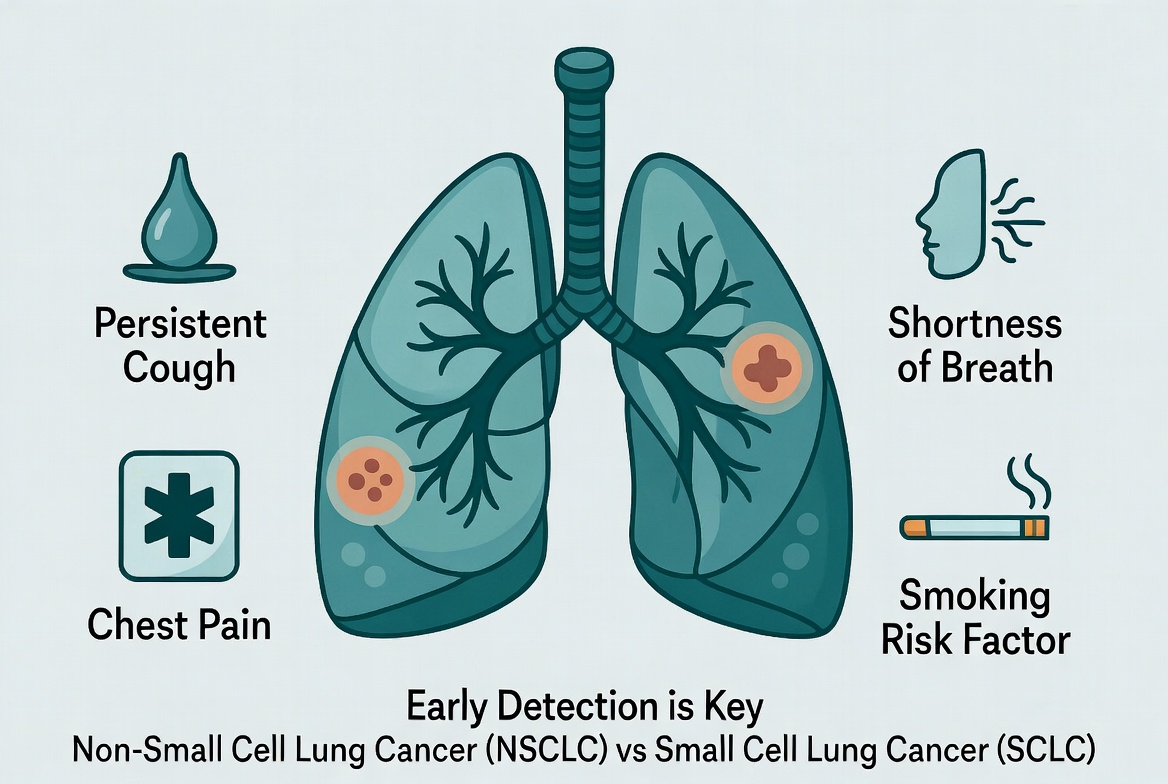
Lung cancer is a disease in which abnormal cells in the lungs grow uncontrollably and form a tumor. Over time, these cancer cells can invade nearby tissues or spread (metastasize) to other parts of the body. Lung cancer is one of the leading causes of cancer-related deaths worldwide, but early detection and advances in treatment have significantly improved outcomes for many patients.
The lungs are responsible for supplying oxygen to the body and removing carbon dioxide. When cancer develops in the lungs, it can interfere with normal breathing and may cause symptoms such as a persistent cough, chest pain, coughing up blood, or shortness of breath.
Smoking is the leading risk factor for lung cancer, but the disease can also occur in people who have never smoked. Exposure to secondhand smoke, radon gas, air pollution, occupational chemicals, and certain genetic factors can also increase the risk.
Types of Lung Cancer
| Type | Description |
|---|---|
| Non-Small Cell Lung Cancer (NSCLC) | The most common type, accounting for about 85% of lung cancer cases. It usually grows more slowly than small cell lung cancer. |
| Small Cell Lung Cancer (SCLC) | A less common but more aggressive type that tends to grow and spread rapidly. It is strongly associated with cigarette smoking. |
Common Symptoms
Many people do not experience symptoms during the early stages of lung cancer. As the disease progresses, symptoms may include:
- A persistent cough that does not improve.
- Coughing up blood or blood-stained mucus.
- Chest pain that worsens with deep breathing or coughing.
- Shortness of breath.
- Persistent hoarseness.
- Unexplained weight loss.
- Loss of appetite.
- Fatigue.
- Repeated chest infections such as pneumonia or bronchitis.
Early Detection Can Save Lives
Lung cancer is often easier to treat when detected at an early stage. People at high risk, particularly long-term smokers, should discuss lung cancer screening with their healthcare provider.
Did You Know?
Although smoking is the leading cause of lung cancer, people who have never smoked can also develop the disease. Environmental exposures, family history, and certain genetic changes may also play a role.
If you have a persistent cough, cough up blood, experience unexplained weight loss, or notice ongoing breathing problems, seek medical evaluation promptly. Early diagnosis offers the best opportunity for effective treatment.
Symptoms
Lung cancer may not cause noticeable symptoms during its early stages. As the tumor grows or spreads, it can affect breathing, irritate the airways, or involve nearby tissues and organs. The symptoms vary depending on the size and location of the tumor and whether the cancer has spread beyond the lungs.
Many of these symptoms can also be caused by less serious lung conditions such as bronchitis, pneumonia, or chronic obstructive pulmonary disease (COPD). However, persistent or unexplained symptoms should always be evaluated by a healthcare provider.
Common Symptoms of Lung Cancer
| Symptom | Description |
|---|---|
| Persistent Cough | A cough that lasts for several weeks or a chronic cough that becomes worse over time. |
| Coughing Up Blood | Blood or blood-stained mucus (hemoptysis) should always be evaluated promptly. |
| Shortness of Breath | Difficulty breathing during normal daily activities or exercise due to airway obstruction or reduced lung function. |
| Chest Pain | Pain or discomfort in the chest that may worsen with deep breathing, coughing, or laughing. |
| Hoarseness | Persistent changes in the voice caused by involvement of nerves controlling the vocal cords. |
| Unexplained Weight Loss | Weight loss without changes in diet or physical activity may be an early warning sign. |
| Loss of Appetite | A reduced desire to eat that may contribute to weight loss. |
| Fatigue | Persistent tiredness or weakness that does not improve with rest. |
| Recurring Chest Infections | Repeated episodes of pneumonia or bronchitis may occur if a tumor blocks part of the airway. |
| Wheezing | A whistling sound while breathing caused by narrowing or blockage of the airways. |
Symptoms of Advanced Lung Cancer
If lung cancer spreads beyond the lungs, additional symptoms may develop depending on the organs involved.
- Bone pain, especially in the back, ribs, or hips.
- Persistent headaches.
- Dizziness or balance problems.
- Swelling of the face or neck.
- Difficulty swallowing.
- Enlarged lymph nodes in the neck or above the collarbone.
- Neurological symptoms such as weakness or seizures if the cancer spreads to the brain.
Do Not Ignore Persistent Symptoms
Many people assume a persistent cough is caused by smoking or a lingering infection. However, any cough lasting more than three weeks, especially when accompanied by coughing up blood, chest pain, or unexplained weight loss, should be assessed by a healthcare professional.
Seek Immediate Medical Attention If You Experience:
- Coughing up large amounts of blood.
- Severe difficulty breathing.
- Sudden chest pain.
- Persistent coughing with worsening shortness of breath.
- New confusion, severe headaches, or seizures.
Early Lung Cancer May Not Cause Symptoms
Some people with early-stage lung cancer feel completely well. Individuals at high risk, especially long-term smokers or former smokers, should discuss lung cancer screening with their healthcare provider even if they have no symptoms.
If you notice any persistent respiratory symptoms or unexplained changes in your health, arrange a medical evaluation promptly. Early diagnosis improves treatment options and can significantly increase the chances of successful treatment.
Causes
Lung cancer develops when cells in the lungs undergo genetic changes (mutations) that cause them to grow and divide uncontrollably. Over time, these abnormal cells can form a tumor, invade nearby tissues, and spread (metastasize) to other parts of the body.
Although the exact cause of these genetic changes is not always known, several factors can damage the DNA of lung cells and increase the likelihood of cancer developing. Smoking remains the leading cause, but lung cancer can also occur in people who have never smoked.
Common Causes of Lung Cancer
| Cause | Explanation |
|---|---|
| Tobacco Smoking | Cigarette smoking is the leading cause of lung cancer. Harmful chemicals in tobacco smoke damage lung cells over time and greatly increase cancer risk. |
| Secondhand Smoke | Regular exposure to smoke from other people's cigarettes, cigars, or pipes can also increase the risk of lung cancer. |
| Radon Gas | Radon is a naturally occurring radioactive gas that can accumulate inside homes and buildings. Long-term exposure is one of the leading causes of lung cancer among people who have never smoked. |
| Air Pollution | Long-term exposure to polluted outdoor air may contribute to the development of lung cancer, particularly in urban or industrial areas. |
| Occupational Exposure | Exposure to substances such as asbestos, silica, diesel exhaust, arsenic, chromium, nickel, and certain industrial chemicals may increase the risk of lung cancer. |
| Previous Radiation Therapy | People who have received radiation treatment to the chest for another medical condition may have a higher risk of developing lung cancer later in life. |
| Genetic Changes | Some lung cancers develop because of inherited or acquired genetic mutations, even in people who have never smoked. |
How Smoking Causes Lung Cancer
Tobacco smoke contains thousands of chemicals, including many known carcinogens (cancer-causing substances). Repeated exposure damages the DNA inside lung cells, allowing abnormal cells to multiply uncontrollably over time.
The risk of lung cancer increases with:
- The number of cigarettes smoked each day.
- The number of years a person has smoked.
- Exposure to secondhand smoke.
- Using other tobacco products.
Can Non-Smokers Get Lung Cancer?
Yes. Although smoking is the leading cause, lung cancer can also occur in people who have never smoked. Radon exposure, air pollution, occupational hazards, family history, and certain genetic mutations are among the factors that may contribute.
Most Cases Are Preventable
Many cases of lung cancer can be prevented by avoiding tobacco smoke, reducing exposure to harmful environmental and workplace substances, testing homes for radon where appropriate, and maintaining regular medical check-ups if you are at increased risk.
Understanding the causes of lung cancer can help you make informed lifestyle choices and recognize situations where screening or medical evaluation may be beneficial. If you have concerns about your personal risk, discuss them with your healthcare provider.
Risk Factors
Several factors can increase the likelihood of developing lung cancer. Having one or more risk factors does not mean you will definitely develop the disease, but it may increase your overall risk. Some risk factors, such as smoking, can be modified, while others, including age and family history, cannot.
Understanding your personal risk factors can help you make informed lifestyle choices and determine whether lung cancer screening may be appropriate.
Common Risk Factors for Lung Cancer
| Risk Factor | Why It Increases Risk |
|---|---|
| Cigarette Smoking | The most significant risk factor. The risk increases with the number of cigarettes smoked and the number of years spent smoking. |
| Secondhand Smoke | Regular exposure to tobacco smoke from others also increases the risk of lung cancer. |
| Increasing Age | Most cases are diagnosed in adults over 50 years of age, although younger people can also develop lung cancer. |
| Family History of Lung Cancer | Having a close family member with lung cancer may slightly increase your risk due to inherited genetic factors and shared environmental exposures. |
| Radon Exposure | Long-term exposure to radon gas inside homes or buildings is one of the leading risk factors among people who have never smoked. |
| Occupational Exposure | Working with asbestos, silica, diesel exhaust, arsenic, chromium, nickel, or other industrial chemicals increases risk, particularly without appropriate protective measures. |
| Air Pollution | Long-term exposure to polluted air may contribute to the development of lung cancer. |
| Previous Chest Radiation | Radiation therapy to the chest for another medical condition may increase the likelihood of developing lung cancer later in life. |
| Chronic Lung Disease | Conditions such as COPD, pulmonary fibrosis, or previous tuberculosis can increase lung cancer risk. |
| Genetic Factors | Certain inherited or acquired genetic mutations can increase susceptibility, even in people who have never smoked. |
Who Is at Higher Risk?
The following individuals are generally considered to have a higher risk of lung cancer:
- Current smokers.
- Former smokers, especially those with a long smoking history.
- People exposed to secondhand smoke.
- Adults aged 50 years or older.
- People with a family history of lung cancer.
- Individuals exposed to radon gas or workplace carcinogens.
- People with chronic lung diseases such as COPD or pulmonary fibrosis.
- Individuals who previously received radiation therapy to the chest.
Smoking Is the Largest Risk Factor
Smoking causes the majority of lung cancer cases. Quitting smoking at any age lowers your risk, and the benefits begin almost immediately. Former smokers continue to have a higher risk than people who have never smoked, but their risk decreases over time after quitting.
Lung Cancer Can Affect Non-Smokers
Not everyone diagnosed with lung cancer has smoked. Environmental exposures, genetic changes, radon gas, and occupational hazards can all contribute to lung cancer in people who have never used tobacco.
Reducing Your Risk
- Do not smoke or vape.
- If you smoke, seek support to quit.
- Avoid secondhand smoke whenever possible.
- Test your home for radon if recommended in your area.
- Use appropriate protective equipment when working with hazardous substances.
- Maintain regular medical check-ups if you are at increased risk.
- Discuss lung cancer screening with your healthcare provider if you have a significant smoking history.
Knowing your risk factors can help you and your healthcare provider decide whether lifestyle changes, regular monitoring, or lung cancer screening may be appropriate. Early detection offers the best chance for successful treatment.
Diagnosis
Diagnosing lung cancer involves a combination of your medical history, physical examination, imaging tests, laboratory investigations, and procedures to obtain a tissue sample (biopsy). While imaging tests can detect suspicious lung abnormalities, a biopsy is usually required to confirm whether cancer is present.
If lung cancer is diagnosed, additional tests are performed to determine the type of cancer and whether it has spread to other parts of the body. This process, known as staging, helps your healthcare team choose the most appropriate treatment plan.
Common Tests Used to Diagnose Lung Cancer
| Test | Purpose |
|---|---|
| Medical History and Physical Examination | Your healthcare provider will ask about symptoms, smoking history, occupational exposures, family history, and perform a physical examination. |
| Chest X-ray | Often the first imaging test performed to detect abnormal masses, nodules, or other lung abnormalities. |
| CT (Computed Tomography) Scan | Provides detailed images of the lungs and chest to identify suspicious nodules, enlarged lymph nodes, or signs of cancer spread. |
| PET Scan | Helps determine whether cancer has spread to lymph nodes or other organs by detecting areas of increased metabolic activity. |
| MRI Scan | May be recommended to determine whether lung cancer has spread to the brain or spinal cord. |
| Sputum Cytology | Examines mucus coughed up from the lungs for the presence of cancer cells in selected cases. |
| Bronchoscopy | A flexible tube with a camera is passed into the airways to examine the lungs and obtain tissue samples. |
| Needle Biopsy | A needle guided by CT or ultrasound is used to remove a small sample of tissue from a lung nodule or enlarged lymph node. |
| Surgical Biopsy | If other biopsy methods are inconclusive, surgery may be required to obtain a larger tissue sample. |
| Molecular (Biomarker) Testing | Tests the tumor for specific genetic changes that may help determine whether targeted therapies are appropriate. |
Staging Lung Cancer
Once lung cancer is confirmed, additional tests help determine its stage. Staging describes how large the tumor is, whether lymph nodes are involved, and whether the cancer has spread to other parts of the body.
- Early-stage: Cancer is confined to the lung or nearby lymph nodes and may be suitable for surgery.
- Locally advanced: Cancer has spread to nearby structures or lymph nodes.
- Advanced (Metastatic): Cancer has spread to distant organs such as the brain, liver, bones, or adrenal glands.
Biopsy Confirms the Diagnosis
Although imaging tests can strongly suggest lung cancer, a biopsy is usually needed to confirm the diagnosis and determine the exact type of cancer. The biopsy results also help guide treatment decisions.
Early Detection Improves Outcomes
Finding lung cancer before it spreads provides more treatment options and improves the chances of successful treatment. Individuals at high risk may benefit from discussing lung cancer screening with their healthcare provider.
Personalized Treatment Planning
Modern lung cancer care often includes biomarker testing and staging to help select the most effective treatment for each individual. Your healthcare team will explain your results and recommend a treatment plan based on the type and stage of your cancer.
If you have a persistent cough, cough up blood, experience unexplained weight loss, or have other concerning symptoms, seek medical evaluation promptly. Early diagnosis offers the greatest opportunity for successful treatment and improved quality of life.
Treatment
Treatment for lung cancer depends on several factors, including the type of lung cancer, its stage, whether it has spread to other parts of the body, your overall health, and the results of biomarker (genetic) testing. Your healthcare team will develop a personalized treatment plan based on these factors.
Many people receive a combination of treatments. Early-stage lung cancer may be treated with surgery, while more advanced disease may require chemotherapy, radiation therapy, targeted therapy, immunotherapy, or a combination of these approaches.
Common Treatment Options for Lung Cancer
| Treatment | Purpose |
|---|---|
| Surgery | Removes the cancer and a margin of healthy tissue. Surgery is often recommended for early-stage non-small cell lung cancer when the tumor is confined to the lung. |
| Radiation Therapy | Uses high-energy radiation to destroy cancer cells. It may be used before surgery, after surgery, or as the primary treatment when surgery is not suitable. |
| Chemotherapy | Uses medications that destroy rapidly growing cancer cells. It may be given before surgery, after surgery, or to treat advanced lung cancer. |
| Targeted Therapy | Some lung cancers have specific genetic changes that can be treated with medications designed to target those abnormalities while causing less damage to healthy cells. |
| Immunotherapy | Helps the body's immune system recognize and attack cancer cells. It is commonly used for certain types of advanced lung cancer. |
| Palliative Care | Focuses on relieving symptoms such as pain, breathlessness, fatigue, and cough while improving quality of life at any stage of the disease. |
How Treatment Is Chosen
Your treatment plan may be based on:
- The type of lung cancer (non-small cell or small cell).
- The stage of the cancer.
- The size and location of the tumor.
- Whether the cancer has spread.
- Results of biomarker or genetic testing.
- Your age, overall health, and lung function.
- Your personal preferences after discussing options with your healthcare team.
Personalized Cancer Treatment
Many patients now receive personalized treatment based on biomarker testing. Identifying specific genetic changes in the tumor can help determine whether targeted therapies or immunotherapy are appropriate, leading to more individualized care.
Stopping Smoking Improves Treatment Outcomes
If you smoke, quitting at any stage of lung cancer treatment can improve healing, reduce treatment-related complications, enhance the effectiveness of therapy, and improve overall quality of life. Your healthcare provider can recommend resources to help you quit.
Regular Follow-Up Is Essential
After treatment, regular follow-up appointments and imaging tests help monitor your recovery, detect any recurrence early, and manage treatment-related side effects. Keeping these appointments is an important part of long-term care.
Lung cancer treatment has advanced significantly in recent years. Early diagnosis, personalized treatment plans, and close follow-up have improved outcomes for many patients. Discuss your treatment options with your healthcare team to understand the approach that is most appropriate for your individual situation.
Need Expert Medical Guidance?
Schedule a direct consultation with Dr. Nabila Zaheer for a personalized care plan.
Prevention
Although not all cases of lung cancer can be prevented, many can be avoided by reducing exposure to known risk factors. The most effective way to lower your risk is to avoid smoking and protect yourself from harmful environmental and occupational exposures. Maintaining a healthy lifestyle and participating in lung cancer screening when appropriate can also help detect the disease at an earlier, more treatable stage.
Whether you currently smoke, used to smoke, or have never smoked, taking preventive steps can improve your lung health and reduce your overall risk of developing lung cancer.
Ways to Help Prevent Lung Cancer
| Prevention Strategy | How It Helps |
|---|---|
| Do Not Smoke | Avoiding cigarettes and other tobacco products is the most effective way to reduce the risk of lung cancer. |
| Quit Smoking | If you currently smoke, quitting at any age lowers your risk of lung cancer and improves overall lung health. |
| Avoid Secondhand Smoke | Limiting exposure to tobacco smoke from others helps reduce your risk. |
| Test for Radon | In areas where radon exposure is a concern, testing your home and reducing high radon levels can lower your risk. |
| Use Workplace Protection | Follow safety guidelines and wear appropriate protective equipment if you work around asbestos, silica, diesel exhaust, or other hazardous substances. |
| Maintain a Healthy Lifestyle | Regular exercise, a balanced diet rich in fruits and vegetables, maintaining a healthy weight, and limiting alcohol support overall health. |
| Reduce Air Pollution Exposure | When possible, minimize prolonged exposure to heavily polluted environments and follow local air quality recommendations. |
| Attend Regular Health Check-Ups | Routine medical care can help identify lung problems early and provide support for smoking cessation or other preventive measures. |
Lung Cancer Screening
Some people with a significant history of smoking may benefit from annual lung cancer screening using a low-dose CT (LDCT) scan. Screening aims to detect lung cancer before symptoms develop, when treatment is often more effective.
Talk with your healthcare provider about whether lung cancer screening is appropriate for you based on your age, smoking history, and overall health.
Quitting Smoking Has Immediate Benefits
- Your body begins to heal soon after you stop smoking.
- Your risk of lung cancer decreases over time.
- Breathing and lung function may improve.
- The risk of heart disease, stroke, and COPD also decreases.
- Stopping smoking benefits people of all ages, even after many years of smoking.
Vaping Is Not Risk-Free
Although research is ongoing, vaping products are not considered harmless. If you do not use tobacco, avoid starting vaping or smoking. If you smoke, discuss evidence-based smoking cessation options with your healthcare provider.
Know Your Personal Risk
People with a long history of smoking, exposure to radon or occupational chemicals, or a family history of lung cancer should discuss their individual risk and whether screening may be beneficial with their healthcare provider.
While it is not possible to prevent every case of lung cancer, avoiding tobacco smoke, reducing exposure to harmful substances, maintaining a healthy lifestyle, and participating in screening when recommended can significantly reduce your risk and improve the chances of early detection.
Complications
Lung cancer can lead to a variety of complications, particularly if it is not diagnosed and treated early. Some complications occur because the tumor affects the lungs or nearby structures, while others develop if the cancer spreads (metastasizes) to other parts of the body. In addition, some treatments may cause temporary side effects that require medical management.
Early diagnosis, appropriate treatment, and regular follow-up can help reduce the risk of serious complications and improve quality of life.
Possible Complications of Lung Cancer
| Complication | Description |
|---|---|
| Difficulty Breathing (Shortness of Breath) | A tumor may block the airways or reduce lung function, making it harder to breathe. |
| Coughing Up Blood (Hemoptysis) | Lung tumors can damage blood vessels, leading to blood in the sputum. In some cases, bleeding may be severe. |
| Recurrent Lung Infections | Blocked airways increase the risk of repeated chest infections such as pneumonia or bronchitis. |
| Pleural Effusion | Fluid may accumulate around the lungs, causing chest discomfort and worsening shortness of breath. |
| Spread to Other Organs (Metastasis) | Lung cancer may spread to the brain, bones, liver, adrenal glands, or other organs, causing additional symptoms depending on the affected area. |
| Bone Fractures and Pain | Cancer that spreads to the bones can weaken them, causing pain and increasing the risk of fractures. |
| Superior Vena Cava (SVC) Syndrome | A tumor near the heart may compress the superior vena cava, leading to swelling of the face, neck, and arms. |
| Weight Loss and Malnutrition | Loss of appetite and increased energy demands from cancer may result in significant weight loss and muscle weakness. |
| Respiratory Failure | Advanced lung cancer can severely reduce lung function, making it difficult to supply enough oxygen to the body. |
Possible Treatment-Related Complications
Some treatments for lung cancer may cause side effects or temporary complications. Your healthcare team will monitor you closely and help manage these if they occur.
- Fatigue.
- Nausea or vomiting.
- Loss of appetite.
- Hair loss (with some chemotherapy medicines).
- Increased risk of infection due to reduced white blood cells.
- Skin irritation from radiation therapy.
- Inflammation of the lungs (pneumonitis) with certain treatments.
Seek Emergency Medical Care If You Experience:
- Severe or sudden difficulty breathing.
- Coughing up large amounts of blood.
- Severe chest pain.
- New confusion, seizures, or sudden weakness.
- Swelling of the face or neck with difficulty breathing.
- Persistent high fever during cancer treatment.
Regular Follow-Up Helps Detect Complications Early
Keeping scheduled appointments allows your healthcare team to monitor your response to treatment, identify complications early, and adjust your treatment plan if needed.
Many Complications Can Be Managed
Advances in cancer care have improved the management of lung cancer and its complications. Early diagnosis, personalized treatment, supportive care, and close follow-up can help improve quality of life and overall outcomes.
If you notice new or worsening symptoms during or after lung cancer treatment, contact your healthcare provider promptly. Early recognition and treatment of complications can help prevent more serious health problems.
When to See a Doctor
Lung cancer often does not cause symptoms in its early stages. Because early detection offers the best chance for successful treatment, it is important to seek medical evaluation if you develop persistent respiratory symptoms or notice unexplained changes in your health.
Many symptoms of lung cancer can also be caused by less serious conditions such as respiratory infections or chronic lung diseases. However, symptoms that persist, worsen, or recur should never be ignored.
Schedule a Medical Appointment If You:
- Have a cough lasting longer than three weeks.
- Notice that a long-standing cough has changed or become worse.
- Cough up blood or blood-stained mucus.
- Experience unexplained shortness of breath.
- Have persistent chest pain, especially when coughing or taking deep breaths.
- Develop unexplained weight loss or loss of appetite.
- Feel unusually tired or weak for several weeks.
- Experience persistent hoarseness or voice changes.
- Have repeated episodes of pneumonia or bronchitis.
- Develop wheezing without a known cause.
People at Higher Risk Should Seek Medical Advice Early
If you have one or more of the following risk factors, discuss any persistent respiratory symptoms with your healthcare provider promptly:
- Current or former smoker.
- A long history of cigarette smoking.
- Exposure to secondhand smoke.
- Occupational exposure to asbestos, silica, diesel exhaust, or other harmful substances.
- Exposure to radon gas.
- A family history of lung cancer.
- A history of chronic lung disease such as COPD or pulmonary fibrosis.
- Previous radiation therapy to the chest.
Ask About Lung Cancer Screening
If you are at high risk because of your age and smoking history, your healthcare provider may recommend annual screening with a low-dose CT (LDCT) scan. Screening can detect lung cancer before symptoms develop, when treatment is often more effective.
Seek Emergency Medical Care Immediately If You:
- Cough up a large amount of blood.
- Have severe or rapidly worsening difficulty breathing.
- Experience severe chest pain.
- Develop sudden confusion, seizures, or weakness on one side of the body.
- Notice swelling of the face or neck along with difficulty breathing.
- Faint or lose consciousness.
Do Not Wait for Symptoms to Become Severe
Many people delay seeking medical care because they believe their cough is related to smoking, aging, or a minor infection. Persistent respiratory symptoms should always be evaluated, especially if they last longer than a few weeks or continue to worsen.
Early Diagnosis Makes a Difference
When lung cancer is detected early, more treatment options are available and outcomes are generally better. Prompt medical evaluation, appropriate testing, and regular follow-up can significantly improve the chances of successful treatment.
If you have persistent respiratory symptoms, cough up blood, experience unexplained weight loss, or are at increased risk for lung cancer, arrange a medical evaluation as soon as possible. Early diagnosis can save lives and improve long-term outcomes.