Dry Cough

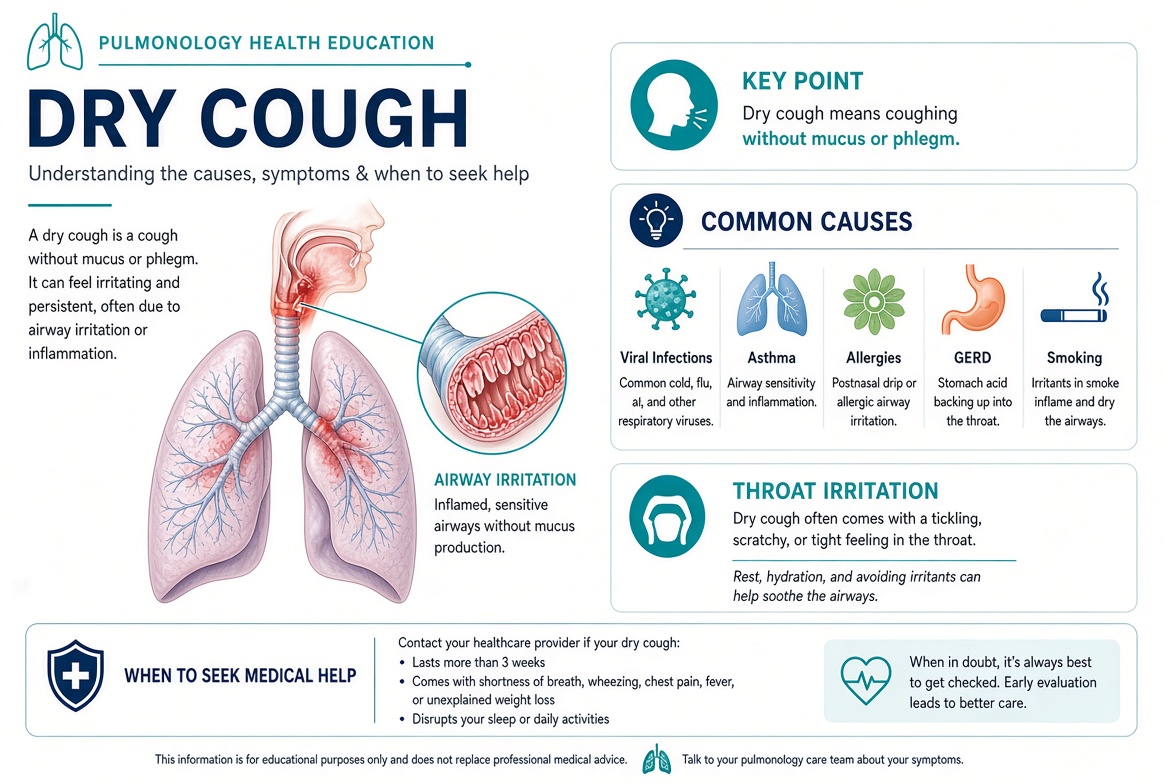
A dry cough is a cough that does not produce mucus or phlegm. It may occur due to allergies, respiratory infections, asthma, acid reflux, airway irritation, or other underlying conditions.

Medically Reviewed
Dr. Nabila Zaheer Consultant Pulmonologist
Last Updated
Aug 25, 2026
Dry Cough
1 min estimated read

Overview

A dry cough is a cough without mucus or phlegm. It can be temporary after a viral infection or may persist because of conditions such as asthma, allergies, acid reflux, smoking, or exposure to irritants. Identifying the underlying cause is important when a dry cough continues or is accompanied by other symptoms.

Causes

Viral respiratory infections Asthma Allergies Post-nasal drip Acid reflux Smoking or secondhand smoke Dust, pollution, and chemical fumes Certain medications Airway irritation Other respiratory conditions

Risk Factors

Smoking Exposure to air pollution or dust Asthma or allergies Acid reflux Frequent respiratory infections Occupational exposure to fumes or chemicals Use of certain medications

Diagnosis

Diagnosis depends on how long the cough has lasted and what other symptoms are present. A doctor may perform a physical examination and, when appropriate, recommend a chest X-ray, spirometry or other lung function tests, allergy assessment, blood tests, or additional investigations.

Treatment

Treatment depends on the underlying cause. It may include avoiding smoke and other irritants, treating allergies or asthma, managing acid reflux, maintaining adequate hydration, or treating an underlying infection when appropriate. Persistent or unexplained cough should be evaluated by a healthcare professional.

Need Expert Medical Guidance?

Schedule a direct consultation with Dr. Nabila Zaheer for personalized medical guidance.

Prevention

Avoid smoking and secondhand smoke. Reduce exposure to dust, pollution, and chemical fumes. Keep indoor air clean and adequately humidified. Manage asthma and allergies properly. Practice good hand hygiene to reduce respiratory infections. Avoid known cough triggers. Seek medical advice when a cough does not improve.

Complications

A prolonged dry cough can cause throat irritation, chest or abdominal muscle pain, headaches, fatigue, disturbed sleep, vomiting, or urinary leakage. Rarely, severe or prolonged coughing can lead to more significant complications.

When to See a Doctor

See a doctor if a dry cough persists for several weeks, repeatedly returns, becomes worse, or interferes with sleep and daily activities. Seek prompt medical attention if the cough is accompanied by difficulty breathing, chest pain, coughing up blood, high fever, unexplained weight loss, or significant weakness.

Conditions Related to This Symptom

Learn more about medical conditions that may cause or be associated with this symptom.

Asthma
Asthma

Asthma is a chronic lung condition that causes inflammation and narrowing of the airways, making breathing difficult. Symptoms…

Read About
Chronic Obstructive Pulmonary Disease (COPD)

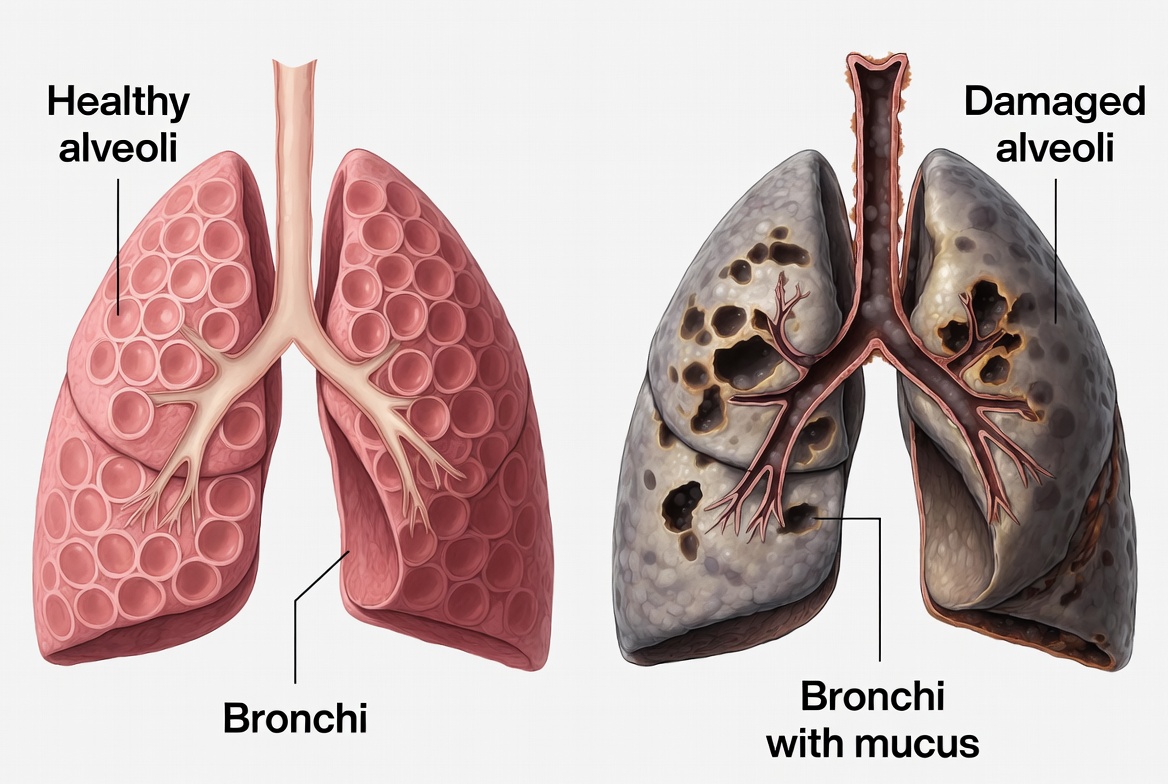
Chronic Obstructive Pulmonary Disease (COPD) is a long-term lung disease that makes breathing difficult due to persistent…

Read About

pneumonia
pneumonia

Pneumonia is an infection that causes inflammation of the air sacs (alveoli) in one or both lungs. The air sacs may fill…

Read About

Frequently Asked Questions

A dry cough is a cough that does not produce mucus or phlegm. It may be temporary or can persist when caused by conditions such as allergies, asthma, acid reflux, respiratory infections, or airway irritation.

Common causes include viral respiratory infections, asthma, allergies, post-nasal drip, acid reflux, smoking, air pollution, dust, chemical fumes, and certain medications.

The duration depends on the underlying cause. A dry cough following a respiratory infection may gradually improve, while a cough caused by asthma, allergies, reflux, smoking, or another ongoing condition may persist until the underlying cause is treated.

Yes. Asthma can cause a dry or persistent cough, sometimes without obvious wheezing. The cough may become worse at night, early in the morning, during exercise, or after exposure to specific triggers.

Yes. Acid reflux can irritate the throat and airways and cause a persistent dry cough. Some people may experience cough related to reflux without having typical heartburn symptoms.

Yes. Allergies can irritate the nose and airways and may cause coughing. Allergic symptoms such as sneezing, nasal congestion, itchy eyes, or post-nasal drainage may occur alongside the cough.

Yes. Cigarette smoke and other tobacco products can irritate and damage the airways. Smoking may cause persistent coughing and can contribute to chronic respiratory conditions.

You should see a doctor if the cough persists for several weeks, keeps returning, becomes worse, or interferes with your sleep or daily activities. Medical evaluation is particularly important when the cause is unclear.

Depending on your symptoms and medical history, a doctor may recommend a physical examination, chest X-ray, spirometry or other lung function tests, allergy testing, blood tests, or additional investigations to identify the cause.

Treatment depends on the underlying cause. A doctor may recommend treatment for asthma or allergies, management of acid reflux, avoiding smoke and other irritants, or treatment of an underlying infection when appropriate.

A prolonged dry cough can cause throat irritation, chest or abdominal muscle pain, headaches, fatigue, disturbed sleep, vomiting, and urinary leakage. Severe or prolonged coughing can occasionally cause more serious complications.

A dry cough is often caused by relatively common conditions such as infections, allergies, asthma, or reflux. However, a persistent or unexplained cough can sometimes be associated with a more significant respiratory or other medical condition. It should be evaluated if it persists or occurs with concerning symptoms such as difficulty breathing, chest pain, coughing up blood, unexplained weight loss, or high fever.

Related Health Calculators

Interactive digital tools to help monitor your health metrics and understand your results.

Smoking Pack-Year Calculator

Calculate your smoking pack years instantly using our free Smoking Pack-Year Calculator. Estimate your lifetime tobacco exposure and understand your potential risk for COPD, lung disease, and lung cancer.

Blood Pressure Calculator & Checker

Check your blood pressure category instantly using our free Blood Pressure Calculator. Understand whether your reading is normal, elevated, or indicates hypertension, with personalized health recommendations.

Sleep Calculator

Calculate the best bedtime or wake-up time based on healthy 90-minute sleep cycles. Improve your sleep quality with personalized recommendations.