Overview
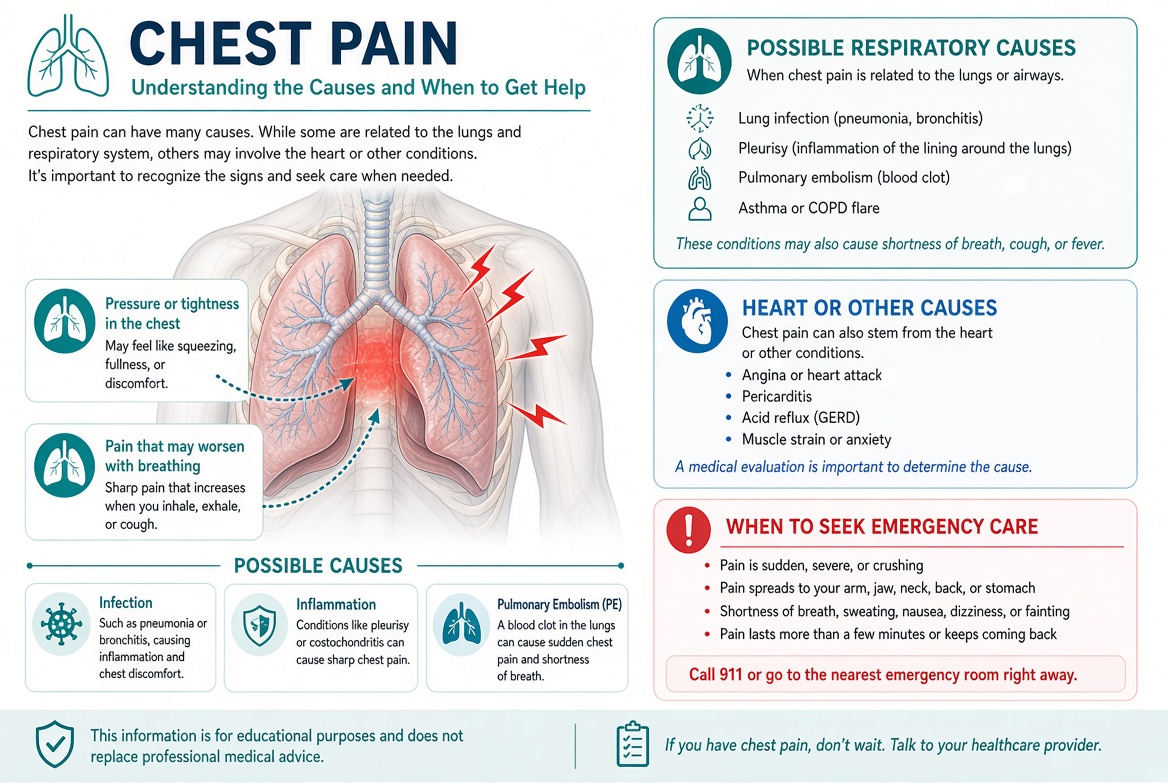
Chest pain is discomfort, pressure, tightness, burning or pain felt anywhere in the chest. It can vary from mild discomfort to severe pain and may occur suddenly or develop gradually.
Chest pain can be caused by problems involving the lungs and airways, muscles and bones, digestive system or heart. Respiratory causes may include infections, inflammation of the lining around the lungs, asthma-related symptoms and other lung conditions.
Because some heart and lung conditions can cause serious or life-threatening chest pain, new or unexplained chest pain should not be ignored.
Causes
Chest pain can have many possible causes. These may include:
- Respiratory infections such as pneumonia
- Inflammation of the lining around the lungs (pleurisy)
- Asthma or other respiratory conditions
- Pulmonary embolism
- Heart-related conditions
- Acid reflux or gastroesophageal reflux disease (GERD)
- Inflammation or injury of the chest muscles
- Costochondritis
- Anxiety or panic attacks
- Chest injuries
The cause cannot always be determined from the location or severity of pain alone, so medical evaluation may be necessary.
Risk Factors
- Smoking
- History of heart or lung disease
- High blood pressure, diabetes or high cholesterol
- Obesity
- Previous blood clots or conditions that increase clotting risk
- Recent surgery or prolonged immobility
- Respiratory infections
- Exposure to respiratory irritants
- Chest injury or strenuous physical activity
- Family history of heart or respiratory disease
Diagnosis
Evaluation of chest pain begins with a detailed medical history and physical examination. The doctor may ask about the location, nature, duration and severity of the pain and whether it is associated with symptoms such as shortness of breath, cough, fever, sweating, dizziness or palpitations.
Depending on the suspected cause, investigations may include an electrocardiogram (ECG), blood tests, chest X-ray, lung function tests, echocardiography or other imaging and diagnostic tests.
The appropriate tests depend on the patient's symptoms, medical history and examination findings.
Treatment
Treatment depends entirely on the underlying cause of the chest pain.
Respiratory infections may require appropriate treatment and supportive care. Conditions such as asthma may require prescribed inhaled medicines, while acid reflux may require dietary changes and medication.
Heart-related conditions, pulmonary embolism and other serious causes require specific medical treatment and should be assessed promptly.
Do not attempt to diagnose or treat unexplained chest pain yourself.
Need Expert Medical Guidance?
Schedule a direct consultation with Dr. Nabila Zaheer for personalized medical guidance.
Prevention
- Do not smoke and avoid secondhand smoke.
- Maintain regular physical activity appropriate for your health.
- Maintain a healthy weight and balanced diet.
- Keep conditions such as high blood pressure, diabetes and high cholesterol under medical control.
- Follow prescribed treatment for existing heart or lung conditions.
- Avoid known respiratory irritants.
- Seek medical advice for persistent or unexplained chest discomfort.
Complications
The complications of chest pain depend on its underlying cause. Pain caused by a minor muscle injury may resolve without significant complications, while chest pain caused by a serious heart or lung condition can be life-threatening if treatment is delayed.
Conditions such as pulmonary embolism, severe pneumonia and certain heart problems require prompt medical assessment and treatment.
When to See a Doctor
New, unexplained or persistent chest pain should be evaluated by a healthcare professional, particularly when the cause is uncertain.
Seek emergency medical attention for severe or sudden chest pain, especially when it is accompanied by difficulty breathing, sweating, fainting, severe weakness, confusion, coughing up blood, or pain spreading to the arm, shoulder, back, neck or jaw.
Sudden chest pain associated with significant breathing difficulty may indicate a serious heart or lung problem and requires urgent assessment.
Conditions Related to This Symptom
Learn more about medical conditions that may cause or be associated with this symptom.

Asthma
Asthma is a chronic lung condition that causes inflammation and narrowing of the airways, making breathing difficult. Symptoms…
Read About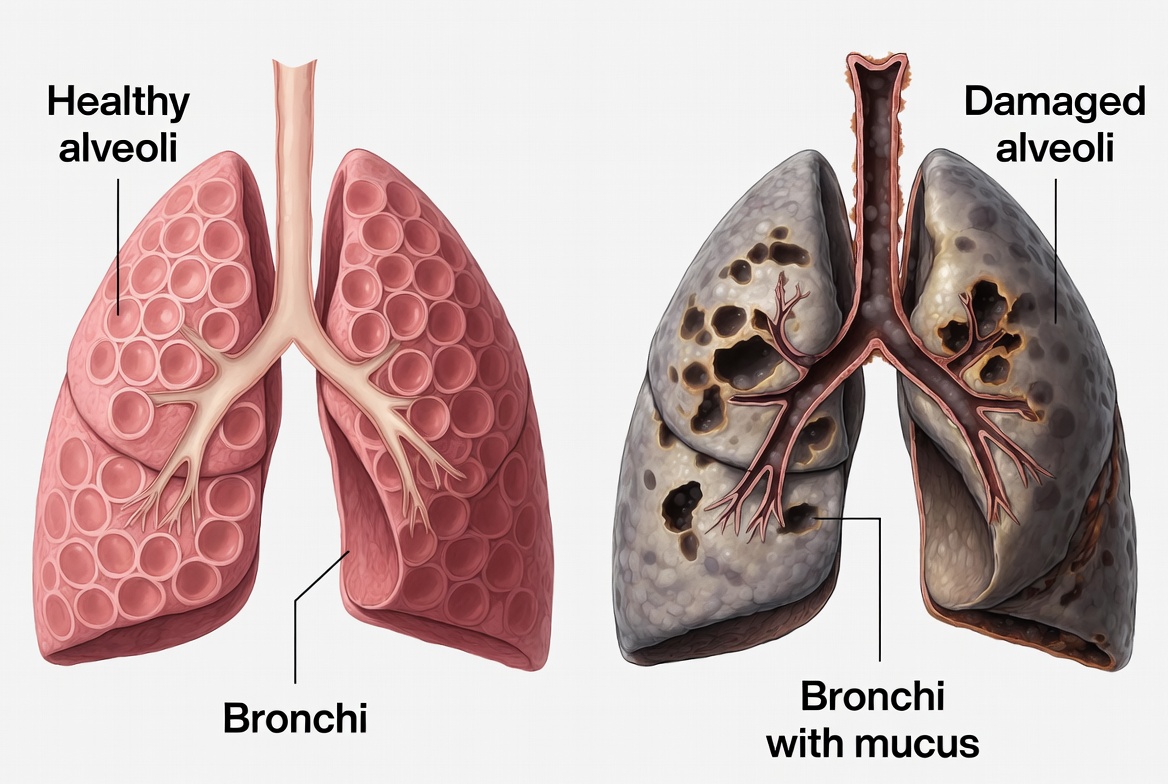
Chronic Obstructive Pulmonary Disease (COPD)
Chronic Obstructive Pulmonary Disease (COPD) is a long-term lung disease that makes breathing difficult due to persistent…
Read About
pneumonia
Pneumonia is an infection that causes inflammation of the air sacs (alveoli) in one or both lungs. The air sacs may fill…
Read About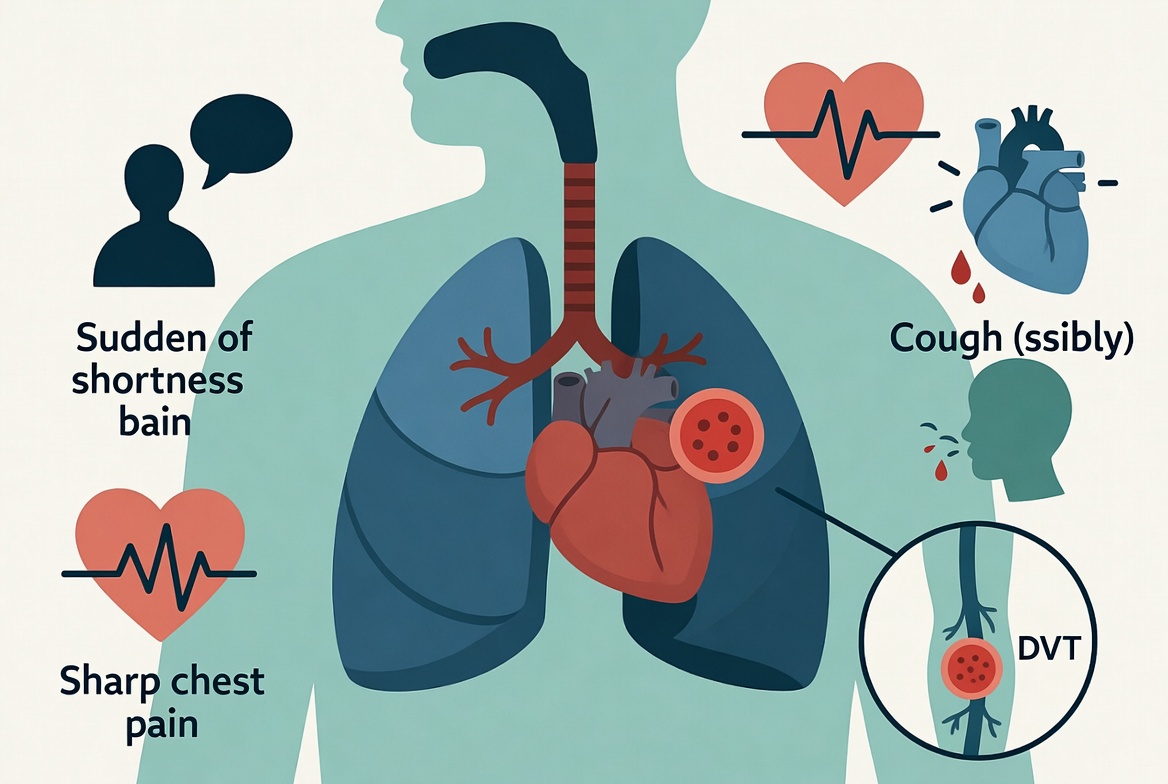
Pulmonary Embolism (PE)
Pulmonary embolism (PE) is a life-threatening condition caused by a blood clot that blocks an artery in the lungs. Learn…
Read About