Overview
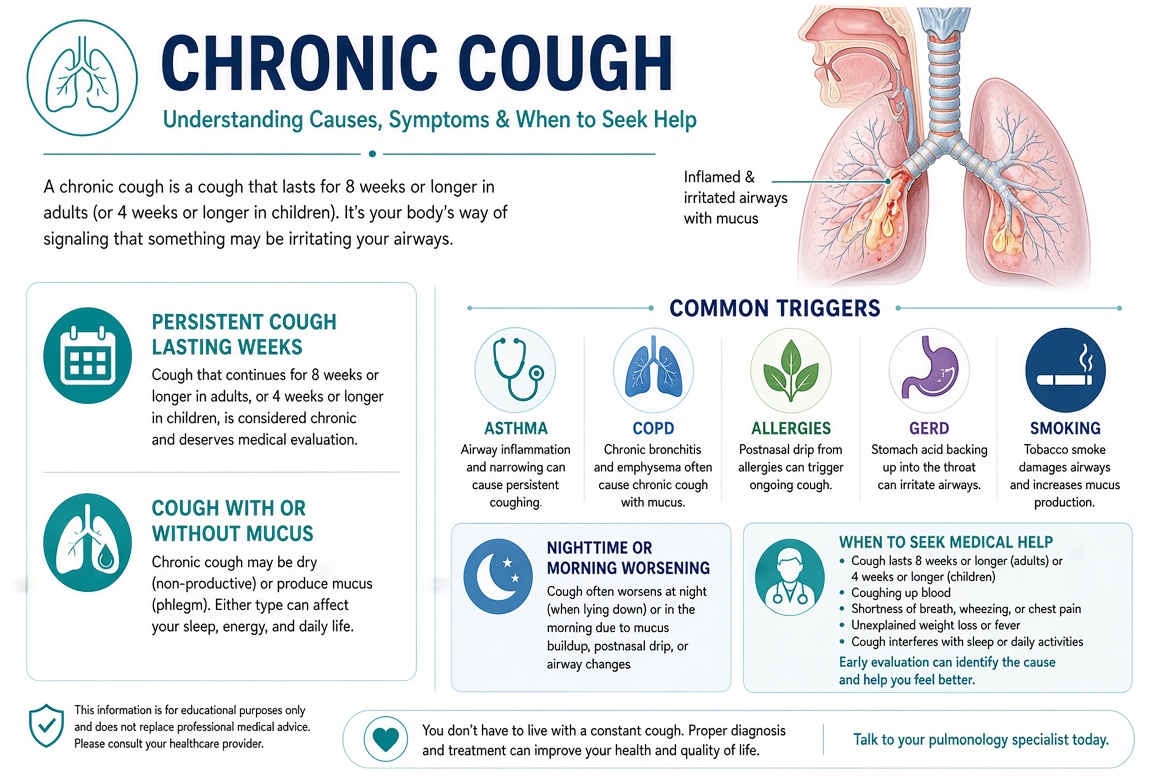
A chronic cough is a cough that continues for an extended period and does not go away as expected. While an occasional cough is a normal protective response that helps clear the airways, a persistent cough may indicate an underlying medical condition.
Chronic cough can occur with or without mucus and may be worse at night, in the morning, during exercise, or after exposure to certain triggers. Identifying the underlying cause is important because treatment depends on what is causing the cough.
Common causes include asthma, chronic obstructive pulmonary disease (COPD), post-nasal drip, acid reflux, respiratory infections, allergies, smoking, and certain medications.
Causes
Chronic cough can have many possible causes. Common causes include:
- Asthma
- Chronic obstructive pulmonary disease (COPD)
- Post-nasal drip or upper airway cough syndrome
- Acid reflux or gastroesophageal reflux disease (GERD)
- Allergies
- Smoking or exposure to secondhand smoke
- Long-lasting respiratory infections
- Bronchitis
- Environmental irritants such as dust, smoke and chemical fumes
- Certain medications, including some blood pressure medicines
In some cases, more than one condition may contribute to a chronic cough.
Risk Factors
- Smoking or regular exposure to tobacco smoke
- History of asthma or COPD
- Exposure to dust, pollution, chemicals or other respiratory irritants
- Allergies
- Acid reflux or GERD
- Frequent respiratory infections
- Occupational exposure to airborne irritants
- Use of certain medications that can cause cough
Diagnosis
The diagnosis of chronic cough begins with a medical history and physical examination. Your doctor may ask how long you have been coughing, whether the cough produces mucus, what makes it worse, and whether you have other symptoms such as wheezing, shortness of breath, fever or chest discomfort.
Depending on the suspected cause, investigations may include a chest X-ray, lung function tests such as spirometry, allergy testing, blood tests, or other examinations.
The appropriate tests depend on the patient's symptoms, medical history and examination findings.
Treatment
Treatment for chronic cough depends on the underlying cause. Treating the condition responsible for the cough is usually more effective than simply suppressing the cough.
Depending on the cause, treatment may include inhalers for asthma or COPD, treatment for allergies or post-nasal drip, medicines for acid reflux, treatment of respiratory infections when appropriate, or changes to medicines that may be contributing to the cough.
People who smoke should be encouraged to stop smoking and avoid exposure to tobacco smoke and other respiratory irritants.
Need Expert Medical Guidance?
Schedule a direct consultation with Dr. Nabila Zaheer for personalized medical guidance.
Prevention
- Avoid smoking and secondhand smoke.
- Reduce exposure to dust, pollution, chemical fumes and other respiratory irritants.
- Manage asthma, allergies and acid reflux as advised by your doctor.
- Practice good hand hygiene to reduce the risk of respiratory infections.
- Use appropriate protective equipment when exposed to workplace dust or chemicals.
- Seek medical advice when a cough persists or repeatedly returns.
Complications
A persistent cough can interfere with sleep, work and daily activities. Severe or prolonged coughing may also cause chest or abdominal muscle pain, headaches, vomiting, dizziness or urinary leakage.
In some cases, a chronic cough may be a sign of an underlying lung or other medical condition that requires diagnosis and treatment. For this reason, a persistent cough should not be ignored.
When to See a Doctor
Consult a doctor if a cough persists for several weeks, repeatedly returns, or interferes with sleep and daily activities.
Seek prompt medical attention if the cough is accompanied by difficulty breathing, coughing up blood, chest pain, unexplained weight loss, persistent fever, severe weakness, or a significant worsening of symptoms.
Conditions Related to This Symptom
Learn more about medical conditions that may cause or be associated with this symptom.

Asthma
Asthma is a chronic lung condition that causes inflammation and narrowing of the airways, making breathing difficult. Symptoms…
Read About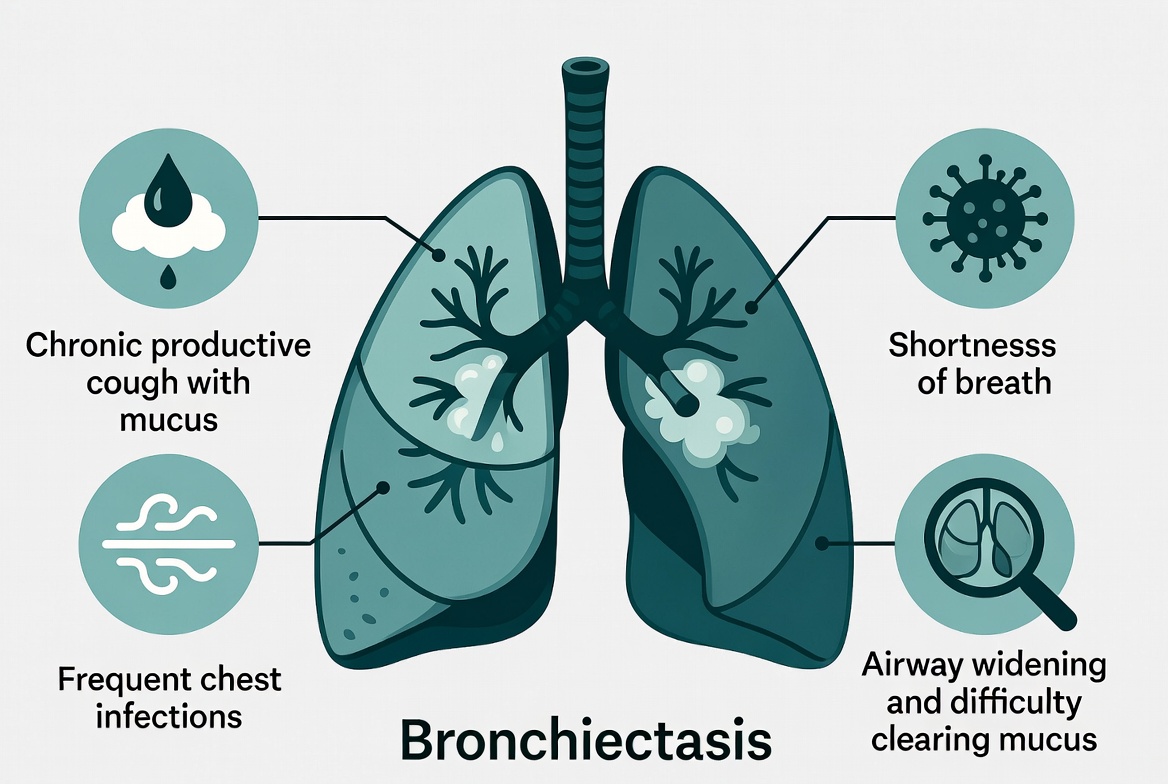
Bronchiectasis
Bronchiectasis is a chronic lung disease in which the airways become permanently widened and damaged, leading to mucus buildup,…
Read About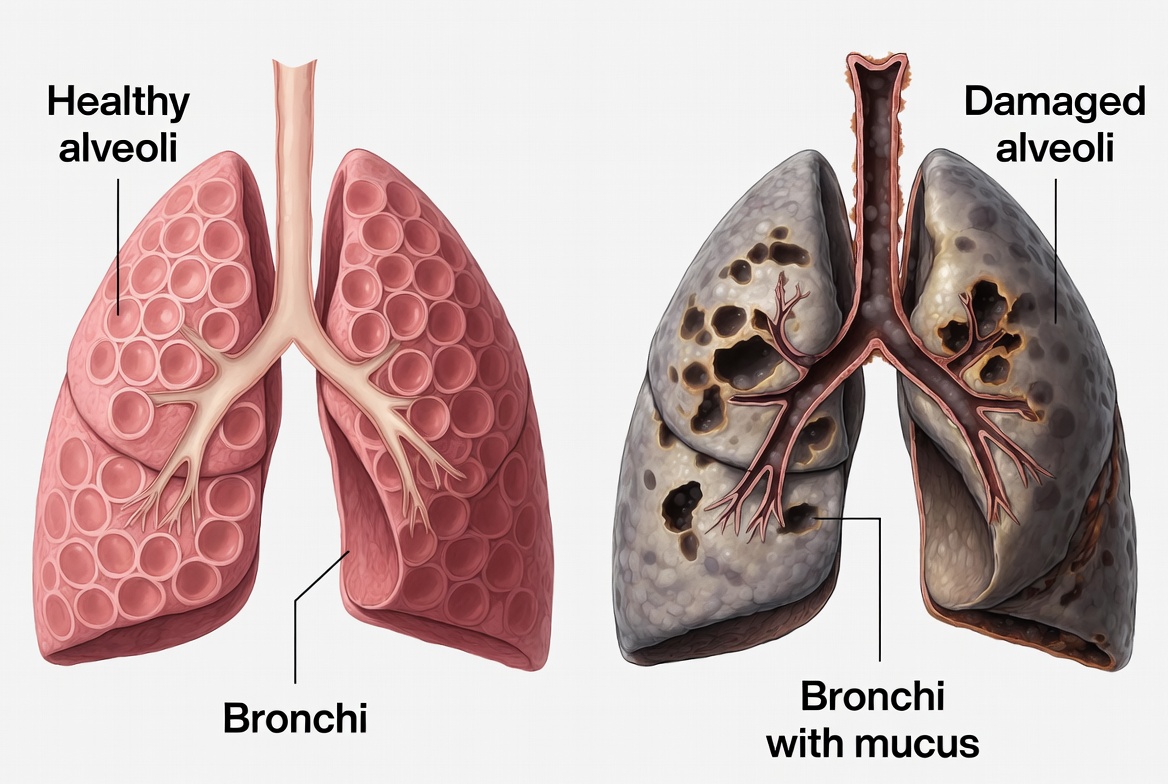
Chronic Obstructive Pulmonary Disease (COPD)
Chronic Obstructive Pulmonary Disease (COPD) is a long-term lung disease that makes breathing difficult due to persistent…
Read About
pneumonia
Pneumonia is an infection that causes inflammation of the air sacs (alveoli) in one or both lungs. The air sacs may fill…
Read About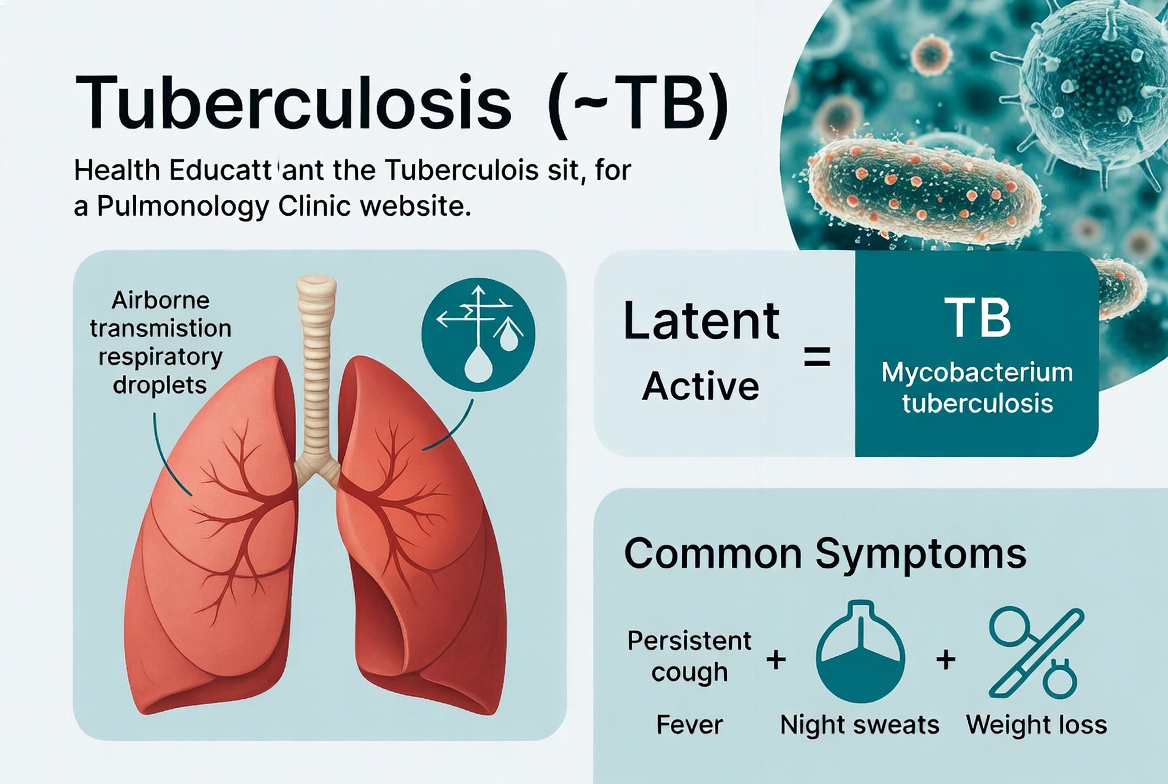
tuberculosis
Learn about tuberculosis (TB), including symptoms, causes, diagnosis, treatment, prevention, recovery, and frequently asked…
Read About