Overview
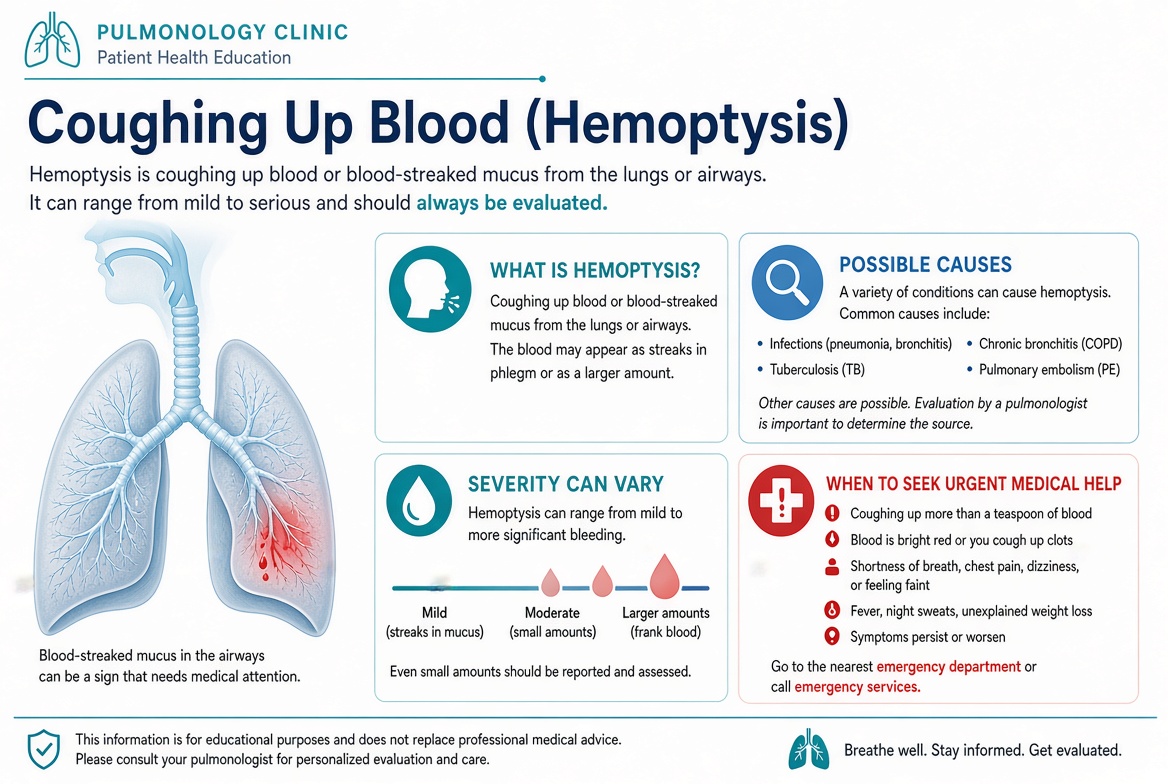
Hemoptysis is the medical term for coughing up blood or blood-stained mucus from the airways or lungs. The amount of blood can range from small streaks mixed with mucus to larger amounts of blood.
Coughing up blood can occur with infections and inflammation of the respiratory tract, but it may also be associated with conditions such as bronchiectasis, tuberculosis, pulmonary embolism or lung cancer.
It is important to determine the source and cause of bleeding. Blood coming from the nose, mouth or digestive tract can sometimes be mistaken for blood originating from the lungs.
Any unexplained coughing up of blood should be assessed by a healthcare professional, particularly when the bleeding is recurrent or accompanied by breathing difficulty or chest pain.
Causes
Possible causes of coughing up blood include:
- Respiratory tract infections
- Bronchitis
- Pneumonia
- Tuberculosis
- Bronchiectasis
- Chronic obstructive pulmonary disease (COPD)
- Pulmonary embolism
- Lung cancer
- Severe or persistent coughing that irritates the airways
- Blood-thinning medicines or disorders affecting blood clotting
The cause can vary depending on the amount of blood, other symptoms, medical history and examination findings.
Risk Factors
- Smoking or a history of smoking
- Chronic lung diseases such as COPD or bronchiectasis
- Previous or current tuberculosis infection
- Recurrent respiratory infections
- History of lung cancer or increased risk of lung cancer
- Conditions that increase the risk of blood clots
- Use of blood-thinning medicines
- Exposure to certain occupational respiratory hazards
Diagnosis
When evaluating hemoptysis, a doctor will ask about the amount and appearance of the blood, how often it occurs and whether it is mixed with mucus. Other symptoms such as cough, fever, shortness of breath, chest pain and weight loss are also important.
A physical examination may be followed by investigations such as a chest X-ray, CT scan of the chest, blood tests, sputum testing or other respiratory investigations.
In some situations, bronchoscopy may be required to examine the airways and identify the source of bleeding.
The tests required depend on the suspected cause and the patient's clinical condition.
Treatment
Treatment depends on the underlying cause and the severity of the bleeding.
Respiratory infections may require appropriate treatment, while conditions such as tuberculosis, bronchiectasis, pulmonary embolism or other lung diseases require specific medical management.
If a medicine that affects blood clotting is contributing to the bleeding, the doctor may need to review the medication and determine the safest course of action.
Significant or ongoing bleeding may require urgent hospital treatment to protect the airway and control the source of bleeding.
Need Expert Medical Guidance?
Schedule a direct consultation with Dr. Nabila Zaheer for personalized medical guidance.
Prevention
- Do not smoke and avoid secondhand smoke.
- Follow prescribed treatment for chronic lung conditions.
- Seek medical care for persistent or recurrent respiratory infections.
- Take tuberculosis treatment exactly as prescribed when diagnosed.
- Avoid unnecessary exposure to dust, chemicals and other respiratory irritants.
- Take blood-thinning medicines only as prescribed and follow your doctor's instructions.
- Seek medical evaluation for unexplained or recurrent coughing up of blood.
Complications
The complications of hemoptysis depend on its cause and the amount of bleeding.
Significant bleeding can interfere with the ability to breathe if blood obstructs the airways. Severe blood loss can also lead to weakness, dizziness or low blood pressure.
More importantly, hemoptysis may be a sign of an underlying lung condition that requires prompt diagnosis and treatment.
When to See a Doctor
Coughing up blood should be medically assessed, particularly when the cause is unknown, the bleeding keeps returning or the amount of blood is increasing.
Seek emergency medical attention if you cough up a large amount of blood, the bleeding does not stop, or you develop significant difficulty breathing, chest pain, dizziness, fainting, confusion or severe weakness.
Coughing up blood together with sudden shortness of breath or chest pain can be a sign of a serious condition and requires urgent medical assessment.
Conditions Related to This Symptom
Learn more about medical conditions that may cause or be associated with this symptom.
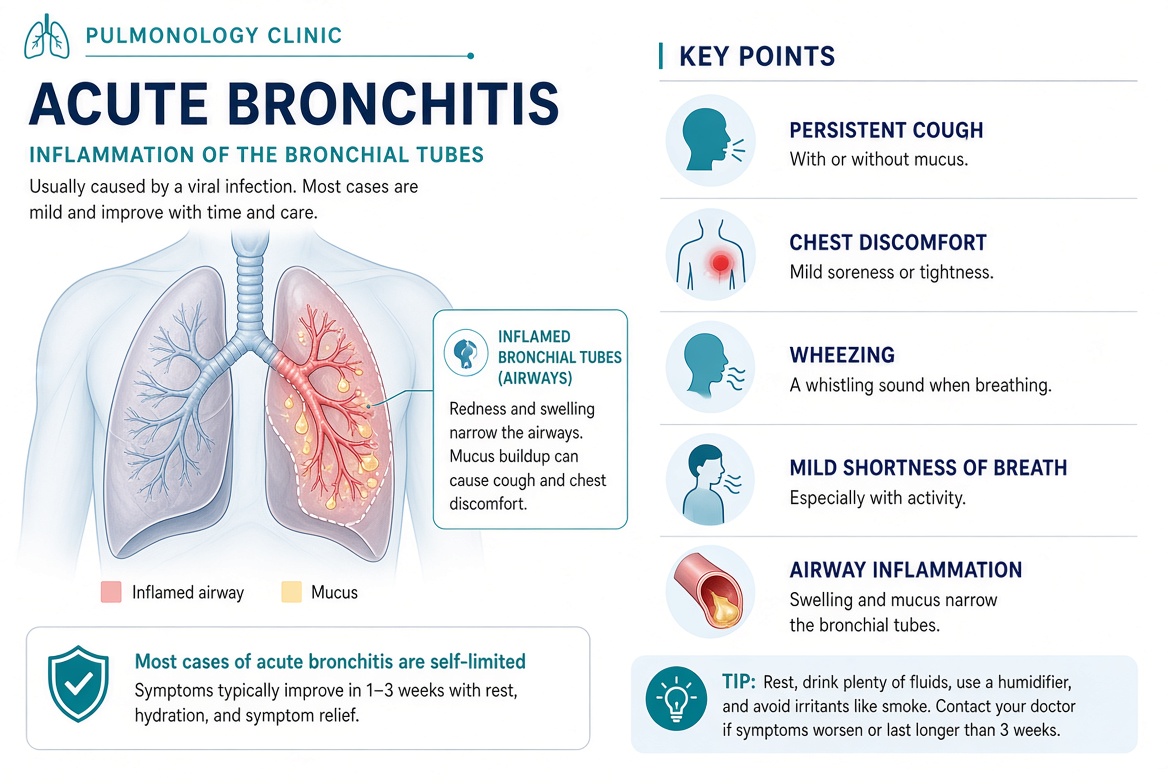
Acute Bronchitis
Acute bronchitis is a temporary inflammation of the bronchial tubes, usually caused by a viral respiratory infection such…
Read About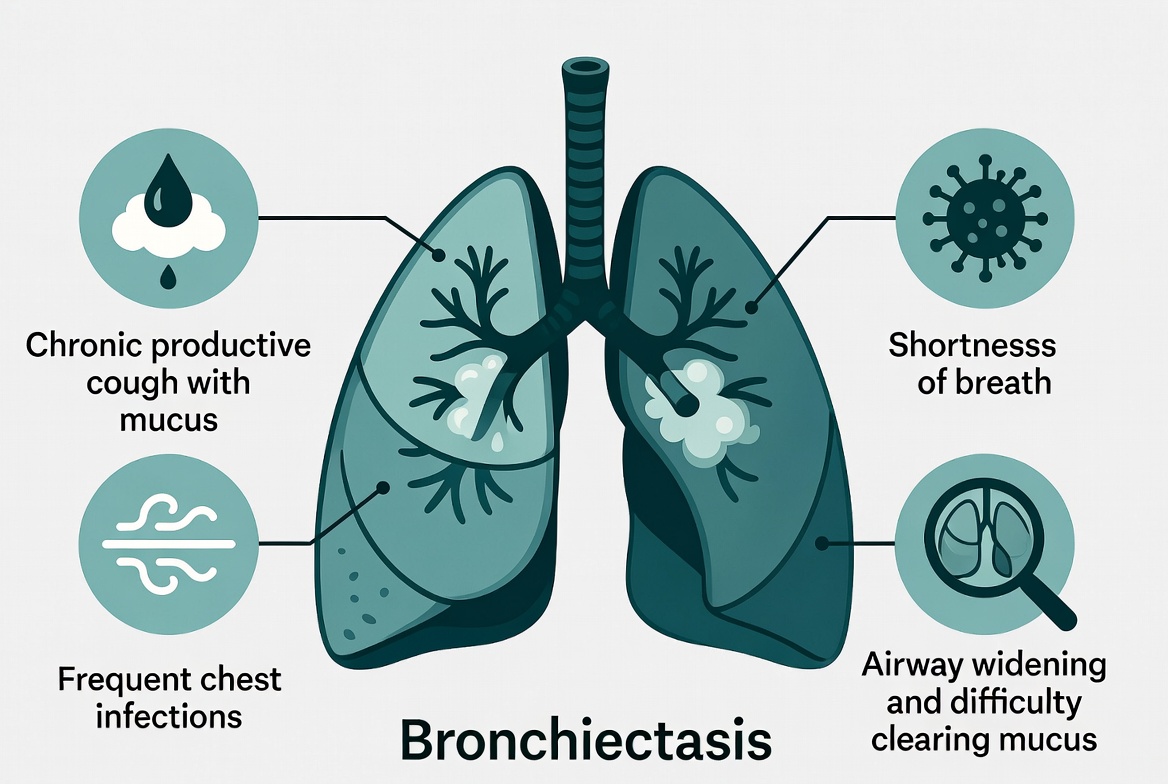
Bronchiectasis
Bronchiectasis is a chronic lung disease in which the airways become permanently widened and damaged, leading to mucus buildup,…
Read About
pneumonia
Pneumonia is an infection that causes inflammation of the air sacs (alveoli) in one or both lungs. The air sacs may fill…
Read About