Overview
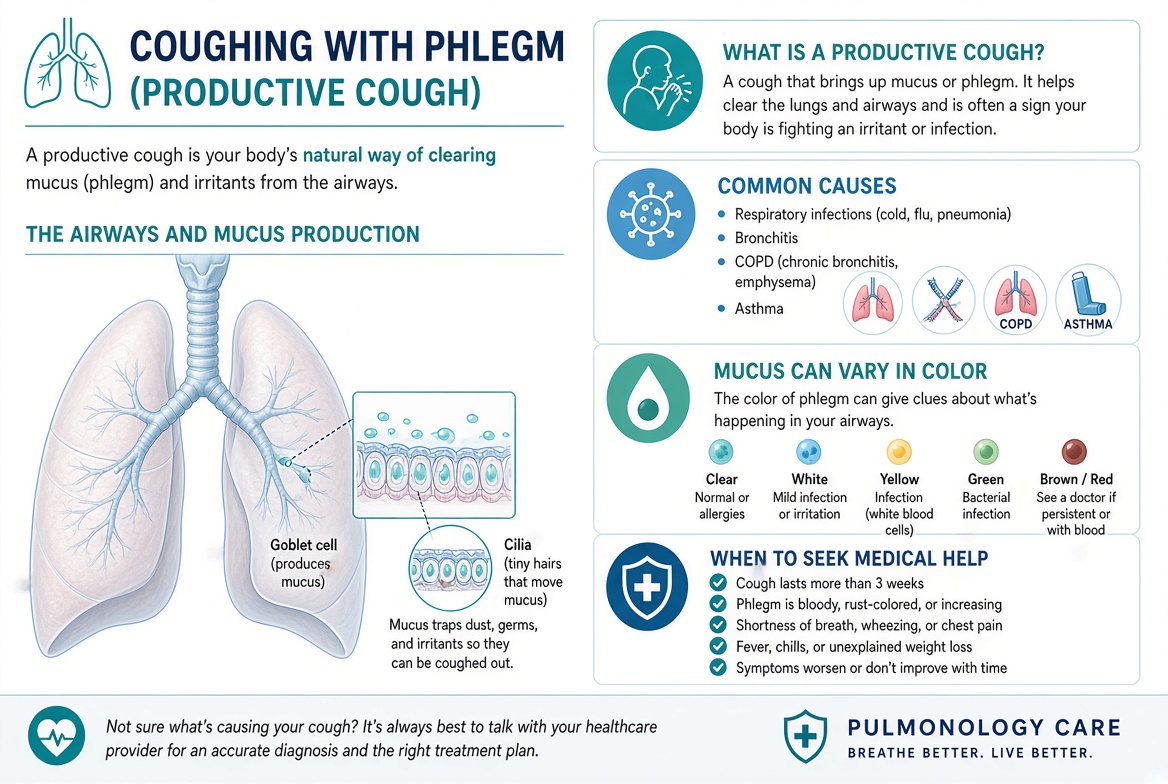
A productive cough is a cough that brings mucus or phlegm up from the airways. Phlegm is produced by the respiratory system to help trap particles, microorganisms and other irritants.
Occasional phlegm can occur during a common respiratory infection. However, a persistent productive cough may be associated with conditions such as chronic bronchitis, asthma, chronic obstructive pulmonary disease (COPD), bronchiectasis or other lung diseases.
The appearance and amount of sputum, how long the cough has lasted and the presence of other symptoms can help a healthcare professional determine the possible cause.
Causes
Common causes of coughing with phlegm include:
- Common cold and other respiratory infections
- Acute bronchitis
- Pneumonia
- Chronic bronchitis
- Chronic obstructive pulmonary disease (COPD)
- Asthma
- Bronchiectasis
- Post-nasal drip
- Exposure to tobacco smoke
- Exposure to dust, air pollution or other respiratory irritants
- Other lung conditions
The color and consistency of phlegm may change during respiratory illnesses, but sputum color alone cannot reliably determine the cause or whether antibiotics are needed.
Risk Factors
- Smoking or exposure to secondhand smoke
- Chronic lung diseases such as COPD or bronchiectasis
- Asthma
- Frequent respiratory infections
- Exposure to dust, smoke, pollution or chemical fumes
- Occupational exposure to respiratory irritants
- Reduced ability to clear mucus from the airways
- History of recurrent chest infections
Diagnosis
The doctor will ask about how long the productive cough has been present, the amount and appearance of the phlegm and whether other symptoms are present, such as fever, wheezing, shortness of breath, chest pain or coughing up blood.
A physical examination may include listening to the lungs with a stethoscope. Depending on the symptoms and suspected cause, investigations may include a chest X-ray, sputum testing, blood tests, spirometry or other lung function tests.
Further investigations may be recommended when the cough is persistent, recurrent or associated with concerning symptoms.
Treatment
Treatment depends on the cause of the productive cough.
Many short-term coughs caused by viral respiratory infections improve with time and supportive care. Adequate fluid intake may help keep mucus less thick and easier to clear.
Bacterial infections, asthma, COPD, bronchiectasis and other underlying conditions may require specific treatment prescribed by a healthcare professional.
Medicines should not be started solely on the basis of phlegm color. Antibiotics are not effective against viral infections and should only be used when medically indicated.
Need Expert Medical Guidance?
Schedule a direct consultation with Dr. Nabila Zaheer for personalized medical guidance.
Prevention
- Do not smoke and avoid secondhand smoke.
- Reduce exposure to dust, pollution, smoke and chemical fumes.
- Follow prescribed treatment for asthma, COPD and other chronic lung conditions.
- Practice good hand hygiene to reduce the spread of respiratory infections.
- Avoid close contact with people who have contagious respiratory infections when possible.
- Maintain appropriate vaccinations according to medical advice.
- Use suitable respiratory protection when exposed to workplace irritants.
Complications
A short-term productive cough caused by a respiratory infection usually improves as the underlying illness resolves. However, a persistent or worsening productive cough may indicate an underlying lung condition that requires treatment.
Severe respiratory infections or chronic lung diseases can cause complications such as worsening breathing difficulty, reduced oxygen levels, recurrent chest infections or impaired lung function.
Coughing up blood, severe shortness of breath or significant chest pain together with a productive cough requires prompt medical assessment.
When to See a Doctor
See a doctor if a productive cough persists, keeps returning or is accompanied by fever, wheezing, shortness of breath, chest pain, unexplained weight loss or other concerning symptoms.
Medical assessment is particularly important for people with existing lung diseases such as COPD, asthma or bronchiectasis.
Seek urgent medical attention if the cough is accompanied by severe difficulty breathing, coughing up a significant amount of blood, confusion, fainting or rapidly worsening symptoms.
Conditions Related to This Symptom
Learn more about medical conditions that may cause or be associated with this symptom.

Asthma
Asthma is a chronic lung condition that causes inflammation and narrowing of the airways, making breathing difficult. Symptoms…
Read About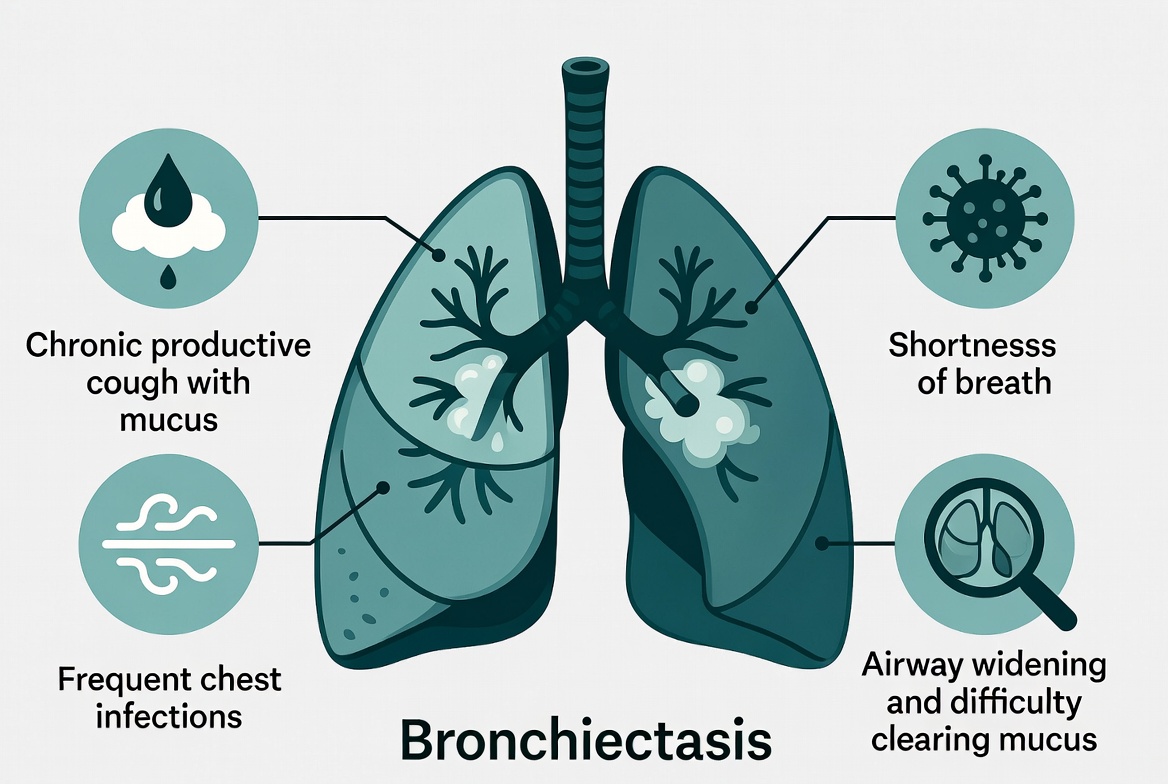
Bronchiectasis
Bronchiectasis is a chronic lung disease in which the airways become permanently widened and damaged, leading to mucus buildup,…
Read About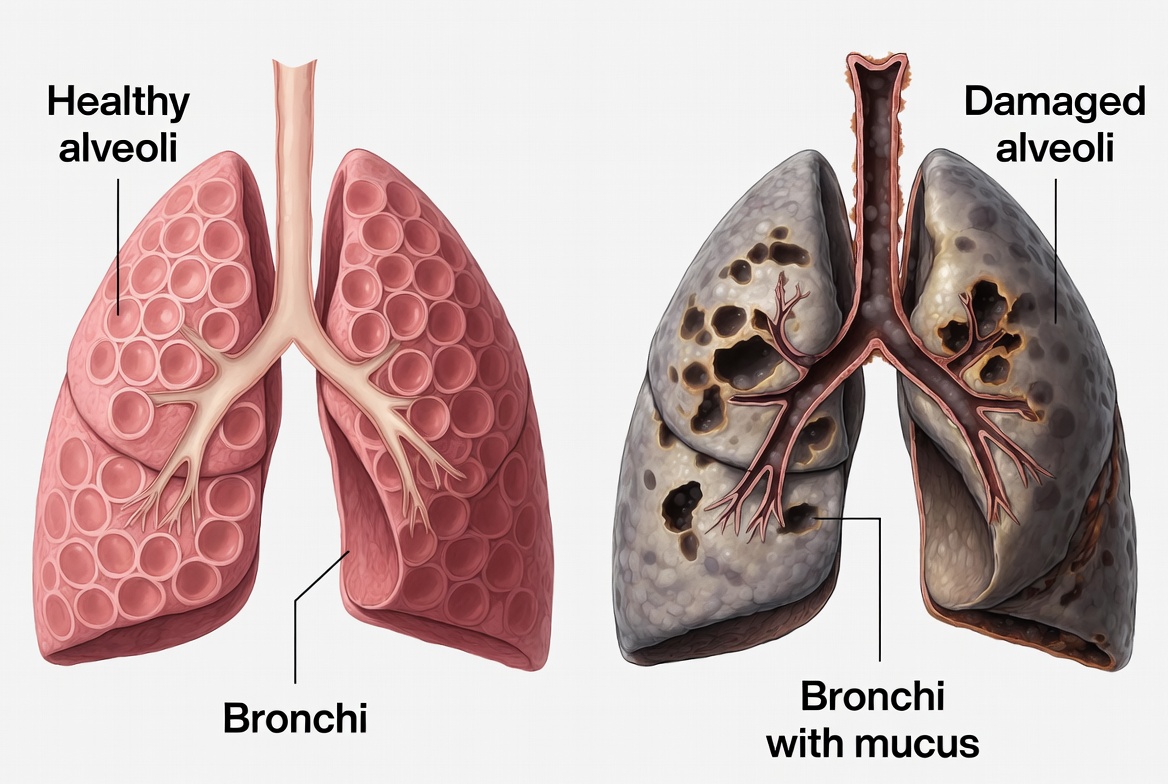
Chronic Obstructive Pulmonary Disease (COPD)
Chronic Obstructive Pulmonary Disease (COPD) is a long-term lung disease that makes breathing difficult due to persistent…
Read About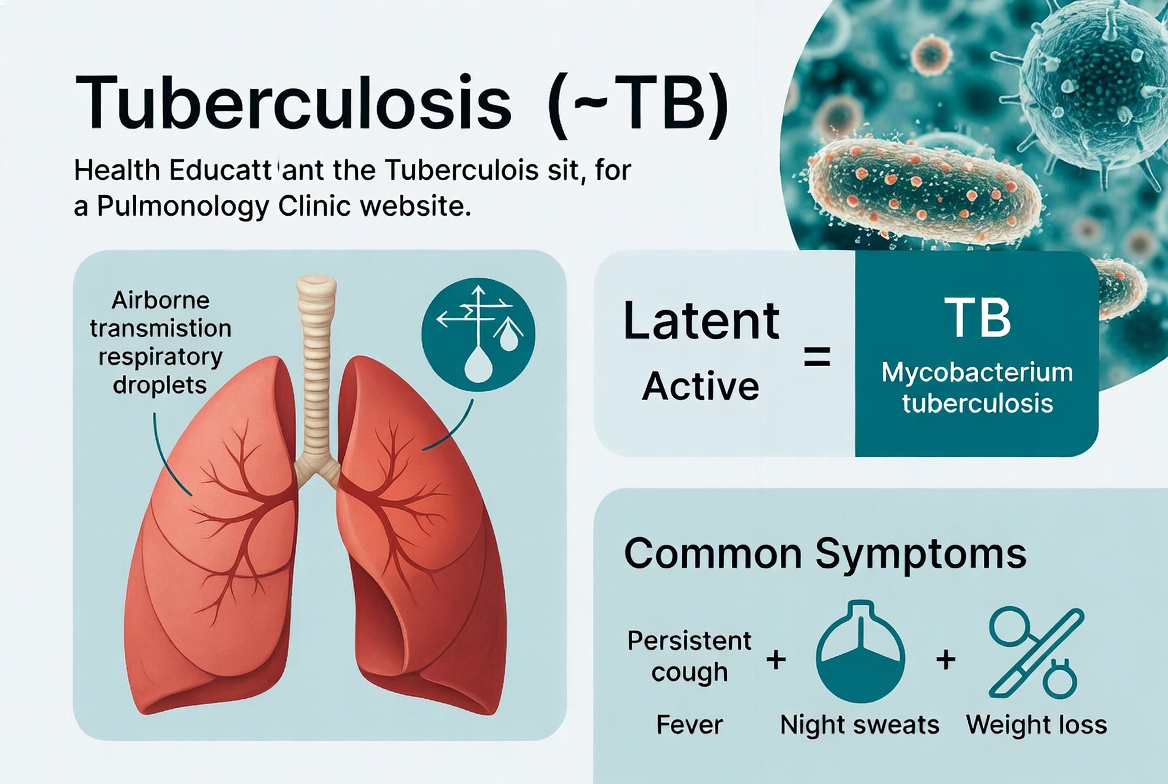
tuberculosis
Learn about tuberculosis (TB), including symptoms, causes, diagnosis, treatment, prevention, recovery, and frequently asked…
Read About