Overview
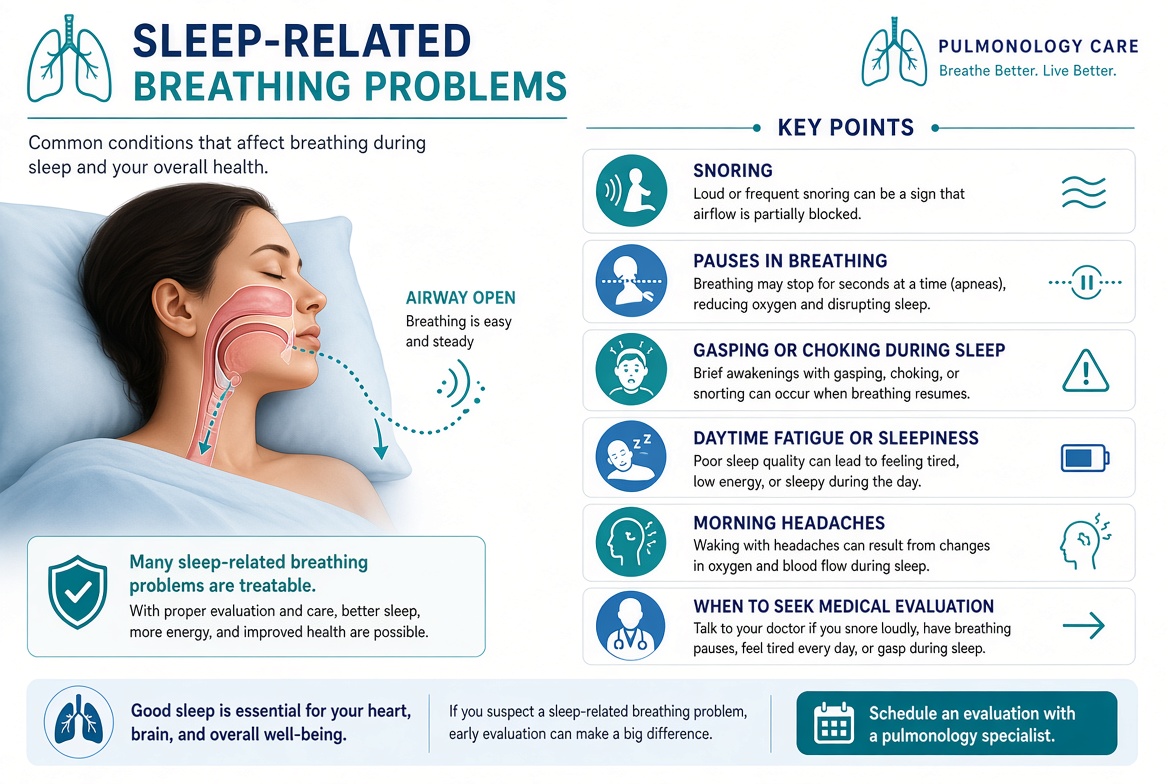
Sleep-related breathing problems occur when breathing becomes restricted, repeatedly stops and starts, or becomes abnormal during sleep. These problems can reduce sleep quality and, in some conditions, lower blood oxygen levels. Obstructive sleep apnea occurs when the upper airway becomes repeatedly blocked during sleep. Other sleep-related breathing disorders can be associated with lung disease, obesity, certain medications, neurological conditions or abnormalities affecting breathing control. Because these conditions can affect sleep quality and oxygen levels, persistent symptoms should be evaluated by a healthcare professional.
Causes
Possible causes and contributing factors include: Obstructive sleep apnea Central sleep apnea Chronic lung diseases such as COPD Asthma that worsens at night Obesity and excess tissue around the upper airway Enlarged tonsils or other airway abnormalities Nasal congestion or obstruction Certain medications, particularly sedatives or opioid medicines Neurological or neuromuscular conditions Heart conditions Sleeping on the back in people prone to airway obstruction Alcohol consumption before sleep
Risk Factors
Risk factors may include: Excess body weight Increasing age Enlarged tonsils or certain airway structures Family history of sleep apnea Smoking Alcohol use Certain medications Chronic lung or heart disease Nasal congestion Certain neurological or neuromuscular conditions
Diagnosis
Diagnosis usually begins with a medical history and assessment of sleep-related symptoms. A doctor may ask about: Loud or frequent snoring Witnessed pauses in breathing Gasping or choking during sleep Daytime sleepiness Morning headaches Difficulty concentrating Sleep quality Depending on the situation, testing may include a sleep study (polysomnography) or a home sleep apnea test. Additional tests may be recommended to identify an underlying lung, heart or neurological condition.
Treatment
Treatment depends on the specific breathing disorder and its underlying cause. Possible treatments include: Weight management when appropriate Positive airway pressure therapy such as CPAP Oral appliances for selected patients with obstructive sleep apnea Treatment of nasal obstruction or congestion Appropriate treatment of asthma or COPD Positional therapy in selected cases Avoiding alcohol and sedating medicines when medically appropriate Surgery or other procedures for selected structural airway problems Treatment of underlying heart, neurological or other medical conditions
Need Expert Medical Guidance?
Schedule a direct consultation with Dr. Nabila Zaheer for personalized medical guidance.
Prevention
Some sleep-related breathing problems cannot be completely prevented, but risk may be reduced by: Maintaining a healthy weight Avoiding smoking Limiting alcohol, particularly close to bedtime Following prescribed treatment for lung and heart conditions Maintaining regular sleep habits Treating persistent nasal congestion Discussing medicines that cause excessive sedation with a doctor Sleeping in a position recommended by your healthcare professional when appropriate
Complications
Untreated sleep-related breathing problems can affect sleep quality and daytime functioning. Depending on the condition and severity, complications may include: Excessive daytime sleepiness Difficulty concentrating Morning headaches Reduced quality of life Increased risk of accidents due to sleepiness High blood pressure Cardiovascular problems Worsening of some underlying medical conditions
When to See a Doctor
Consult a doctor if you regularly: Snore loudly Wake up gasping or choking Have witnessed pauses in breathing during sleep Experience excessive daytime sleepiness Wake with headaches Have persistent poor-quality sleep Experience unexplained fatigue or difficulty concentrating Seek urgent medical attention for severe breathing difficulty, significant chest pain, fainting, confusion or other rapidly worsening symptoms.
Conditions Related to This Symptom
Learn more about medical conditions that may cause or be associated with this symptom.
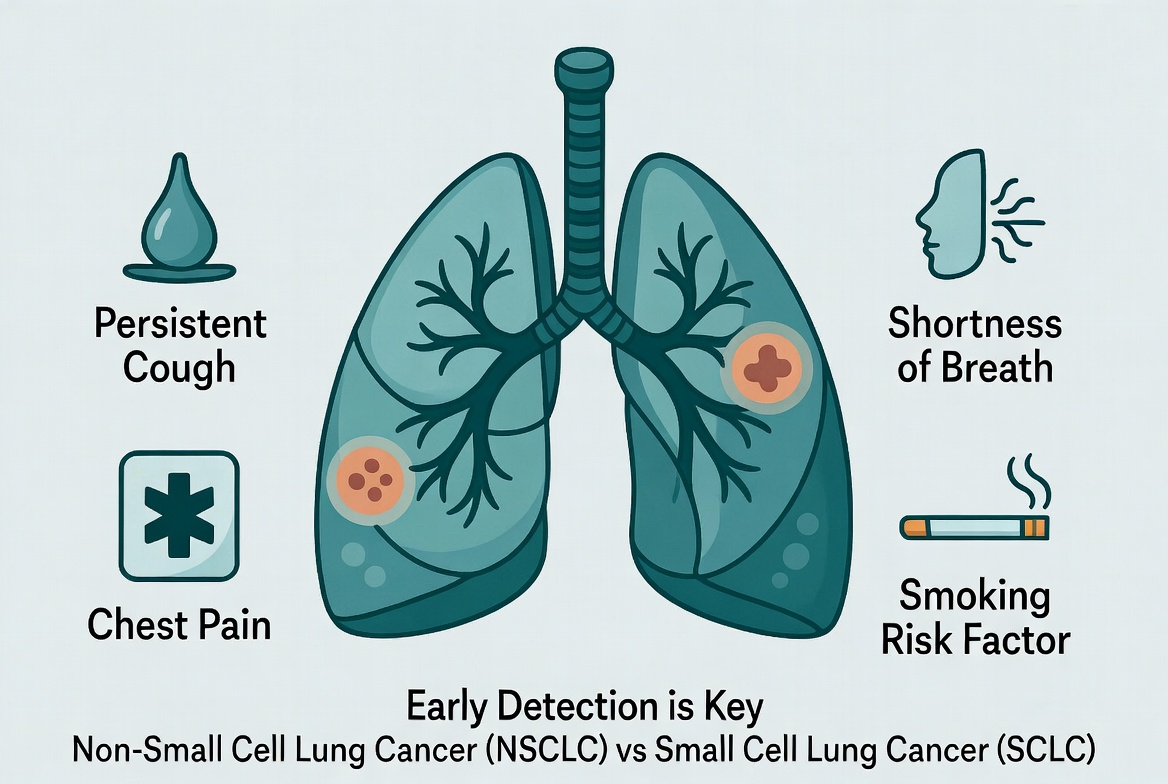
Lung cancer
Learn about lung cancer, including its symptoms, causes, risk factors, diagnosis, treatment, prevention, and complications.…
Read About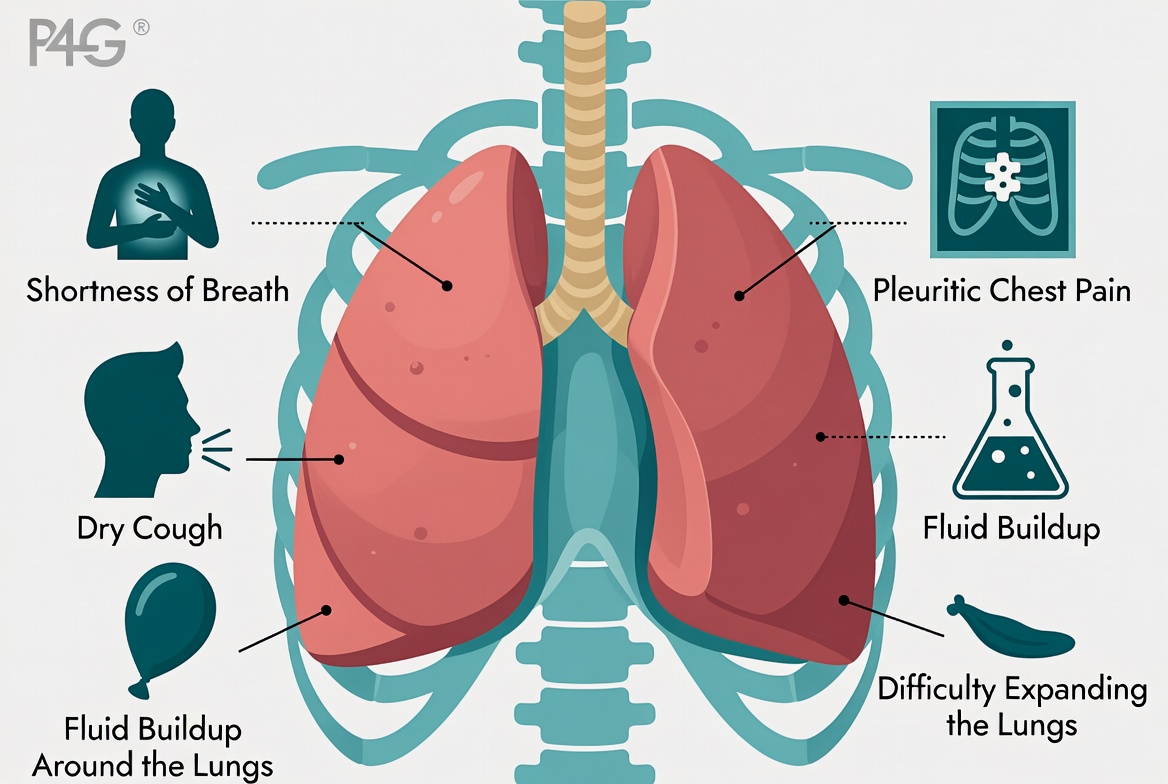
Pleural Effusion: Causes, Symptoms & Treatment Options
What is pleural effusion? Learn about fluid around the lungs, common causes (TB, pneumonia), diagnosis, and treatment options…
Read About
pneumonia
Pneumonia is an infection that causes inflammation of the air sacs (alveoli) in one or both lungs. The air sacs may fill…
Read About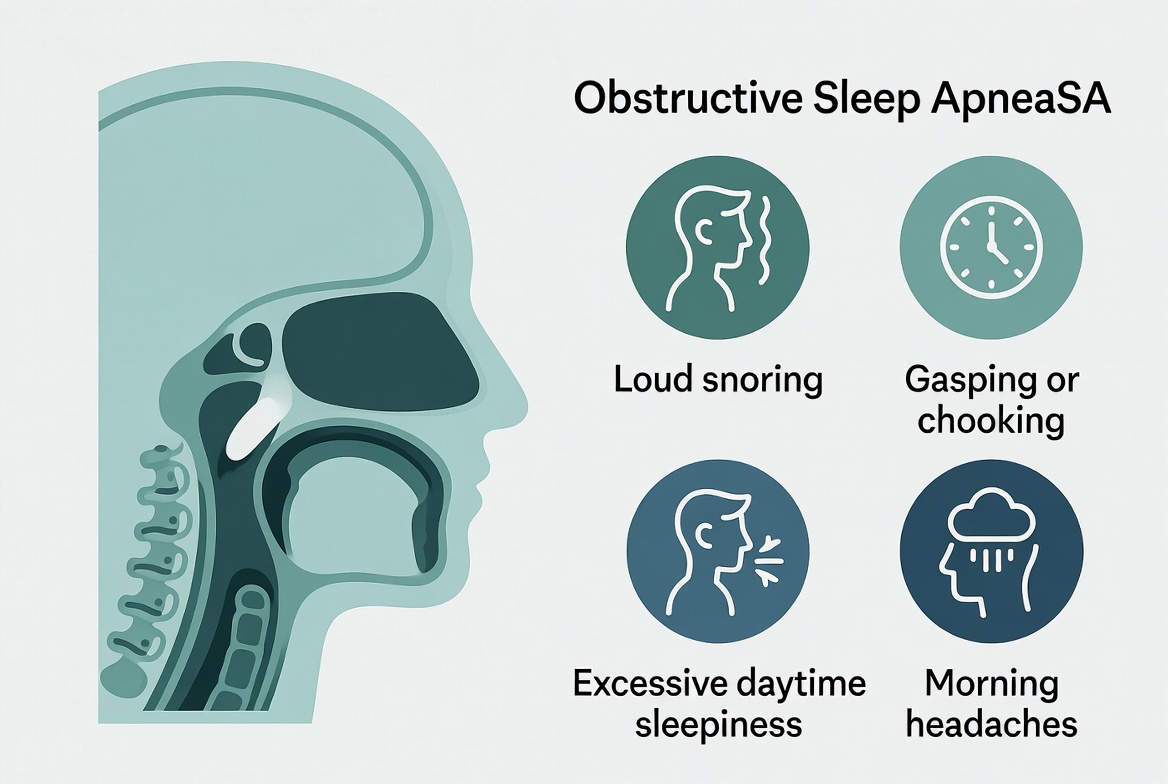
Sleep Apnea (Obstructive Sleep Apnea - OSA)
Sleep apnea is a common sleep disorder in which breathing repeatedly stops and starts during sleep, leading to poor sleep…
Read About