Health Library
Trusted information about lung diseases, respiratory conditions, symptoms, diagnosis and treatment.
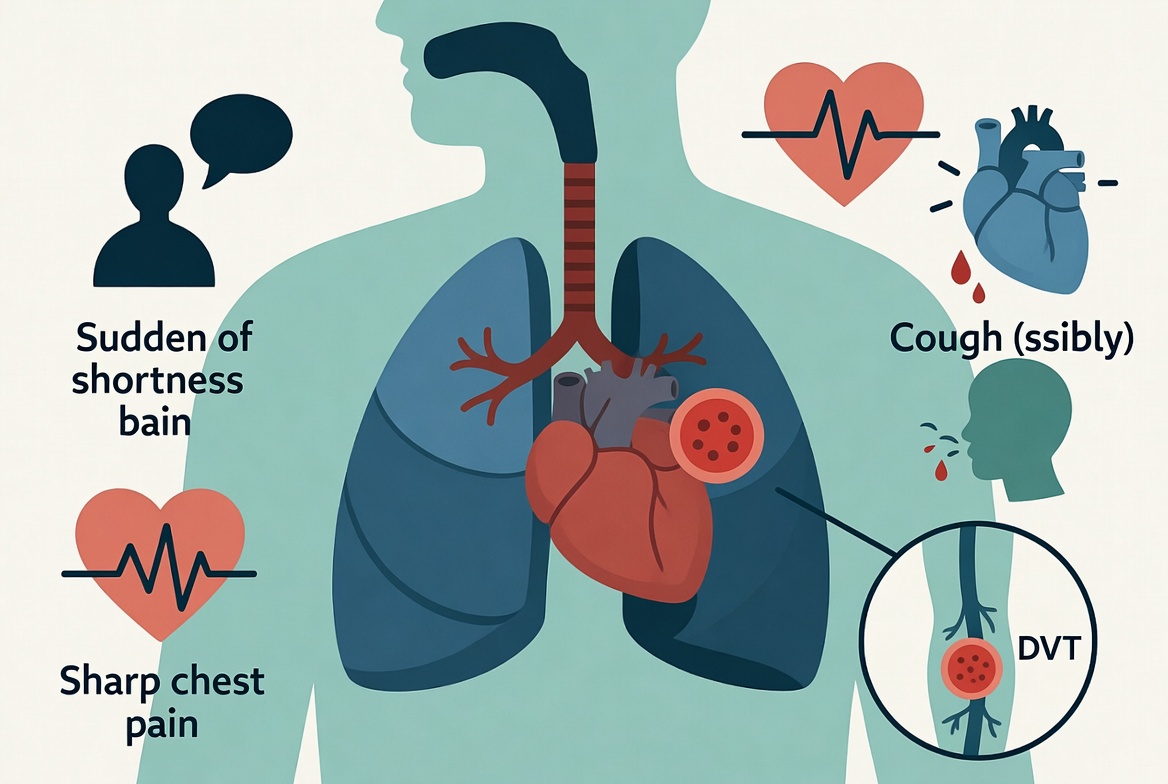
Pulmonary Embolism (PE)
Pulmonary embolism (PE) is a life-threatening condition caused by a blood clot that blocks an artery in the lungs. Learn about the symptoms, causes, risk factors, diagnosis, treatment, prevention, complications, and when to seek emergency medical care for pulmonary embolism.Pulmonary embolism (PE) is a potentially life-threatening condition caused by a blood clot that blocks an artery in the lungs. Learn about PE symptoms, causes, risk factors, diagnosis, treatment, prevention, complications, and when to seek emergency medical care.
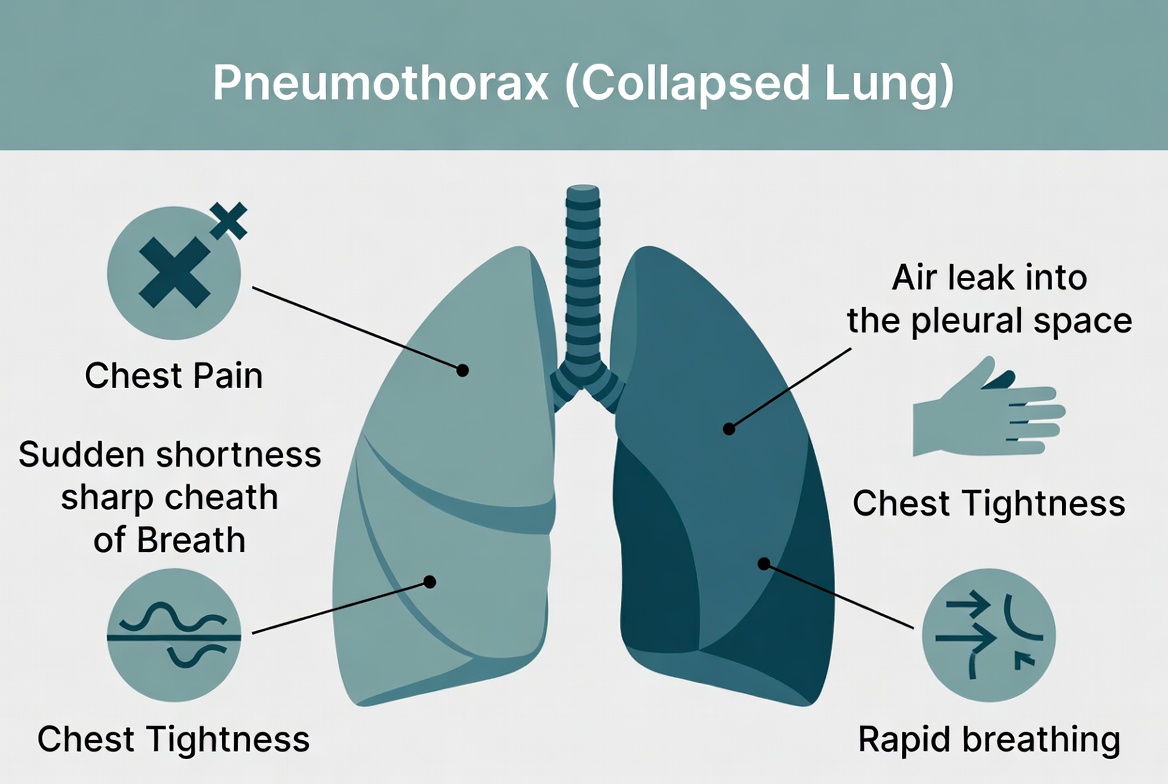
Pneumothorax (Collapsed Lung)
Pneumothorax, also known as a collapsed lung, occurs when air enters the space between the lung and the chest wall, causing the lung to partially or completely collapse. Learn about the symptoms, causes, risk factors, diagnosis, treatment, prevention, complications, and when to seek emergency medical care for pneumothorax.
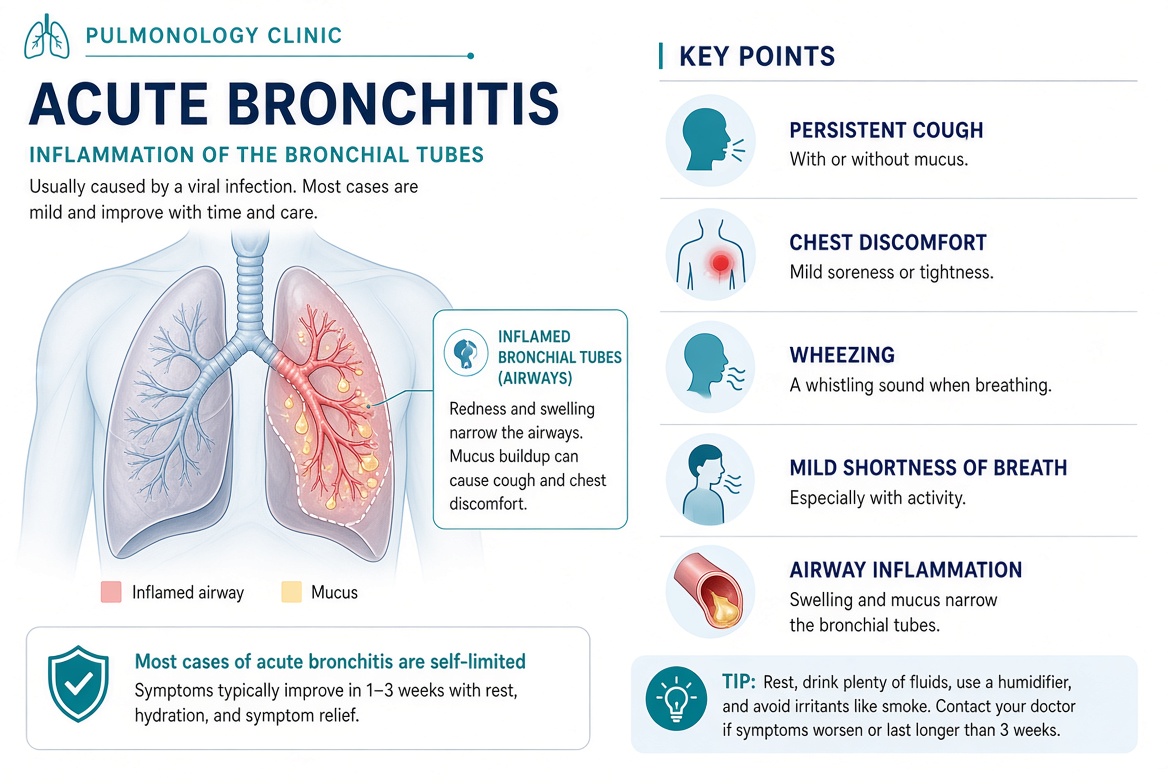
Acute Bronchitis
Acute bronchitis is a temporary inflammation of the bronchial tubes, usually caused by a viral respiratory infection such as a cold or flu. It commonly causes a persistent cough, mucus production, wheezing, chest discomfort, and mild breathing difficulty. Most cases improve within a few weeks with rest, fluids, and supportive care. Learn about the symptoms, causes, risk factors, diagnosis, treatment, prevention, complications, and when to see a doctor for acute bronchitis.
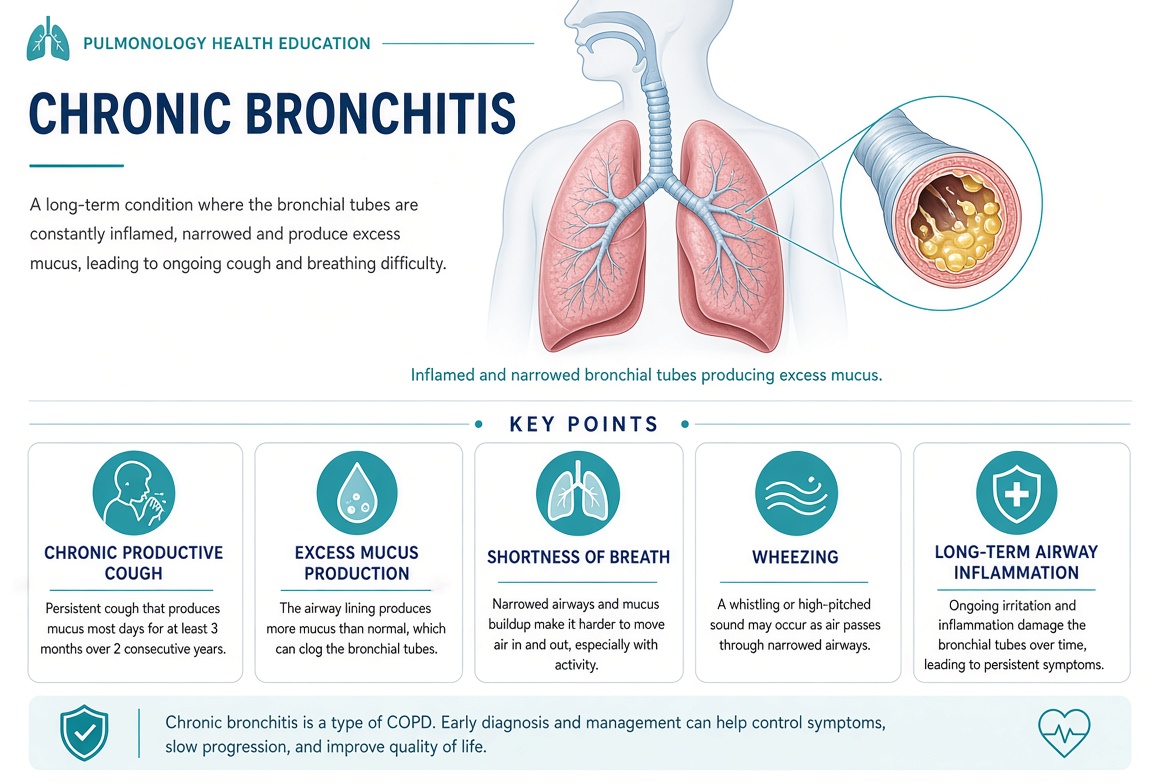
Chronic Bronchitis
Chronic bronchitis is a long-term condition in which the bronchial tubes become persistently inflamed and produce excess mucus, causing a chronic cough and breathing difficulties. It is commonly associated with chronic obstructive pulmonary disease (COPD) and is most often linked to long-term exposure to cigarette smoke. Learn about chronic bronchitis symptoms, causes, risk factors, diagnosis, treatment, prevention, complications, and when to see a doctor.
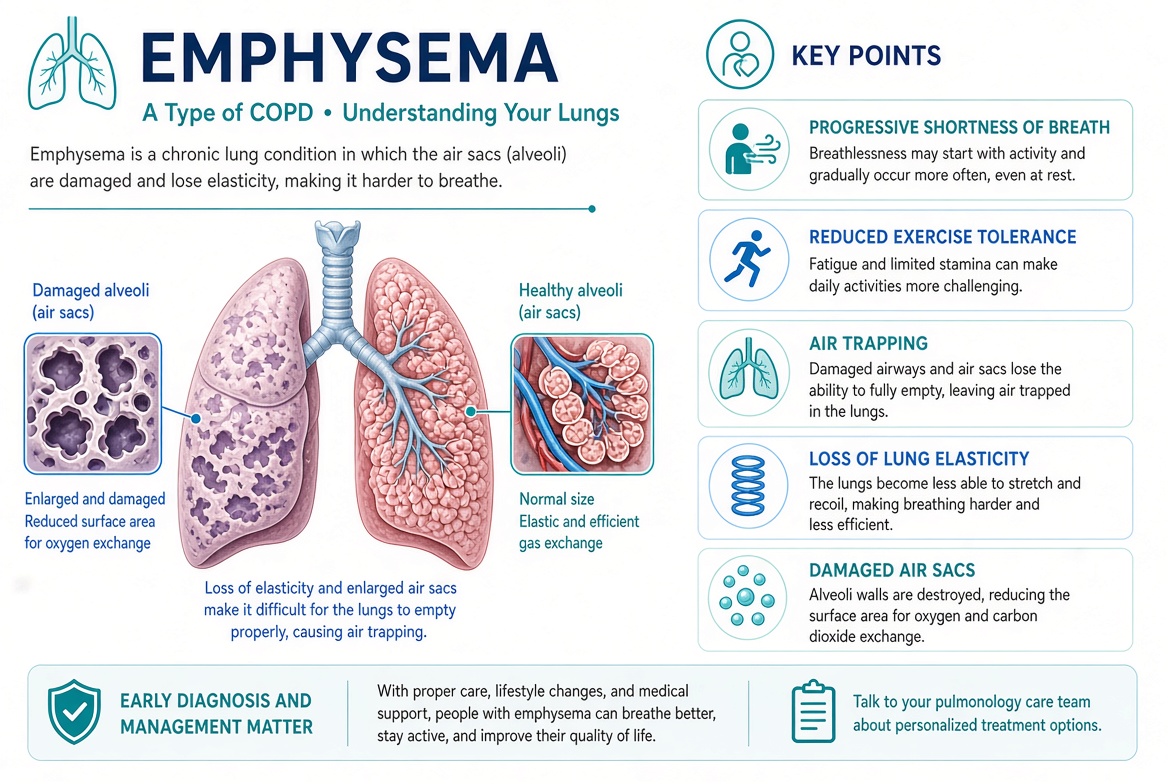
Emphysema
Emphysema is a chronic lung condition that damages the air sacs in the lungs, making it harder to breathe and exchange oxygen effectively. It is a common form of chronic obstructive pulmonary disease (COPD) and is most often associated with long-term cigarette smoking. Learn about emphysema symptoms, causes, risk factors, diagnosis, treatment, prevention, complications, and when to see a doctor.
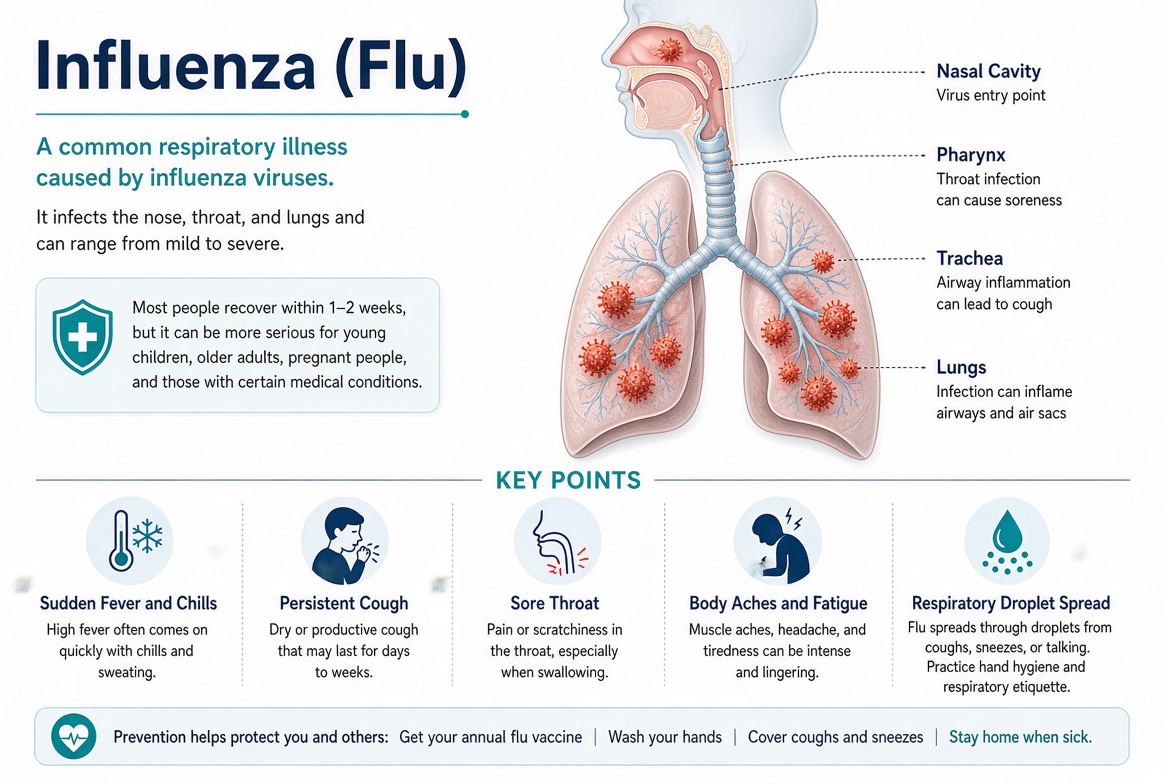
Influenza (Flu)
Influenza, commonly known as the flu, is a contagious respiratory infection caused by influenza viruses. It can cause sudden fever, cough, sore throat, body aches, headache, chills, and fatigue. Most people recover within several days to two weeks, but influenza can lead to serious complications such as pneumonia, particularly in older adults, young children, pregnant people, and those with chronic health conditions. Learn about influenza symptoms, causes, risk factors, diagnosis, treatment, prevention, complications, and when to see a doctor.