Symptoms
Learn about common respiratory and lung-related symptoms, their possible causes, diagnosis, treatment and when to seek medical attention.
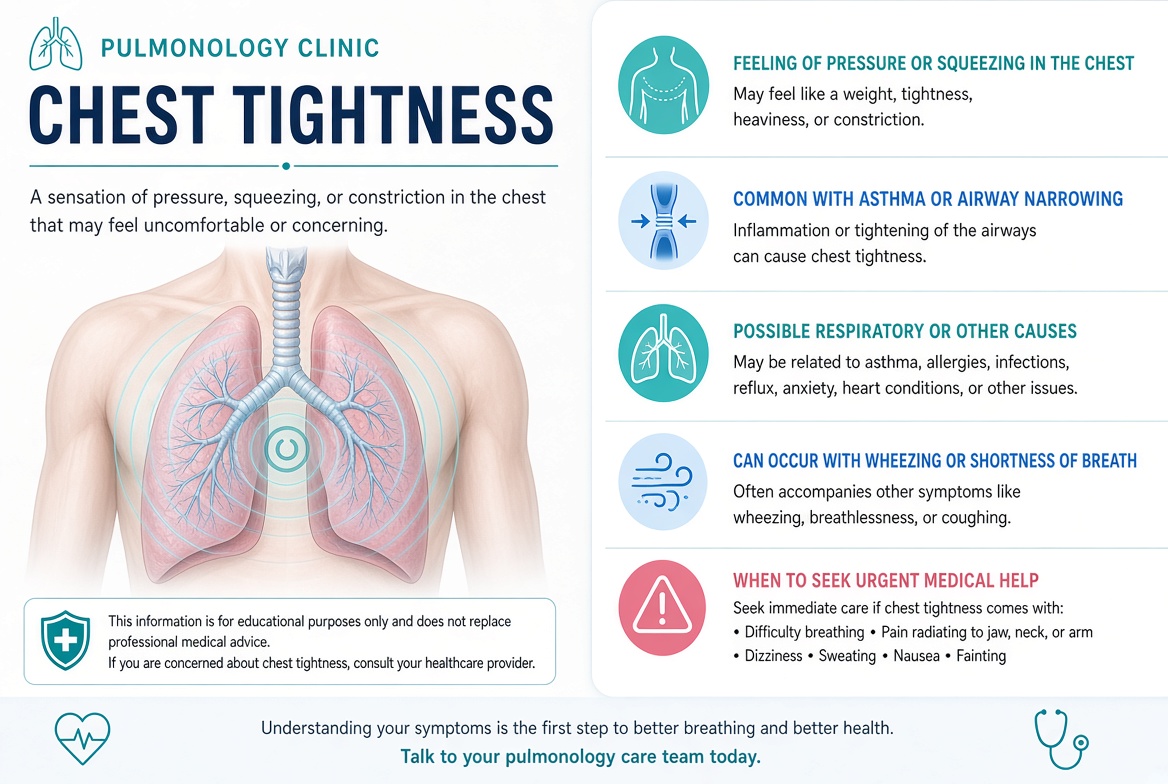
Chest Tightness
Chest tightness is a sensation of pressure, squeezing, heaviness, or discomfort in the chest. It can be caused by respiratory conditions such as asthma, but it may also occur with heart problems, infections, acid reflux, anxiety, or other conditions.
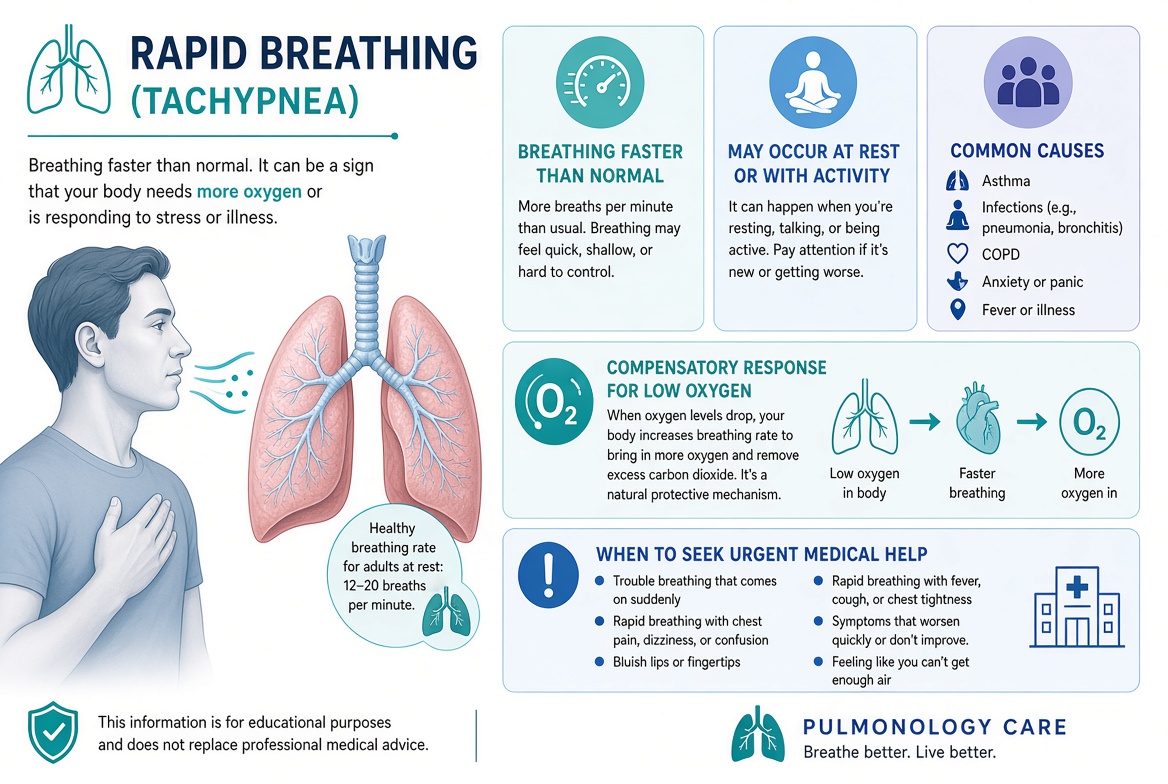
Rapid Breathing (Tachypnea)
Rapid breathing, medically known as tachypnea, means breathing faster than normal for a person's age and situation. It may occur temporarily after exercise, fever, anxiety, or physical exertion, but persistent or unexplained rapid breathing can be a sign of an underlying respiratory, cardiac, metabolic, or other medical condition.
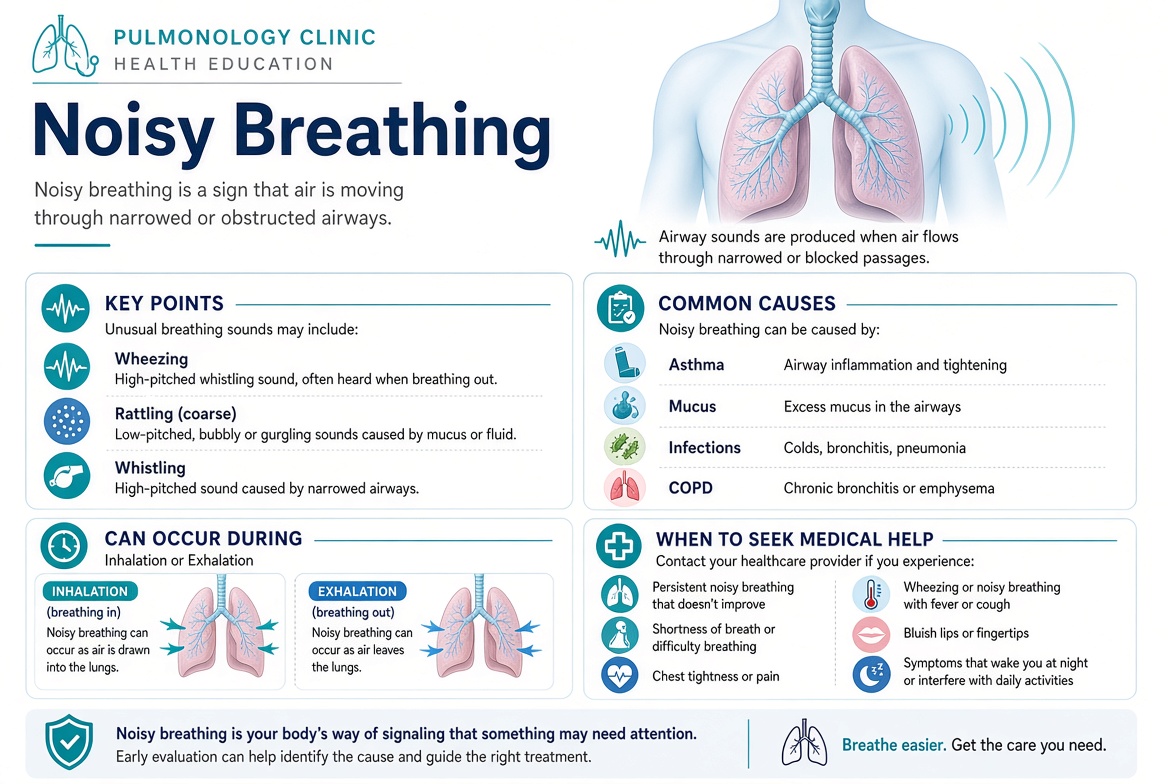
Noisy Breathing
Noisy breathing refers to unusual sounds produced when air moves through the nose, throat, or airways. The sound may be described as wheezing, rattling, whistling, snoring, or a harsh high-pitched noise and can occur with conditions affecting the upper or lower respiratory tract.
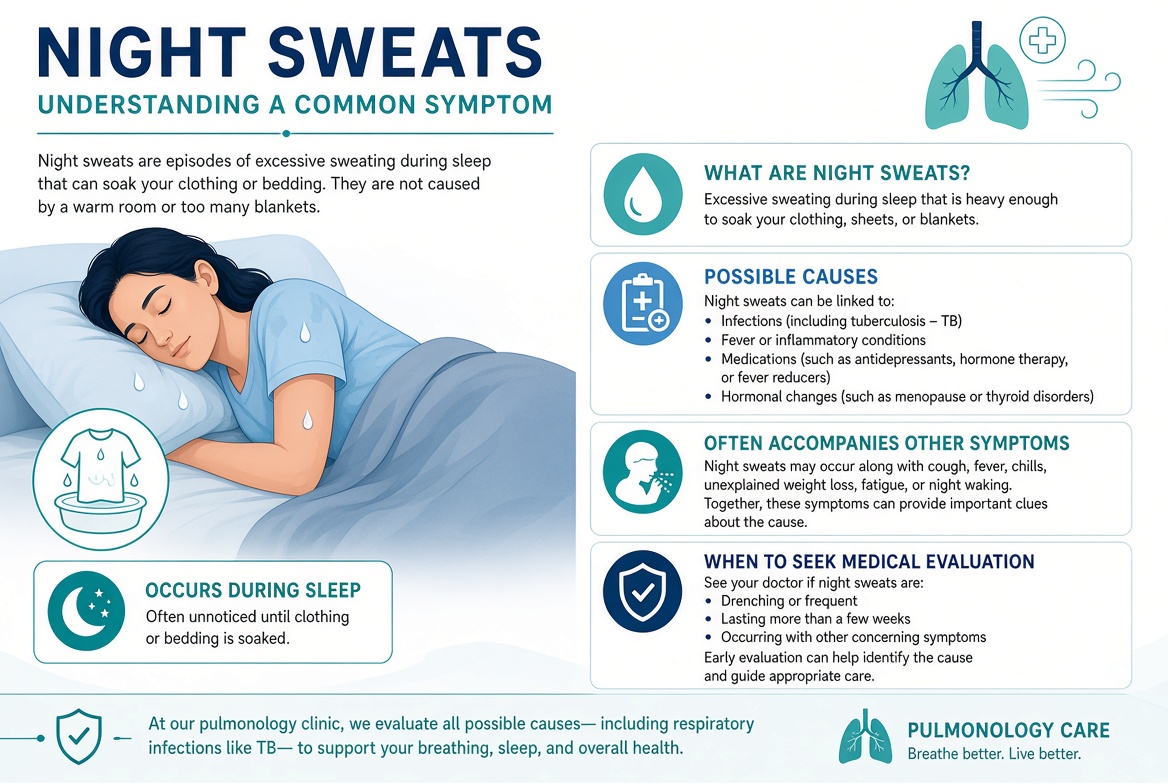
Night Sweats
Night sweats are episodes of excessive sweating during sleep that may soak clothing or bedding. They can occur because of a warm sleeping environment, infections, medications, hormonal changes, or other medical conditions. Persistent or unexplained night sweats should be medically evaluated.
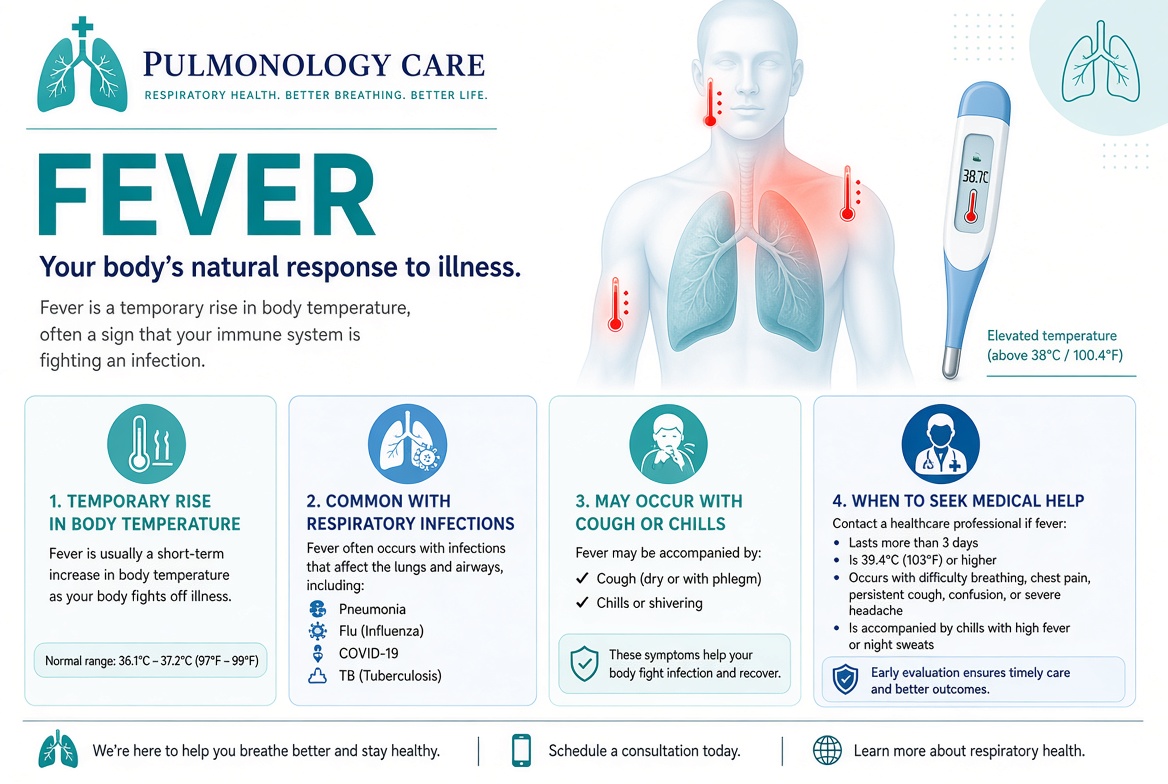
Fever
Fever is a temporary increase in body temperature that commonly occurs when the immune system responds to an infection or illness. Respiratory infections such as pneumonia, influenza, and tuberculosis can cause fever, sometimes along with cough, chills, sweating, or breathing difficulties.
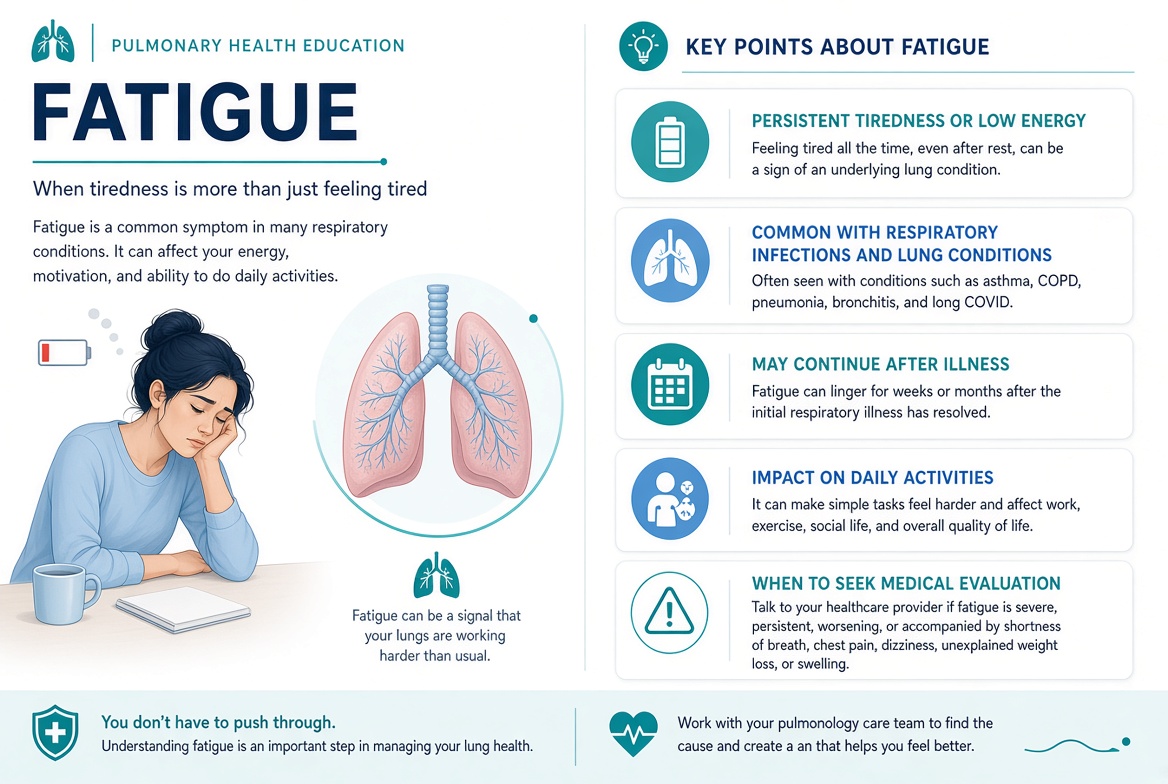
Fatigue
Fatigue is a persistent feeling of tiredness, low energy or lack of physical or mental stamina. It can occur with respiratory infections and lung conditions, but may also result from poor sleep, anemia, stress, medications or other medical conditions.
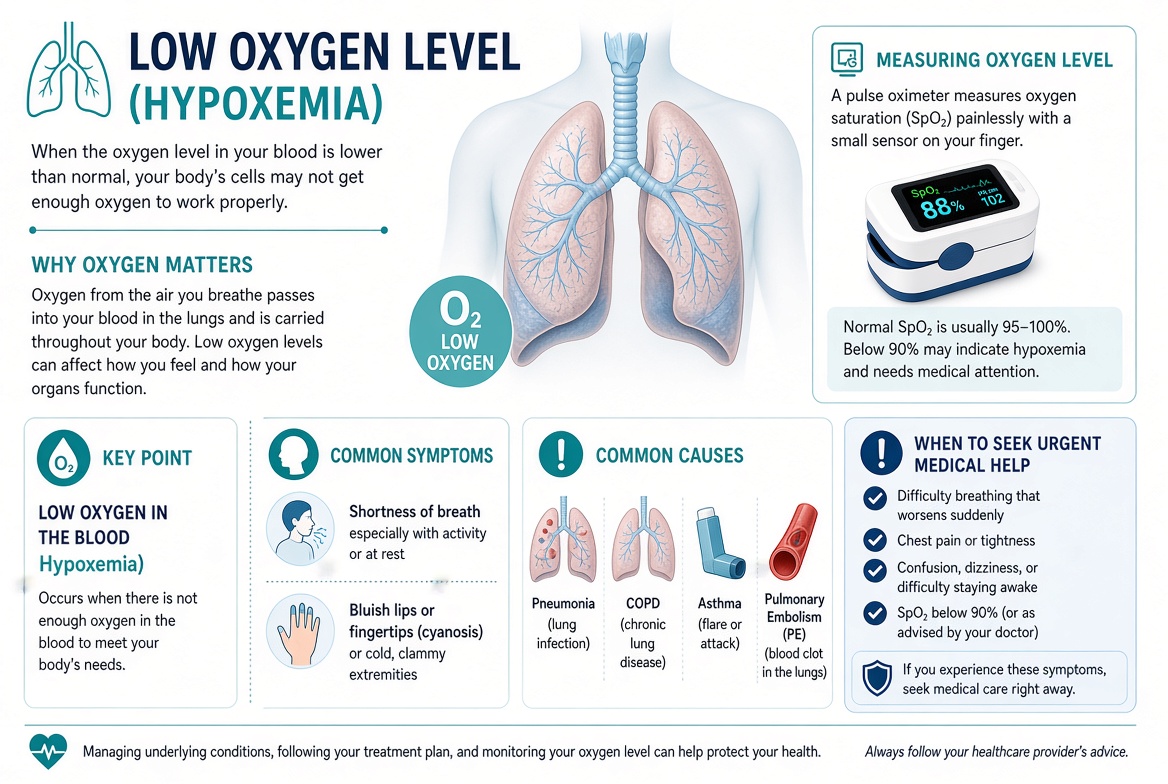
Low Oxygen Level (Hypoxemia)
Low oxygen level (hypoxemia) occurs when the amount of oxygen in the blood is lower than normal. It can result from lung diseases, breathing problems, heart conditions or other medical issues and may cause shortness of breath, rapid breathing, confusion or bluish lips and fingertips.
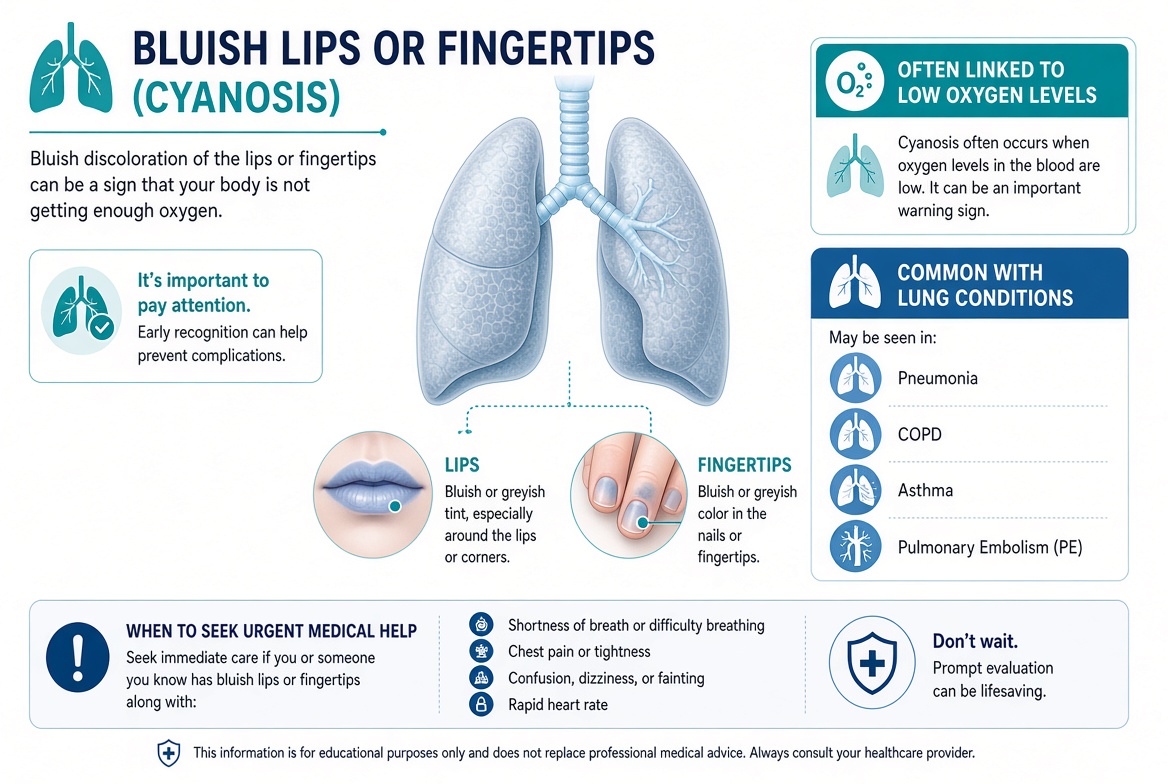
Bluish Lips or Fingertips (Cyanosis)
Bluish lips or fingertips, known as cyanosis, occur when the skin or mucous membranes develop a blue, grey or purple appearance. Cyanosis can be associated with low blood oxygen levels, circulation problems, heart conditions or certain lung diseases and may require urgent medical assessment.
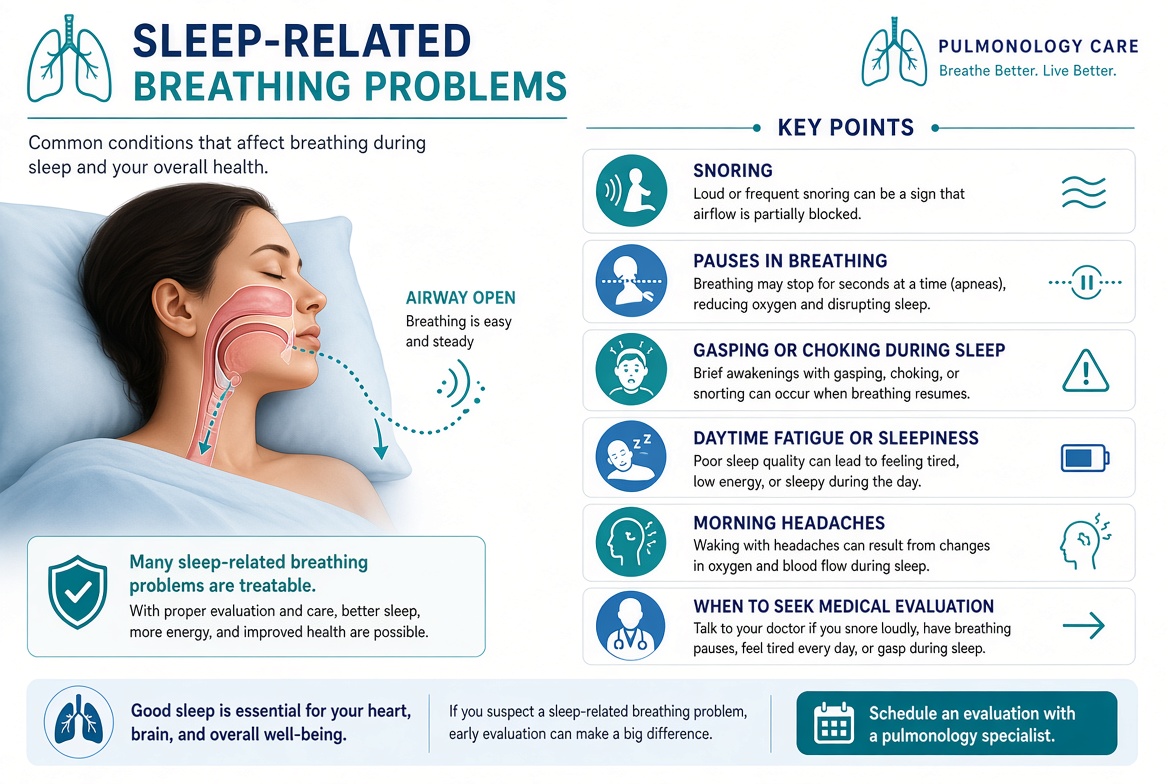
Sleep-Related Breathing Problems
Sleep-related breathing problems are conditions that interfere with normal breathing during sleep. They may cause snoring, pauses in breathing, gasping, restless sleep, daytime fatigue and morning headaches. Sleep apnea is one of the most common sleep-related breathing disorders.